Last updated: August 14, 2026
Shopping for a trailer sway bar gets confusing fast, because the category quietly contains two very different products. One is a friction bar that bolts alongside your existing hitch and adds resistance to side to side movement. The other is a full weight distribution hitch that happens to include sway control, and it changes how weight sits on the tow vehicle’s axles as well. They solve overlapping problems, they cost very different amounts of effort to install, and buying the wrong one is the most common mistake in this whole category.
So this guide sorts the field by what your setup actually needs. If the truck sits level with the trailer hitched and you just want the rig to stop reacting to passing semis, a friction bar is the honest answer. If the back of the tow vehicle squats and the steering feels light, no amount of friction fixes that, and a weight distribution kit with integrated sway control is where to look. The picks below cover both routes with hardware from established towing brands you can still buy easily today.
This article contains affiliate links. If you buy through them, we may earn a commission at no extra cost to you. Learn more.
Quick Answer
Which trailer sway bar should you buy?
- If your hitch setup is otherwise fine, an add-on friction sway control kit from a brand like Husky or Curt is the simplest fix, and it bolts on in an afternoon.
- If the tow vehicle squats when hitched, buy a weight distribution hitch with integrated sway control instead, since that treats the cause rather than the symptom.
- Match the kit to the trailer weight and tongue weight printed on your trailer label and tow vehicle placard, and never use a bar to compensate for exceeding a rating.
What Separates a Good Sway Control Kit From a Frustrating One
Five things decide whether a kit suits your rig, and brand loyalty is not one of them. Work down this list and most of the catalog eliminates itself, because nearly every disappointment traces back to a mismatch between the hardware’s design and the trailer it was bolted to.
| What to check | Why it matters | What to look for |
|---|---|---|
| Trailer weight range | Sway hardware is rated, and a bar outside its range does not help | The gross trailer weight and tongue weight range printed on the kit, checked against your trailer label |
| Friction bar or weight distribution | They solve different problems | Friction for stability alone, weight distribution when the tow vehicle squats |
| Clearance on your A-frame | Propane tanks, battery boxes, and generators block bracket positions | Measure the A-frame before ordering, and check the maker’s clearance dimensions |
| Brake system compatibility | Friction sway control is generally not used with surge brake couplers | The fitment notes, which state this explicitly |
| Included hardware | Missing a sway control ball means a second order | Kits that ship with the bar, the bracket, and the ball together |
| Adjustability | Tension that suits a loaded trailer is wrong for an empty one | A tension handle or nut you can reach and change without tools |
Notice what is missing from that list: any promise that a bar makes an overloaded or badly packed trailer safe. It does not, and the physics behind that is covered in our explainer on what causes trailer sway.
Friction Bar or Weight Distribution With Sway Control?
Answer this before you compare products, because it decides which half of the category you are shopping in. Stand behind the rig with the trailer hitched and look at the tow vehicle’s stance. If it sits close to level and the headlights point where they should, weight distribution is not your problem.
A friction sway control bar adds resistance to the pivot at the coupler. It does not lift, level, or transfer anything, it simply makes the trailer harder to swing, which damps the oscillation that a truck passing at speed sets off. That is genuinely useful and it is inexpensive. A weight distribution hitch does something structurally different: spring bars apply leverage that moves part of the tongue load forward onto the tow vehicle’s front axle and back onto the trailer axles, which restores steering and braking feel. Most modern kits then add sway control on top, either as friction, cams, or the chain geometry itself.
The honest limitation of friction bars
A friction bar reacts after sway starts, and it works within a range. If your trailer sways because the tongue weight is too low, because the cargo is packed behind the axles, or because the trailer is heavy for the tow vehicle, the bar buys you a calmer version of the same problem. Fix the load first, then add hardware. Our guide to tongue weight and sway covers why that one number does more than any accessory.
Our Top Picks at a Glance
How we chose: we compared widely available sway control hardware on rated weight range, install complexity, whether the mounting hardware is included, adjustability, and the themes that repeat in owner feedback across towing forums. Our assessment rests on manufacturer information and that feedback rather than any hands on trial of our own.
🏆 Best Overall
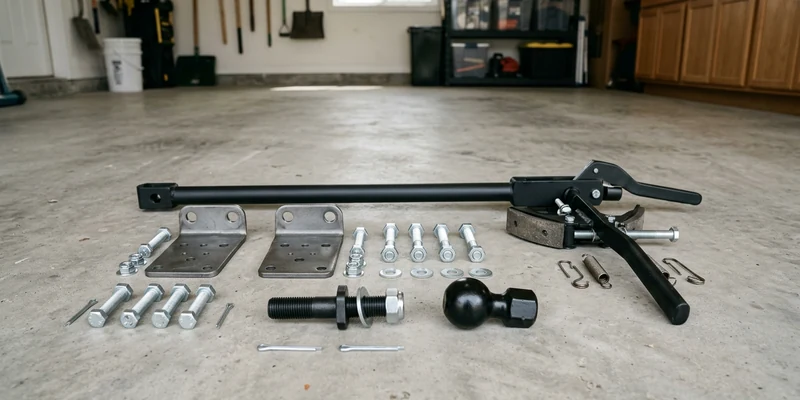
A friction sway control kit from an established towing brand is the answer for the majority of owners: one bar, one bracket, one sway control ball, and an afternoon with a torque wrench. Tension adjusts by hand, so you can dial it in for a loaded trailer and back it off for an empty one. Confirm the trailer weight range on the box against your trailer label, and follow our walkthrough on installing a trailer sway bar for the bracket placement that decides how well it works.

💰 Best Budget Pick
The same idea at the accessible end of the shelf. A basic friction sway control kit does the one job it is designed for, and for a modest single axle trailer that only feels nervous on windy interstates, that is often all the setup needs. The trade-offs are usually finish quality and how smoothly the tension adjuster works over time rather than the amount of sway resistance on day one.
⚖️ Best Integrated System
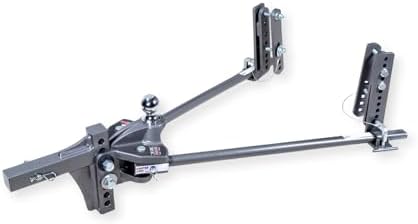
When the tow vehicle squats, a weight distribution hitch with sway control built into the head is the more complete answer. Setup takes longer, since you measure ride height before and after and adjust the shank angle, but you get level stance, restored steering feel, and sway resistance from one piece of hardware. Compare the options in our guide to weight distribution hitches with sway control.
Matching the Kit to Your Rig
Trailer length, axle count, and tow vehicle size narrow the field faster than any spec comparison. Use this as a starting point, then let the published weight ranges make the final call.
| Your setup | What usually matters most | Where to look |
|---|---|---|
| Small single axle trailer, midsize SUV | Stability in wind and truck wash, minimal added weight | Single friction bar, sized to the lower weight range |
| Tandem axle travel trailer, half ton truck | Squat control as much as sway control | Weight distribution hitch with integrated sway control |
| Long, tall trailer with a big side profile | Resistance to crosswind push | Weight distribution plus dual friction bars, if the maker permits |
| Utility or cargo trailer, variable loads | Easy tension changes between loads | Friction bar with a hand adjustable tension knob |
| Trailer with surge or hydraulic brakes | Compatibility, not capability | Check fitment notes; friction sway control is often excluded |
If your trailer is on the lighter end of that table, the sizing conversation is different enough that we treat it separately in our roundup of sway bars for light travel trailers.
Two More Picks for Specific Situations
The three above cover most rigs. These fill the gaps that show up once the trailer gets longer, or once you discover your ball mount was never drilled for a sway control ball.
🔗 Upgrade Pick
A chain style weight distributing hitch takes a different route to sway control: the spring bars are held under tension in brackets that resist the trailer’s tendency to rotate, so the system pushes back continuously rather than relying on friction. Owners often mention that it is quieter than friction hardware and needs less fiddling between loads, and that it stays hooked up in conditions where friction bars are supposed to be released.

🧰 The Part People Order Twice
A sway control ball and mounting hardware kit is the small item that turns a bar you already own into a bar you can actually install. Some ball mounts arrive with the hole already drilled and some do not, and adding a hole to a load bearing shank is only acceptable where the maker permits it. Check your ball mount before ordering, then match the ball to the socket size on your bar.

Living With It: Setup, Tension, and Weather
A sway bar is not fit and forget hardware, and the small habits are what separate owners who like theirs from owners who leave it in the garage.
Set tension to the manufacturer specification as a starting point, then adjust upward only until highway sway settles, because a bar cranked down hard resists your steering input as well as the trailer’s. Recheck every fastener with a torque wrench after the first short drive, since fresh hardware settles. And read the weather instructions in your manual: most friction sway control makers ask you to release tension or remove the bar in rain, ice, and snow, and many ask you to disconnect before backing at sharp angles.
What it will not do
No sway control hardware raises a tow rating, a hitch rating, or a payload capacity. Those numbers live on the tow vehicle door jamb placard, the hitch receiver label, and the trailer weight label, and they are the boundary of the conversation. If a rig only feels stable with the friction bar at maximum, treat that as information about the load, not as a successful setup.
Common Mistakes to Avoid
- Buying a bar to fix a squatting tow vehicle. Friction does not transfer weight. That is a weight distribution job.
- Ignoring the rated range. Sway hardware has a published trailer weight and tongue weight window, and it is not decorative.
- Skipping the A-frame measurement. Propane tanks, battery boxes, and generator trays block bracket positions on plenty of trailers.
- Combining friction bars with surge brakes. Check the fitment notes rather than assuming, since this is a common exclusion.
- Cranking tension to maximum. Heavy friction makes turns feel wrong and stresses the bracket, and it hides a loading problem instead of solving it.
- Leaving it connected in ice. If the manual says release it in wet or icy conditions, that instruction is part of using the product correctly.
Where to Go From Here
If you have not yet worked out why your trailer sways, hardware is the second step rather than the first. Start with what causes trailer sway, then read how to prevent it before you leave, since loading and tire pressure are free and often decisive.
Two situations have their own answers. A trailer that sways worst when empty is telling you something specific about weight balance, covered in why a trailer sways when empty. And if sway only shows up above a certain speed, trailer sway at highway speed explains what changes as the numbers climb.
Frequently Asked Questions
Do I need a sway bar for my travel trailer? Not automatically. Many owners tow smaller trailers comfortably without one, while longer and taller trailers benefit noticeably. Tow vehicle wheelbase, trailer length, and how the load is packed matter more than trailer weight alone.
Is a friction sway bar enough, or do I need weight distribution? If the tow vehicle sits level when hitched, a friction bar is usually enough. If it squats, buy weight distribution with integrated sway control, because a friction bar cannot move weight onto the front axle.
Do I need one sway bar or two? One is common on lighter trailers, and dual bars appear as length and weight increase. Follow the trailer weight range on the kit, and check that your hitch maker permits a second bar.
Can I use a sway bar with surge brakes? Usually not. Friction sway control and surge brake couplers are commonly listed as incompatible, so read the fitment notes for your specific kit before ordering.
How tight should the friction be? Start at the manufacturer specification and increase only until highway sway settles. Maximum tension is not a goal, since it makes steering feel heavy and masks loading problems.
Will a sway bar let me tow a heavier trailer? No. Tow ratings, hitch ratings, and payload come from the tow vehicle and hitch labels, and no accessory raises them. See our install guide for how to check those numbers before fitting anything.
The Bottom Line
Decide which problem you have before you decide which product to buy. A friction sway control kit is the right, inexpensive answer when the tow vehicle sits level and the trailer just needs to be harder to swing. A weight distribution hitch with integrated sway control is the answer when the truck squats, because it restores stance and steering as well as resisting sway. Match either one to the weight ranges printed on your trailer and tow vehicle, and fix the load before you add friction.