Last updated: August 14, 2026
Ask ten experienced towers what causes trailer sway and nine of them will start with the same answer: too little weight on the hitch ball, usually because the trailer was loaded from the back forward. Everything else on the list, crosswind, semi trucks, speed, worn tires, a hitch that was never set up properly, makes an already marginal setup break into oscillation sooner. The load balance is what decides whether your trailer tracks or hunts.
That is good news, because balance is free to fix in a parking lot. This article is the hub for our whole sway series: what sway physically is, the full list of causes ranked by how often they turn out to be the culprit, the immediate response if it starts at speed, and where the line sits between a driveway adjustment and a problem that belongs at a scale or a shop. The one number to keep in your head while you read is your trailer’s tongue weight, commonly cited as roughly 10 to 15 percent of the loaded trailer weight for a conventional bumper pull.
This article contains affiliate links. If you buy through them, we may earn a commission at no extra cost to you. Learn more.
Quick Answer
What causes trailer sway, and what do you do about it?
- The most common cause is too little tongue weight, meaning too much cargo loaded behind the trailer axles. Speed, wind, and passing trucks are triggers, not root causes.
- If sway starts while driving, ease off the throttle, hold the steering wheel straight, and let the rig slow itself. Do not stab the brake pedal and do not try to steer out of the oscillation.
- The lasting fix is loading and setup: get the weight distribution right, stay inside the ratings on your vehicle and trailer weight labels, then add sway control hardware on top of a setup that is already balanced.
Causes, Symptoms, and Actions at a Glance
Sway rarely has one cause. It usually has one main cause and two or three contributors that push a setup past its limit. Work down this table in order, because the free checks at the top solve most cases before you spend anything.
| What you notice | What it usually means | What to do |
|---|---|---|
| Trailer wanders constantly, even in calm air | Too little tongue weight, cargo loaded behind the axles | Move heavy items forward of the axles, recheck tongue weight |
| Tow vehicle front end feels light, steering vague | Rear of the tow vehicle squatting, front axle unloaded | Check weight labels, set up or readjust a weight distribution hitch |
| Sway starts only above a certain speed | You are near the setup’s stability limit | Slow down for the trip, then fix the load and setup before the next one |
| Sway when a semi passes or in gusts | Normal disturbance exposing a marginal setup | Reduce speed, increase following distance, review balance and hitch |
| Light or empty trailer sways worse than loaded | Very low tongue weight and a tall, light box | Add controlled weight ahead of the axles, see the empty trailer guide |
| Sway appeared after a tire, wheel, or spring change | Mismatched pressure, uneven load, or a mechanical fault | Set pressures cold to the trailer tire label, inspect suspension |
| One trailer tire runs hot or wears unevenly | Bearing, brake, or alignment problem | Stop towing and have the axle inspected before the next trip |
| Sway that grows with each correction | Divergent oscillation, the dangerous kind | Throttle off, wheel straight, slow gradually, then stop and reload |
If Sway Starts While You Are Driving
Handle the moment first, then the hardware. Sway is a yaw oscillation, and your instinctive reactions, braking hard and steering against it, both feed energy into it. The response below is what towing courses and highway safety agencies consistently teach.
- Ease off the throttle. Do not lift abruptly and do not accelerate to “pull it straight.” Let engine braking bleed speed off smoothly.
- Keep the steering wheel straight. Hold it firmly in the direction of travel. Countersteering into each swing usually amplifies the oscillation.
- Stay off the foot brake while it is swinging. Braking the tow vehicle can push the rig further out of shape. If you have a brake controller with a manual lever, a light, steady application of trailer brakes only can help stretch the rig back straight.
- Let it settle, then stop somewhere safe. As speed drops the oscillation damps out. Find a level pullout with room, not a narrow shoulder next to traffic.
- Do not just carry on. Inspect the load, the hitch, the coupler, and the tires before you move again. Sway that happened once at a given speed will happen again.
Our step by step piece on how to stop trailer sway while towing walks through the same moment in more detail, including the roadside checks worth doing before you rejoin traffic.
What Sway Physically Is
Sway is the trailer rotating back and forth around the hitch ball while the whole rig moves forward. Every trailer does this a little when disturbed. The question is whether the motion damps out on its own within a swing or two, or whether each swing feeds the next one and grows.
Where the trailer’s weight sits decides which of those happens. With a healthy share of the load ahead of the axles, the trailer’s center of gravity is forward and the axles act like the flights on a dart, pulling it straight. Move that weight behind the axles and the trailer behaves more like a pendulum hanging off the ball, with plenty of mass swinging where it has leverage. Speed multiplies the effect, which is why the same trailer can feel planted around town and nervous on the interstate. Our article on trailer sway at highway speed covers why the threshold is so sharp.
Cause One: Load Balance and Tongue Weight
This is the first thing to check on any swaying trailer, and in most cases it is also the last. Tongue weight is the downward force the coupler puts on the ball, and for conventional travel trailers and cargo trailers it is commonly cited as roughly 10 to 15 percent of the loaded trailer weight. Drop meaningfully below that range and stability goes with it.
The practical version has nothing to do with math. Heavy items go low and ahead of the axles: the loaded water tank position, batteries, tools, generators, firewood, cast iron. Bikes on a rear bumper rack, a cargo box behind the axles, and a rear kitchen packed for a month are the classic sway builders because they are heavy, high, and as far from the axles as the trailer allows. Once the trailer is packed the way you actually travel, verify the number rather than trusting the feel; our guide on how to calculate RV tongue weight at home covers the scale methods, and too much tongue weight has its own set of problems worth understanding.
Cause Two: Hitch Setup and the Tow Vehicle
A correctly balanced trailer can still sway if the tow vehicle is squatting, undersized, or hitched wrong. When the rear of the tow vehicle sinks, weight comes off the front axle, steering goes vague, and the vehicle stops resisting the trailer’s push. That is the exact job a weight distribution hitch exists to do, moving part of the tongue load back onto the front axle of the vehicle and the trailer axles.
Wheelbase and mass matter too. A short wheelbase SUV towing a long trailer has less leverage against yaw than a full size truck with the same rated capacity, which is why two vehicles with identical tow ratings can feel completely different behind the same trailer. Ball height, spring bar tension, and a hitch head that was set up for a different trailer all belong on the checklist. None of this is a reason to exceed a rating: the numbers on your vehicle door jamb label and the trailer’s weight label are hard limits, and RV weight ratings explained untangles GVWR, GCWR, and payload.
If your tow vehicle squats noticeably when you hitch up, or if the trailer’s loaded tongue weight is a large share of the vehicle’s payload, a weight distribution hitch with integrated sway control is the setup change with the biggest effect.
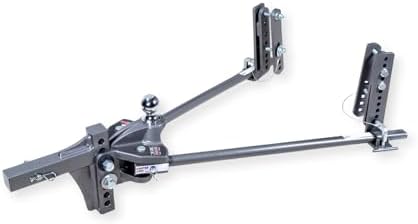
Sizing matters more than brand here. Our comparison of weight distribution hitches with sway control explains how to match spring bar rating to your actual loaded tongue weight rather than the trailer’s dry number.
Cause Three: Speed, Wind, and Traffic
Crosswind and passing semis do not create instability, they reveal it. A gust or a bow wave gives the trailer a shove, a balanced rig absorbs it, and a marginal one starts oscillating. A downhill grade does the same thing by adding speed you did not ask for.
Because these triggers are outside your control, the response is speed and space: a self imposed highway limit below the posted speed, extra following distance, and easing off before a truck passes rather than during. Trailer tires also carry a maximum speed rating, listed on the sidewall or the trailer label.
Cause Four: Tires and Mechanical Faults
Underinflated trailer tires flex more, respond slower, and make a rig feel loose in a way that resembles load imbalance. Set trailer tire pressure cold to the number on the trailer’s tire and loading label rather than to whatever looks familiar, and check it before every travel day. A tire pressure monitoring system is the cheap way to catch a slow leak or a hot bearing before it becomes a blowout, which is one of the fastest routes to genuine loss of control.
Beyond tires, look at the mechanical items that let one axle steer the trailer: worn equalizers or shackle bushings, a broken leaf spring, a sagging or shifted axle, loose wheel bearings, and brakes grabbing on one side. Sway that appears suddenly on a rig that was fine last month is a mechanical suspicion until proven otherwise.

What Sway Control Hardware Can and Cannot Do
Sway control adds friction or geometry that resists the trailer’s yaw motion. A friction bar clamps between the trailer A frame and the hitch shank and damps small movements. Dual cam and integrated systems build that resistance into the weight distribution hitch itself so the trailer is actively pulled back toward center. Both work, and both are worth having.
What none of them do is fix a badly loaded trailer. Hardware raises the speed and disturbance level at which oscillation starts; it does not move your cargo forward of the axles. Treat sway control as insurance on a setup that is already balanced, not as permission to skip the loading step. Our explainer on how a trailer sway bar actually works covers the mechanism, and sway bars and control kits compares the common types.
For a single axle or light trailer that only needs the edge taken off, an add on friction sway control bar is the usual starting point.

When It Is Not a Driveway Fix
Some sway causes are not yours to adjust. Stop towing and get a professional inspection if you find a bent or cracked frame member, a shifted axle, a broken spring or equalizer, elongated coupler or hitch holes, or damage after a hard sway event. The same goes for anything that lets the trailer move independently of the coupler.
The other hard boundary is weight. If the loaded trailer, the tongue weight, or the combined rig exceeds what your vehicle labels and trailer label allow, no hitch or bar makes that safe, and the answer is less cargo or a different tow vehicle. Take the rig across a public scale rather than guessing, and treat the ratings on the labels as the ceiling instead of the target.
Common Mistakes to Avoid
- Braking hard when sway starts. It transfers weight forward and can pitch the rig further out of shape. Throttle off and a straight wheel come first.
- Loading for convenience, not balance. The heavy tote goes near the door because it is easy. If that door is behind the axles, you just built a pendulum.
- Using dry weight numbers. Brochure tongue weight is measured empty. Water, batteries, propane, and gear change it substantially.
- Bolting on sway control and calling it solved. Hardware damps oscillation, it does not rebalance cargo.
- Treating one sway event as a fluke. The conditions that produced it are still in the rig, waiting for the same speed.
Frequently Asked Questions
What is the number one cause of trailer sway? Insufficient tongue weight from cargo loaded behind the trailer axles. For conventional bumper pull trailers, tongue weight is commonly cited as roughly 10 to 15 percent of the loaded trailer weight.
Should I speed up or slow down when a trailer starts swaying? Slow down, but gradually. Ease off the throttle, keep the wheel straight, and avoid the foot brake while the trailer is swinging. Accelerating out of sway is old advice that most towing instruction no longer supports.
Does a weight distribution hitch stop sway by itself? Not by itself. It restores load to the tow vehicle front axle and levels the rig, and many models add friction or cam based sway control. It cannot compensate for cargo loaded too far back or for exceeding your weight ratings.
Can trailer tires cause sway? Yes. Low or mismatched pressures, mixed tire types, and worn or aged tires all reduce how quickly the trailer resists yaw. Set pressures cold to the trailer’s tire and loading label before every travel day.
Is some sway normal? A brief settle after a gust or a passing truck that damps out on its own within a swing or two is normal behavior. Motion that grows with each swing, or that appears in calm air, is a setup problem to fix before the next trip.
The Bottom Line
Trailer sway is almost always a balance problem wearing a weather disguise: too much cargo behind the axles, too little weight on the ball, and a speed or gust that exposes it. Fix the load first, verify tongue weight and stay inside the ratings on your vehicle and trailer labels, then add a weight distribution hitch or sway control to raise the margin. If it starts at speed, throttle off, wheel straight, no foot brake, and sort it out at the next safe pullout.