Last updated: August 14, 2026
The short answer to can too much tongue weight cause trailer sway is no, not the classic fishtailing kind. Too little tongue weight is what makes a trailer hunt behind the ball. Excess tongue weight causes a different set of problems, and some of them produce instability that feels like sway from the driver’s seat even though the mechanism is entirely different.
That distinction matters, because the two conditions call for opposite fixes. Moving cargo rearward to cure a squatting tow vehicle is one of the most common ways owners create genuine sway while trying to solve something else. This article covers what each end of the range actually does, how to tell which one you have, and how to land the loaded rig inside both the tongue weight range and every rating on your vehicle and trailer labels.
This article contains affiliate links. If you buy through them, we may earn a commission at no extra cost to you. Learn more.
Quick Answer
Can too much tongue weight cause trailer sway?
- Classic sway comes from too little tongue weight, not too much. Excess tongue weight instead overloads the rear of the tow vehicle and lightens its front axle.
- That front axle unloading reduces steering and braking authority, which can feel like instability and makes a real sway event harder to control.
- Aim for the range commonly cited as roughly 10 to 15 percent of the loaded trailer weight, while staying inside the hitch rating, the receiver rating, and the payload on your vehicle door jamb label.
Too Little, Just Right, Too Much
Tongue weight is a balance, not a maximum or a minimum. This table shows what each condition looks like from the driver’s seat and what to do about it.
| Condition | How it feels | What is happening | What to do |
|---|---|---|---|
| Too little tongue weight | Trailer wanders, fishtails, sway grows with speed | Center of gravity too far behind the axles, pendulum behavior | Move dense cargo forward of the axles and remeasure |
| In the usual range | Trailer tracks straight, gusts fade within a swing | Enough download on the ball to keep the trailer aligned | Verify on a scale, then keep the loading pattern consistent |
| Too much tongue weight | Rear squats, steering light and vague, nose high trailer | Rear axle overloaded, front axle unloaded, ride height wrong | Set up a weight distribution hitch, or move some cargo rearward carefully |
| Too much plus overloaded | Harsh ride, poor braking, hitch and vehicle past their ratings | Payload, receiver, or axle rating exceeded | Remove cargo; hardware does not extend a rating |
| Correct percentage, wrong hitch | Stable but bottoming or scraping | Ball height or hitch class mismatched | Correct ball height and use hardware rated for the load |
Why Too Little Tongue Weight Causes Sway
A trailer stays in line because most of its mass sits ahead of its axles, so the axles trail the coupler the way flights trail a dart. Tongue weight is the visible evidence of that arrangement, which is why the number is used as a proxy for balance.
Push the center of gravity behind the axles and the trailer starts behaving like a pendulum hanging off the ball. Any disturbance rotates it, the mass behind the axles carries the rotation past center, and the swing repeats with more energy than the last one. That is classic divergent sway, and it is the mechanism behind the vast majority of cases described in our hub on what causes trailer sway.
What Too Much Tongue Weight Actually Does
Excess tongue weight pushes down on the rear of the tow vehicle. The rear suspension compresses, the vehicle acts like a lever pivoting around its rear axle, and weight comes off the front wheels. The trailer usually sits nose down while the tow vehicle sits tail down.
The consequences are all about the tow vehicle rather than the trailer. Lighter front wheels mean less steering grip and vaguer response, headlights aim high, braking performance drops because the front brakes do most of the work, and the rear tires and axle carry more than they were meant to. None of that is sway in the technical sense, but a driver with reduced steering authority is less able to hold a straight wheel when something does start swinging, so a heavy tongue makes a sway event worse even though it did not cause it.
The Ratings That Cap the Top End
There is also a hard ceiling that has nothing to do with handling. Tongue weight consumes tow vehicle payload, and it must stay within the tongue weight rating of the hitch ball, the ball mount, the receiver, and the vehicle. Those numbers live on the vehicle door jamb label and on stickers or stampings on the hitch components, and some receivers list separate figures for weight carrying and weight distributing use. Our breakdown of RV weight ratings explains how they interact.
How to Tell Which Problem You Have
The symptoms separate cleanly once you know what to look for. A trailer that wanders in calm air, gets worse with speed, and swings wider with each cycle is telling you the tongue is too light. A rig that tracks straight but whose steering feels floaty, whose headlights blind oncoming drivers, and that squats visibly at the rear is telling you the tongue is too heavy, or that the load simply exceeds what the vehicle should carry.
Do not diagnose by feel alone. Measure fender heights at the front and rear of the tow vehicle unhitched, then again hitched and loaded. A large drop at the rear with a rise at the front is the classic signature of a heavy tongue without weight distribution, and it is the measurement that tells you whether a hitch adjustment fixed it.
Measuring Tongue Weight Instead of Guessing
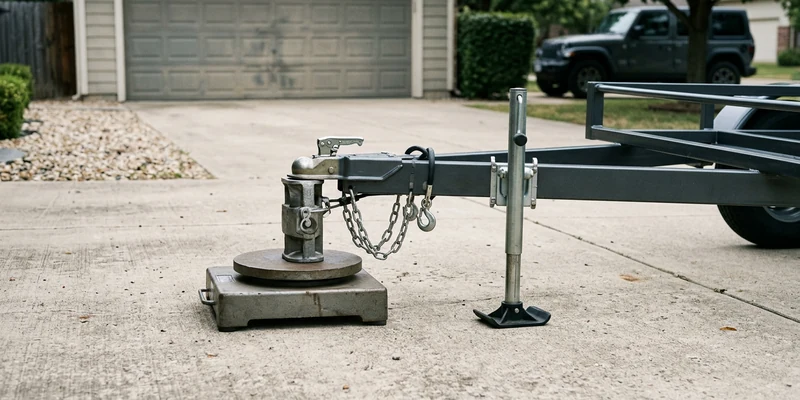
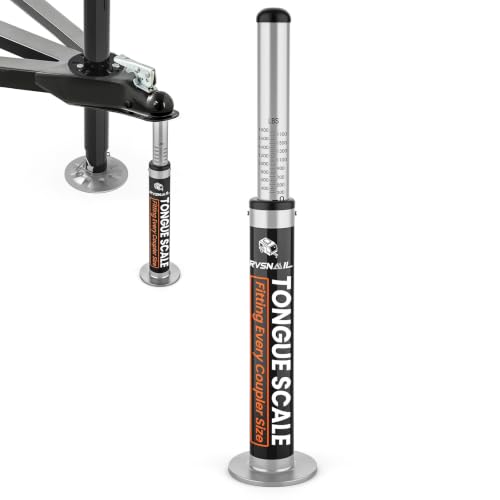
Brochure numbers are dry weights taken before water, batteries, propane, and gear, so they rarely describe the trailer you are towing. The reliable methods are a public truck scale, which gives you axle by axle figures for the whole rig, or a dedicated tongue weight scale under the coupler for lighter trailers. Our walkthrough on how to calculate RV tongue weight at home covers both.
Measure the trailer as you actually travel: tanks filled the way you tow, gear stowed where it lives, bikes on the rack if they go. Then compare the result against the range commonly cited as roughly 10 to 15 percent of the loaded trailer weight, and against the tongue weight limits of your hitch components and vehicle. If any of those are exceeded, the fix is cargo, not hardware.
Fixing a Heavy Tongue the Right Way
The first instinct, sliding heavy cargo toward the rear of the trailer, is the one to be careful with. It does reduce tongue weight, and past a certain point it also creates the tail heavy condition that produces genuine sway. Move cargo rearward in small steps and remeasure rather than shifting everything behind the axles at once.
The better tool is a weight distribution hitch. Spring bars apply leverage that transfers part of the tongue load onto the tow vehicle front axle and the trailer axles, restoring ride height and steering feel without changing where your cargo sits. Set it up by measurement: record unhitched fender heights, then adjust ball height, head tilt, and bar tension until the front fender height returns close to its unhitched figure. Spring bars should be rated for your actual loaded tongue weight, which is covered in our guide to weight distribution hitches with sway control.

Where This Stops Being a Loading Problem
If measured tongue weight exceeds the rating of the ball, ball mount, receiver, or vehicle, or if the loaded rig is over payload, GVWR, or GCWR, the honest answer is less cargo or a different tow vehicle. A weight distribution hitch redistributes load, it does not increase what your vehicle is rated to carry, and using one to hide an overload is exactly the mistake these ratings exist to prevent.
Get a qualified shop involved for anything structural: cracked or bent A frame members, elongated holes at the receiver or coupler, a receiver with corrosion around its mounting points, or damage after a hard sway event. Hitch hardware failures at highway speed do not give warning, and they are not a place to improvise.
Common Mistakes to Avoid
- Reducing tongue weight to stop a squat. The squat is a load transfer issue for a weight distribution hitch, not a reason to make the trailer tail heavy.
- Using the dry tongue weight figure. It was measured before everything you added, including water and batteries.
- Measuring the trailer half packed. Weigh it the way you travel, tanks and all.
- Ignoring the hitch component ratings. Ball, mount, and receiver each have their own limits, and the lowest one governs.
- Chasing a single magic percentage. The commonly cited 10 to 15 percent range is a target zone, and it still has to fit inside your ratings.
- Assuming a heavy tongue is always safer. It trades one failure mode for another, including reduced steering and braking authority.
Frequently Asked Questions
Can too much tongue weight cause trailer sway? Not the classic fishtailing kind, which comes from too little tongue weight. Excess tongue weight unloads the tow vehicle front axle and degrades steering and braking, which makes any instability harder to manage and can feel unstable in its own right.
What is the correct tongue weight percentage? For conventional bumper pull trailers it is commonly cited as roughly 10 to 15 percent of the loaded trailer weight. Verify the loaded figure on a scale and confirm it fits within the ratings of your hitch components and tow vehicle.
What are the signs of too much tongue weight? A visibly squatting rear on the tow vehicle, light or vague steering, headlights aiming high, a nose down trailer, and reduced braking confidence. Fender height measurements before and after hitching confirm it.
Does a weight distribution hitch reduce tongue weight? It does not reduce the trailer’s tongue weight; it redistributes that load across the tow vehicle front axle and the trailer axles so the vehicle sits level and steers normally. It does not raise any weight rating.
Can I just move cargo to the back to cut tongue weight? Only in small, measured steps. Shifting weight behind the axles is the fastest way to create genuine sway, as described in what causes trailer sway.
The Bottom Line
Too little tongue weight causes sway; too much causes a squatting tow vehicle with light steering and reduced braking, which makes any sway event harder to handle. Target the range commonly cited as roughly 10 to 15 percent of the loaded trailer weight, measure it on a scale with the trailer packed the way you travel, and stay inside the tongue weight ratings of the ball, mount, receiver, and vehicle. Fix a heavy tongue with a properly adjusted weight distribution hitch, not by sliding cargo behind the axles.