Last updated: August 14, 2026
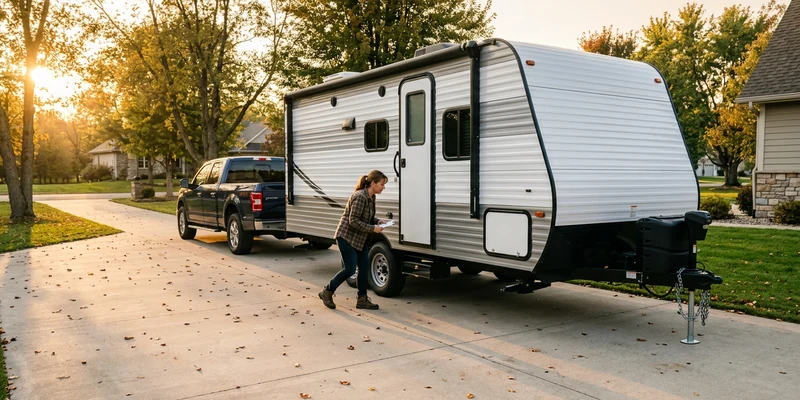
Everything that matters about how to prevent trailer sway happens in your driveway, not on the interstate. A rig that is loaded nose heavy, hitched level, running correct tire pressures, and comfortably inside its weight ratings simply does not start oscillating under normal highway disturbances. A rig that is packed for convenience will, and no amount of careful driving changes that.
So this is the departure day article rather than the emergency one. It covers the loading order that puts weight where it belongs, how to verify tongue weight instead of eyeballing it, the hitch and tire checks that take five minutes, and how to plan a travel day around wind and grades. If sway is happening to you right now, read how to stop trailer sway while towing first and come back to this afterward.
This article contains affiliate links. If you buy through them, we may earn a commission at no extra cost to you. Learn more.
Quick Answer
How do you prevent trailer sway before you leave?
- Load heavy items low and ahead of the axles so tongue weight lands in the range commonly cited as roughly 10 to 15 percent of the loaded trailer weight.
- Confirm the loaded rig is inside every rating on the tow vehicle door jamb label and the trailer weight label, ideally with a scale ticket rather than an estimate.
- Hitch level, set trailer tire pressures cold to the trailer’s label, and use a weight distribution hitch with sway control if your trailer is long or your tow vehicle squats.
The Pre Departure Stability Checklist
Run this list the evening before a trip, not while the engine is idling and everyone is waiting. The first four items prevent most sway; the rest close the remaining gaps.
| Check | Why it matters for sway | What good looks like |
|---|---|---|
| Heavy cargo position | Weight behind the axles turns the trailer into a pendulum | Dense items low and forward of the axle centerline, strapped down |
| Tongue weight | Too little is the leading cause of sway | Commonly cited as roughly 10 to 15 percent of loaded trailer weight |
| Weight ratings | Overloaded rigs cannot be made stable with hardware | Inside GVWR, axle ratings, and payload on both labels |
| Rig stance | A squatting tow vehicle unloads its front axle | Trailer level or slightly nose down, vehicle sitting close to normal |
| Trailer tire pressure | Soft tires flex and delay the trailer’s response | Cold pressures set to the trailer’s tire and loading label |
| Tire age and condition | Aged trailer tires fail without warning | No cracking, even wear, date code within the interval you accept |
| Hitch and sway control | Loose or wrongly set hardware does nothing | Coupler latched and pinned, spring bars on the right setting, friction bar tight |
| Brake controller | Gain set correctly gives you the manual lever option | Firm, straight stop from low speed with trailer brakes only |
| Route and weather | Crosswind and grades are the usual triggers | Wind forecast checked, alternative day or route considered |
Load the Trailer in the Right Order
Packing order is the highest value habit in towing, and the rule is simple: the heaviest things go low and ahead of the axles, the light and bulky things go behind. Weight ahead of the axles becomes tongue weight, which is what keeps the trailer tracking straight behind the ball.
In practice that means tool boxes, generators, batteries, firewood, canned food, and water jugs live in the front third of the trailer or in the front pass through storage. Bedding, camp chairs, and empty totes can go rearward. Onboard tanks count too: a full fresh tank ahead of the axles adds useful tongue weight, while full gray and black tanks behind them do the opposite, which is why many owners travel with waste tanks empty.
Secure Everything That Can Move
A cargo load that slides rearward on the first hard stop undoes your loading plan while you are driving. Straps, cargo bars, and a full pantry that cannot shift keep the balance you set at home. The same applies to anything on a rear bumper rack, which is the highest leverage position on the entire trailer.
Verify Tongue Weight Instead of Guessing
Brochure tongue weight is a dry number measured before water, batteries, propane, and gear, so it tells you very little about the trailer you are actually towing. The number that matters is the loaded one, and the only way to know it is to measure.
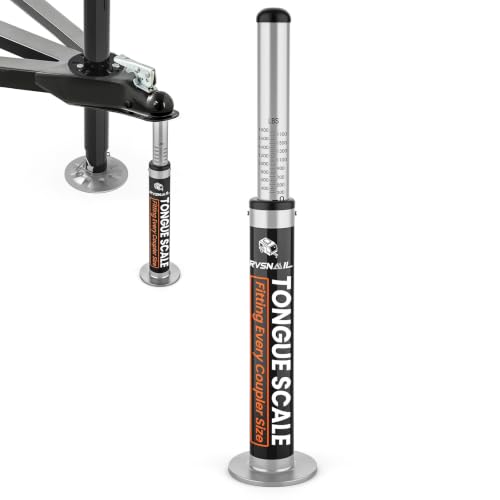
A public truck scale gives you the complete picture: gross combined weight, the weight on each vehicle axle, and the trailer axle weight, which is enough to work back to tongue weight and to confirm you are inside every rating. A dedicated tongue weight scale placed under the coupler does the same job in the driveway for lighter trailers. Our walkthrough on how to calculate RV tongue weight at home covers both methods, and RV weight ratings explained untangles which label limit each measurement belongs to.
For owners who reload the trailer differently each trip, a tongue weight scale takes the guesswork out of the driveway check.
Set the Hitch Up Once, Properly
A weight distribution hitch does two things that matter for sway: it transfers part of the tongue load onto the tow vehicle front axle and the trailer axles, and in most designs it adds cam or friction based sway resistance. Set up correctly, the tow vehicle sits close to its unhitched ride height and the trailer runs level or slightly nose down.
Setup is a measuring job, not a feel job. Measure the tow vehicle’s front and rear fender heights unhitched, then hitch up and adjust ball height, head tilt, and spring bar tension until the front fender height is back near where it started. Spring bars should be rated for your actual loaded tongue weight rather than a much larger or smaller figure, since an over rated bar rides harshly and an under rated one does not restore enough load. Our guide to weight distribution hitches with sway control covers matching the rating, and installing a trailer sway bar walks through the add on friction type.

Tires: The Quiet Half of Stability
Trailer tires do more for stability than most owners expect. Underinflated tires flex and delay the trailer’s reaction to every input, and mixing tire types or sizes across axles produces uneven cornering behavior. Set pressures cold, before driving, to the number on the trailer’s tire and loading label, and check them every travel morning rather than once a season.
Age matters as much as tread. Trailer tires often age out before they wear out, and a failure at highway speed is one of the fastest ways to lose control of a rig. A tire pressure monitoring system watches pressure and temperature on every wheel while you drive, which catches a slow leak or a dragging brake long before it becomes an event; see also how to prevent RV tire blowouts and our comparison of wireless TPMS systems for RVs.

Plan the Travel Day Around the Triggers
Crosswind, passing trucks, and long downgrades are the disturbances that expose a marginal setup. You cannot remove them, but you can choose when you meet them. Checking a wind forecast along the route is a habit worth building, and a sustained crosswind advisory is a legitimate reason to move a travel day or take a sheltered route.
Speed is the other lever. Many towers settle on a self imposed limit under the posted speed, which also respects the speed rating on trailer tires. Add following distance, back off before a semi passes rather than during, and select a lower gear at the top of a grade instead of managing runaway speed with the brakes. Our article on trailer sway at highway speed explains why a few miles per hour changes so much.
Where Prevention Stops and a Shop Starts
Prevention assumes the trailer is mechanically sound. It is not a home job if you find a cracked or bent A frame, elongated bolt holes at the hitch or coupler, a shifted axle, broken leaf springs or equalizers, or wheel bearings with noticeable play. Those go to a qualified trailer shop before the next trip, not into a checklist.
The same applies to the weight side. If the loaded rig exceeds any rating on the tow vehicle door jamb label or the trailer weight label, the fix is less cargo or a different tow vehicle. Hitch hardware is designed to work within those limits, never to extend them.
Common Mistakes to Avoid
- Loading by convenience. Whatever is easiest to reach ends up near the door. If that is behind the axles, stability pays for it.
- Trusting dry weights. Water, batteries, propane, and gear can change tongue weight substantially compared to the brochure.
- Setting the hitch by eye. Fender height measurements before and after hitching are what tell you the distribution is right.
- Traveling with full waste tanks. Those tanks usually sit behind the axles, which is the wrong end for stability.
- Checking tire pressure warm. Cold pressure to the trailer label is the standard; a hot roadside reading misleads you.
- Buying hardware first. Sway control on an unbalanced trailer raises the threshold slightly and hides the real problem.
Frequently Asked Questions
What tongue weight prevents trailer sway? For conventional bumper pull trailers, tongue weight in the range commonly cited as roughly 10 to 15 percent of the loaded trailer weight is the usual target. Confirm the loaded figure with a scale and keep the result inside your hitch and vehicle ratings.
Do I need a weight distribution hitch to prevent sway? Not always. Short, light trailers behind a heavy tow vehicle can be stable without one. Longer travel trailers, or any setup where the tow vehicle squats noticeably, benefit clearly, and many trailer and vehicle manufacturers require one above a stated trailer weight.
Does traveling with a full fresh water tank help? It depends where the tank sits. Ahead of the axles it adds tongue weight and can help; behind the axles it reduces tongue weight and makes things worse. Check your trailer’s layout before deciding.
How often should I check trailer tire pressure? Cold, before every travel day, against the trailer’s tire and loading label. A monitoring system does the watching for you once you are rolling.
Can a light trailer still sway? Yes, and it often sways more easily, because a light box with very little tongue weight has less resistance to yaw. See why a trailer sways when empty.
The Bottom Line
Sway prevention is a driveway job: heavy cargo low and ahead of the axles, tongue weight verified rather than guessed, every number inside the ratings on your vehicle and trailer labels, and cold tire pressures set to the trailer’s own label. Add a properly set up weight distribution hitch with sway control on longer trailers, then plan the travel day around wind, grades, and a speed you are comfortable holding.
Open the pre departure checklist