
Last updated: August 14, 2026
Owners describing trailer sway at 60 mph almost always tell the same story: everything was fine on back roads and around town, then the rig found a speed where it suddenly started hunting. That threshold is real. Speed does not create sway on its own, it decides whether the small disturbance you just drove through fades away or feeds itself.
Every trailer setup has a speed below which oscillations damp out and above which they grow. Where that line sits depends on tongue weight, load balance, trailer length, tow vehicle mass and wheelbase, tire condition, and whether sway control is fitted. Finding the line by driving faster is the wrong experiment. The useful response is to back off, understand what changed, and move the line by fixing the setup rather than by adapting your nerves.
This article contains affiliate links. If you buy through them, we may earn a commission at no extra cost to you. Learn more.
Quick Answer
Why does trailer sway appear only at highway speed?
- Above a certain speed, a disturbance puts more energy into the trailer than the setup can damp out, so each swing grows instead of fading.
- Aerodynamic loads from wind and passing trucks climb steeply with speed, so the same gust is a much bigger shove at highway pace.
- If sway shows up at a given speed, treat it as the setup’s limit. Slow down now, then fix load balance, tongue weight, tires, and hitch before the next trip.
What Changes as Speed Rises
The rig does not become a different machine at highway speed; several effects simply grow at once. This table lines them up so you can see why the change often feels sudden.
| Factor | What happens as speed rises | What it means for you |
|---|---|---|
| Damping margin | The setup’s ability to absorb a yaw disturbance falls away | There is a threshold speed where swings stop fading and start growing |
| Aerodynamic force | Wind and bow wave loads climb steeply with speed | The same crosswind is a far bigger shove at highway pace |
| Reaction time | Each oscillation cycle happens faster | Driver correction arrives late and tends to make it worse |
| Tire heat | Casing temperature builds with speed, load, and low pressure | Respect the trailer tire speed rating and set cold pressures |
| Grades | Gravity adds speed you did not select | Gear down early rather than braking a rig that is speeding up |
| Passing traffic | The push and pull of a semi arrives and leaves faster | Ease off before the pass, hold the wheel steady through it |
| Load imbalance | A tail heavy trailer’s threshold sits lower | Fix the load and the safe speed range widens |
The Threshold Effect Explained
Think of the trailer as a mass on a pivot that gets shoved sideways now and then. Two things push back: the cornering force of the trailer tires, and the resistance of the tow vehicle and hitch. Together they either bleed energy out of the motion or fail to.
At low speed the tires do that work easily, and a shove produces one lazy swing that disappears. As speed rises, the same shove produces a faster yaw motion, the tires spend longer catching up, and less energy is removed per cycle. Cross the point where energy removed is smaller than energy added and the motion becomes divergent, meaning each swing is bigger than the last. That is why owners describe a specific speed rather than a gradual worsening, and why many first notice it somewhere in the range of roughly 55 to 65 mph.
Why the Threshold Moves
The threshold is not a property of the trailer alone, it is a property of the whole combination on that day. Move tongue weight up into the range commonly cited as roughly 10 to 15 percent of the loaded trailer weight and the threshold rises. Load the rear bumper rack with bikes and it drops.
Other levers work the same way. A longer wheelbase and heavier tow vehicle resist yaw better than a short wheelbase SUV with the same tow rating. Properly inflated trailer tires respond faster than soft ones. A weight distribution hitch that keeps load on the tow vehicle front axle preserves the steering authority that resists the trailer’s push, and cam or friction sway control adds damping directly. Our hub on what causes trailer sway ranks these factors by how often each turns out to be the real problem.
Crosswind, Semis, and Grades
Aerodynamic loads rise steeply with speed, which is why the crosswind that was a nuisance at 50 feels like a shove at 65. A tall travel trailer has a large side area and its center of pressure often sits behind the axles, so a gust does not just push the trailer sideways, it rotates it.
Passing trucks add a two stage disturbance: the bow wave pushes your rig away as the tractor arrives, then the low pressure region pulls it back as the trailer passes. Both events arrive faster the faster you travel. Downgrades combine the worst of everything, adding unplanned speed exactly where a driver is least willing to lift. The practical answers are the same three: lower speed, more following distance, and a lower gear chosen at the top of the hill rather than halfway down.
Tires and Heat at Sustained Speed
Highway speed is also where trailer tires work hardest. Heat builds with speed, load, and underinflation, and trailer tires carry their own speed rating, which is often lower than drivers assume and is listed on the sidewall or in the tire manufacturer’s data. Running above it, or running underinflated at sustained speed, is how a tire failure becomes the disturbance that starts an unrecoverable event.
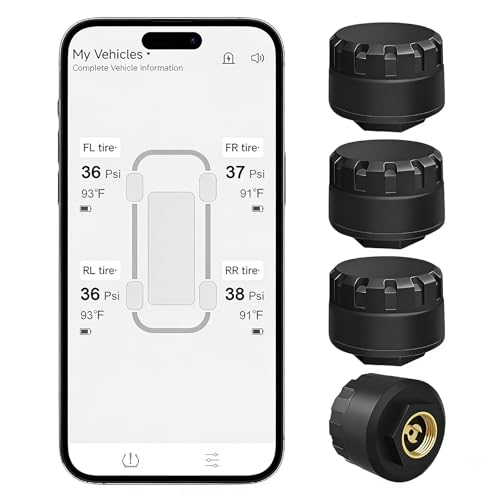
Set cold pressures to the trailer’s tire and loading label before every travel day, and use a monitoring system if you cover long distances. Pressure and temperature alerts give you warning of a slow leak or a dragging brake while it is still just a warning; see how to prevent RV tire blowouts and our roundup of wireless TPMS systems for RVs.
What to Do When It Starts at Speed
The response is the same at any speed, and it is worth rehearsing so it happens without deliberation. Ease off the throttle smoothly, keep both hands on the wheel and hold it straight, and stay off the foot brake while the trailer is swinging. If your brake controller has a manual lever, a light, steady application of trailer brakes only helps pull the rig straight.
Once it settles, do not simply resume your previous speed. Drive at a clearly lower speed to a safe pullout, then inspect the load, the hitch, the coupler, and the tires. Whatever speed the sway appeared at is the setup’s limit for that day, and the rest of the drive belongs well below it. The full sequence is in how to stop trailer sway while towing.
Raising the Threshold Properly
Once you are home, the goal is to move the speed at which the rig becomes nervous well above the speed you actually travel. Load balance comes first, because it is free and it has the largest effect: dense cargo low and ahead of the axles, nothing heavy on the rear bumper, waste tanks empty for travel days.
Then verify rather than assume. A pass across a public scale tells you the loaded trailer weight, the axle weights, and whether you are inside every rating on the tow vehicle door jamb label and the trailer weight label. Those labels are the ceiling, and no hitch component extends them. On a balanced, legal rig, a weight distribution hitch with integrated sway control is the hardware that adds the most margin, and matching spring bar rating to your real loaded tongue weight matters more than brand; see weight distribution hitches with sway control and our explainer on how a trailer sway bar actually works.

When Speed Is Not the Real Story
If a rig that was stable at highway speed for years suddenly is not, look for a change rather than a threshold. New cargo arrangement, a different tow vehicle, replacement tires of another type, or a suspension or axle problem are the usual explanations.
Have a qualified trailer shop inspect the rig before the next trip if you find a cracked or bent A frame, a shifted axle, broken leaf springs or equalizers, worn shackle bushings, wheel bearing play, or elongated holes at the hitch or coupler. Those faults let the trailer move in ways no driving technique compensates for, and they do not improve with a slower cruising speed.
Common Mistakes to Avoid
- Testing where the sway starts. Deliberately approaching the threshold to see what happens is the one experiment not worth running.
- Treating a lower speed as the fix. It is the immediate answer, not the repair. The setup still needs work.
- Forgetting the trailer tire speed rating. It is often lower than the highway limit and it is not advisory.
- Managing a downgrade with the brakes. Gear down early, before speed builds.
- Blaming the wind every time. Wind exposes a marginal setup; a balanced rig rides out the same gust.
- Buying hardware before weighing the rig. A scale ticket tells you whether the problem is balance or overload.
Frequently Asked Questions
Why does my trailer only sway at 60 mph? Because that is roughly where your setup’s damping runs out. Below it, disturbances fade; above it, they grow. The threshold depends on load balance, tongue weight, tow vehicle, tires, and sway control, so it is a property of the combination rather than the trailer alone.
What speed should I tow at? A speed comfortably below where your rig starts feeling nervous, and never above the speed rating of the trailer tires. Many towers choose a self imposed limit under the posted highway speed, especially in wind or on grades.
Does a weight distribution hitch raise the sway threshold? Usually yes, by restoring load to the tow vehicle front axle and, in cam or friction equipped designs, by adding damping. It cannot compensate for cargo loaded behind the axles or for exceeding your weight ratings.
Is it safe to keep driving after sway at speed? Only at a clearly reduced speed and only to the next safe stop, where you inspect load, hitch, and tires. Repeating the conditions that caused it is not a plan.
Do longer trailers sway at lower speeds? Length alone is not the whole story, but long trailers have more side area and more mass behind the axles, so they are more sensitive to crosswind and to tail heavy loading. Balance and sway control matter more as length grows.
The Bottom Line
Highway speed does not cause sway, it removes the margin that was hiding a marginal setup. Every combination has a threshold where oscillations start growing instead of fading, and the honest response is to slow down immediately, then raise that threshold at home with proper load balance, verified tongue weight, correct cold tire pressures, and a weight distribution hitch with sway control. Stay inside every rating on the vehicle and trailer labels, and keep your travel speed under the trailer tire speed rating.