Last updated: August 14, 2026
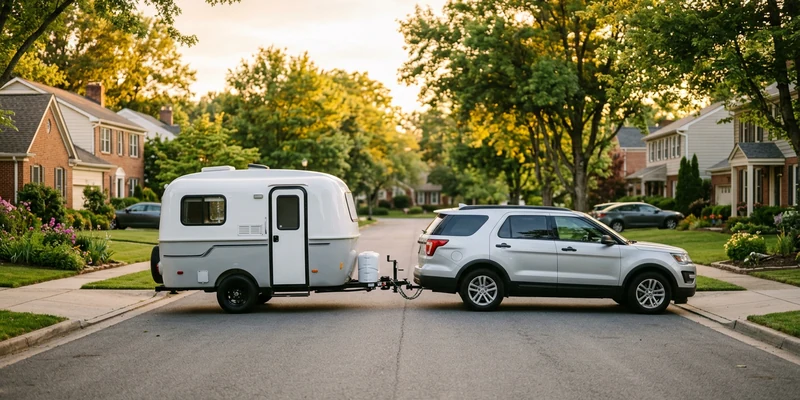
There is a persistent myth that a light trailer does not need a travel trailer sway bar, and anyone who has been pushed sideways by a passing semi in a small camper knows how wrong that is. Light trailers sway readily for a reason that has nothing to do with weight: they still have a large, flat side profile catching crosswind, and they are usually pulled by shorter wheelbase vehicles that have less leverage to resist the push. Less mass, less resistance, and a tow vehicle that reacts more, all at once.
What changes with a light trailer is not whether you need sway control, it is which hardware fits. Rated ranges matter more, because a bar built for a heavy fifth wheel is the wrong tool on a small single axle camper. Bracket clearance is tighter, because a compact A-frame is crowded with a propane tank and a battery box. And tongue weight, the number that does more than any accessory, is easier to get wrong on a small trailer where one loaded cooler shifts the balance. The picks below are sized and chosen with that in mind.
This article contains affiliate links. If you buy through them, we may earn a commission at no extra cost to you. Learn more.
Quick Answer
Which sway bar suits a light travel trailer?
- For most small single axle campers, one friction sway control kit rated for your trailer’s weight range is enough, and it installs in an afternoon.
- If the tow vehicle is a midsize SUV that squats when hitched, look at a lighter duty weight distribution hitch with sway control instead of adding friction.
- Check tongue weight before buying anything, since light trailers are easy to load nose light, and that is the fastest route to sway no bar can fix.
What to Check Before You Buy for a Light Trailer
Five checks decide whether a kit will suit a small camper. Two of them are about the trailer, two are about the tow vehicle, and one is about how you pack, which is the one most people skip.
| What to check | Why it matters on a light trailer | What to look for |
|---|---|---|
| Rated weight window | Oversized hardware is stiff and undersized hardware is not rated | A kit whose published trailer and tongue weight range brackets your actual numbers |
| A-frame clearance | Compact A-frames are crowded with tanks, batteries, and the jack | Measured space for the bracket, plus the maker’s clearance dimensions |
| Tow vehicle wheelbase | Short wheelbase vehicles react more to a trailer’s push | Sway control that stays connected, plus honest expectations about speed |
| Squat when hitched | A light trailer can still overload a small SUV’s rear | Weight distribution if the stance drops, friction alone if it does not |
| Tongue weight percentage | Small trailers go nose light easily, and nose light equals sway | A measured tongue weight, not an estimate from how it looks |
That last row is the one worth a Saturday morning. Our guide to tongue weight and sway explains why it dominates every other variable, and calculating tongue weight at home covers how to actually measure it.
Why Small Trailers Sway More Than Owners Expect
Sway is an oscillation, and light trailers are easy to set oscillating. A gust or the pressure wave off a passing truck pushes the trailer’s flat side, the trailer pivots at the coupler, the tow vehicle answers, and if nothing damps that exchange it grows instead of settling. Mass helps damp it, and a small camper does not have much.
The tow vehicle matters just as much. A short wheelbase means the trailer’s push acts on a shorter lever, so the same nudge moves the back of the vehicle further. That is why the same small camper can feel planted behind a full size truck and nervous behind a compact SUV, with nothing changed on the trailer at all. Sway control hardware narrows that gap, but it does not erase the geometry.
The empty trailer trap
Light trailers often sway worst when they are barely loaded, which surprises people who assume less weight means less trouble. An empty trailer has minimal tongue weight and nothing holding the nose down, so the balance point sits too far back. We unpack that specific case in why a trailer sways when empty, and the short version is to load heavy items ahead of the axles rather than behind them.
Our Top Picks for Light Travel Trailers
How we chose: we compared widely available sway control hardware on published weight ranges suited to smaller campers, bracket clearance requirements, install complexity for a first time owner, and the themes that repeat in owner feedback. Our assessment rests on manufacturer information and that feedback rather than any hands on trial of our own.
🏆 Best Overall
A single friction sway control kit rated for the lighter end of the range is the sensible default for a small single axle camper. One bar, one A-frame bracket, one sway control ball, and hand adjustable tension you can back off when the trailer is empty. Measure your A-frame clearance before ordering, since compact frames leave less room than the instructions assume, then follow our sway bar install walkthrough for bracket placement.

💰 Best Budget Pick
The same concept from another established towing brand, and for a modest camper that only feels unsettled on windy interstates, it does the job. Owners commonly report that the differences between basic friction kits show up in finish and in how smoothly the tension adjuster works after a couple of seasons rather than in sway resistance itself. Confirm the kit includes the sway control ball, because that varies by part number.
⚖️ Best When the SUV Squats
If the back of the tow vehicle drops when you hitch up, friction is the wrong tool and a lighter duty weight distribution hitch with sway control is the right one. Systems that avoid chains and heavy greased bars are noticeably easier to live with on a small rig, and they restore front axle load so the steering stops feeling light. See our full comparison of weight distribution hitches with sway control.

Matching Hardware to Your Tow Vehicle
The tow vehicle usually decides more than the trailer does at this weight. Use this to work out which half of the picks above applies to you.
| Tow vehicle | What typically happens | What usually suits it |
|---|---|---|
| Compact or midsize SUV | Short wheelbase, reacts quickly, may squat | Weight distribution with sway control, or friction plus careful loading |
| Half ton truck | Level stance, plenty of wheelbase | A single friction bar is usually enough |
| Minivan or crossover | Low payload margin, sensitive to tongue weight | Check payload first, then lighter duty weight distribution |
| Full size SUV | Stable, but a tall trailer still catches wind | Friction bar, sized to the trailer’s rated window |
Whatever the vehicle, the placard on the door jamb and the label on the hitch receiver are the limits, and no accessory changes them. If those numbers are new to you, RV weight ratings explained translates them into plain language.
One More Item Worth Owning
The three picks above cover the hardware. This is the tool that tells you whether you needed hardware in the first place, and on a light trailer it is unusually worth having.
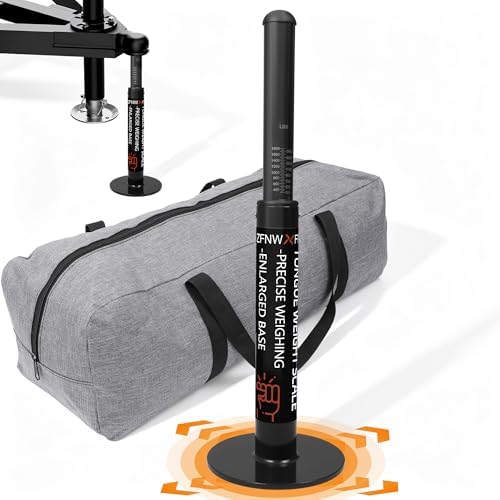
⚖️ The Sizing Insurance
A trailer tongue weight scale turns the most important number in towing from a guess into a measurement. On a small camper, moving a couple of loaded bins from behind the axle to ahead of it can change tongue weight enough to alter how the rig behaves, and without a scale you are guessing at that. Owners who buy one usually report that it changed how they pack more than what they bought.
Getting the Most From a Light Setup
Hardware is the last step in a short list, and the earlier steps are free. Do them first and you may find the bar has very little work left to do.
Load heavy items low and ahead of the axles, aim for a tongue weight in the commonly recommended range for your trailer, and set tire pressures on both trailer and tow vehicle to the placard values while the tires are cold. Then set friction tension to the manufacturer specification and increase only until highway sway settles. Recheck the hardware with a torque wrench after the first short drive, because fresh fasteners settle.
Speed is a setting too
Sway grows with speed, and light trailers reach their comfortable ceiling sooner than heavy ones. Owners of small campers frequently report that the difference between a relaxed drive and a tense one is a few miles per hour rather than a piece of hardware. Our article on trailer sway at highway speed covers what changes as the number climbs, and why the tail wind of a passing truck matters more than a headwind.
Common Mistakes to Avoid
- Assuming light means safe. A small trailer behind a short wheelbase vehicle can sway more than a big one behind a truck.
- Buying oversized hardware. A bar rated far above your trailer’s window is stiff and awkward, and the rating is not a bonus.
- Loading the back first. Bikes, generators, and coolers behind the axle pull tongue weight down and set up sway.
- Never measuring tongue weight. On a light trailer the percentage shifts easily, and eyeballing it is not measurement.
- Skipping the A-frame measurement. Compact frames often have the battery box exactly where the bracket wants to go.
- Ignoring the wet weather instruction. Most friction sway makers ask you to release tension in rain, ice, and snow. Follow the manual for your kit.
Where to Go From Here
If the sway is new rather than constant, something changed, and finding out what beats buying hardware. Start with what causes trailer sway, then work through how to prevent it before you leave, which is a pre departure routine rather than a shopping list.
If you are comparing across the whole category rather than just light trailers, our broader roundup of trailer sway bars and control kits includes the heavier duty options and the integrated systems in more detail.
Frequently Asked Questions
Does a small travel trailer need a sway bar? Not always, but many owners of small campers find one useful, especially behind short wheelbase vehicles or on windy interstates. Trailer length and side profile matter more than weight alone.
One bar or two on a light trailer? One is normally enough for a small single axle camper. Dual bars belong on longer and heavier trailers, and only where the hitch maker permits a second bracket.
Do I need weight distribution on a light trailer? Only if the tow vehicle squats when hitched or the maker requires it. If the stance stays level, a friction bar addresses sway without the extra setup.
What tongue weight should a travel trailer have? Trailer and hitch makers publish a recommended percentage of loaded trailer weight, commonly cited in the low teens. Measure yours rather than estimating, as covered in calculating tongue weight at home.
Will a sway bar make my SUV tow more? No. Tow rating, payload, and hitch rating come from the vehicle and hitch labels, and no accessory raises them. Sway control changes stability, not capacity.
Can I leave the friction bar connected all the time? Follow your manual. Most makers ask for tension to be released in wet or icy conditions and for the bar to be disconnected before sharp backing maneuvers.
The Bottom Line
Light trailers sway because of side profile and tow vehicle geometry, not because something is broken, so size the hardware to your trailer’s published weight window rather than buying big. One friction sway control kit suits most small single axle campers, and a lighter duty weight distribution hitch with sway control is the answer when the tow vehicle squats. Measure tongue weight and fix the loading first, because that single number does more than any bar on the shelf.