Last updated: August 14, 2026
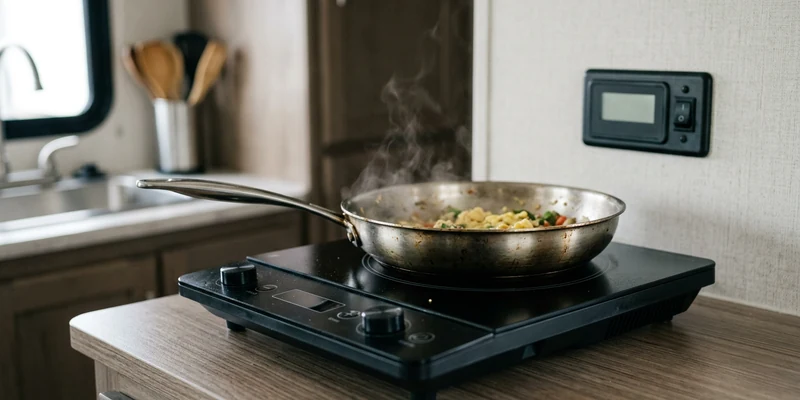
Going electric on an RV stove is appealing for reasons that have nothing to do with cooking. No open flame, no combustion moisture fogging the windows, no propane bottle to run out halfway through dinner, and a glass surface that wipes clean in one pass. Induction in particular boils water faster than most RV gas burners and stops instantly when you lift the pan.
The part nobody puts on the box is what it does to your electrical system. A single induction burner is one of the largest loads in the rig, comparable to running an air conditioner, and it lands on a thirty amp pedestal or on an inverter and battery bank that were never sized for it. That does not make electric cooking a bad idea. It makes it a decision you take with your eyes open, and this guide is about doing exactly that.
This article contains affiliate links. If you buy through them, we may earn a commission at no extra cost to you. Learn more.
Quick Answer
Should you cook electric in an RV, and with what?
- For most owners, a portable single burner induction cooktop is the right first step. It costs little, needs no installation, stows away, and tells you honestly whether your power situation can carry electric cooking.
- A built in electric or induction cooktop suits rigs that live on shore power or carry a serious lithium and inverter setup. On thirty amp service it will compete with the air conditioner and the water heater for the same amps.
- Induction only works with magnetic cookware, so budget for pans as part of the switch, and keep the propane cooktop if you boondock.
What to Check Before You Buy
Seven points decide whether electric cooking works in your rig. The first three are about power, and they are the ones that decide whether the appliance is a pleasure or a permanent argument with the breaker.
| What to check | Why it matters | What to look for |
|---|---|---|
| Your shore power service | Thirty amp service is a single limited budget that everything shares | Roughly 3,600 watts total on thirty amp, so a big burner takes a large slice |
| Burner wattage | The number that decides both cooking speed and whether the breaker holds | Portable units commonly run from around 1,200 up to about 1,800 watts |
| Inverter capacity | Off grid cooking runs through the inverter, not around it | Pure sine, comfortably rated above the burner’s draw, with cable sized to match |
| Battery bank | An 1,800 watt burner pulls a very large current at 12 volts | Lithium with a high continuous discharge rating, not a pair of tired lead acid batteries |
| Cookware | Induction ignores anything not magnetic | Test your pans with a fridge magnet before you buy the cooktop |
| Counter or cutout | Portable sits on the counter, built in needs the hole and the wiring | Measure the cutout for built in units, and the stow space for portable ones |
| Ventilation | Electric produces no combustion gases but plenty of steam | A working range hood still matters, especially in a small rig in cold weather |
If you are not sure what your rig can carry, that question is worth answering before the appliance question. Thirty amp versus fifty amp RV service explained covers the budget you are working inside, and it is the reason so many electric cooking experiments end at a tripped pedestal breaker.
The Honest Power Math
An induction burner running at full output draws roughly twelve to fifteen amps at 120 volts, which on a thirty amp hookup is between a third and a half of everything you have. Add an air conditioner, a water heater on its electric element, and a converter charging the batteries, and you are at the limit before anyone opens the fridge. This is not a fault in the appliance, it is arithmetic, and it is why RV breakers trip at campground pedestals more often for people who cook electric.
Off grid the math is harsher. Delivering 1,800 watts through an inverter means pulling something in the region of 150 amps or more from a 12 volt battery bank once you allow for conversion losses. Lithium banks with a high continuous discharge rating handle that. A pair of aging lead acid batteries will sag, the inverter will complain, and you will have spent a meaningful slice of your usable capacity on one pot of pasta.
What to do about it instead of ignoring it
Cook one burner at a time and turn the water heater’s electric element off while you do it. Use the induction burner’s power levels rather than leaving it wide open, since most cooking below a rolling boil needs far less than maximum. If you plan to cook electric off grid regularly, the honest answer is that the inverter and battery bank are the purchase, not the cooktop, and choosing an RV inverter is where that conversation starts.
Our Top Picks at a Glance
How we chose: we compared widely available electric and induction cooking options on wattage and power level control, footprint, build quality, safety cutoffs, and the complaints and compliments that repeat across owner feedback. Our assessment is based on published specifications and that feedback rather than any trial of our own. Nearly everyone should start with the first pick before committing to anything built in.
🏆 Best Overall
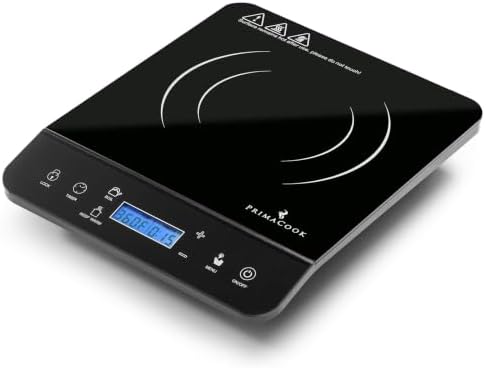
A portable single burner induction cooktop with clearly stepped power levels, a timer, and a slim body that stows in a cabinet. It costs a fraction of a built in unit, needs no installation, and it is the honest test of whether your power setup supports electric cooking. Pick one with real power steps rather than a vague dial, since low and steady is what makes induction pleasant rather than frantic.
🍳 Best for Cooking Real Meals
A portable double burner induction cooktop, for owners on full hookups who want a sauce and a pan going at once. Check the combined draw carefully, because many double units cannot run both zones at full power at once and will share the available wattage. That is sensible design rather than a defect, but it changes how you cook on it.

🔌 Best Built In Option
A drop in electric or induction RV cooktop for rigs that live on shore power or carry a large lithium and inverter system, replacing the propane unit in the countertop. It looks like part of the kitchen instead of an appliance on the counter, and the flat glass wipes clean. Confirm the cutout against your own measurement, and understand that the 120 volt circuit it needs is not a job you wire yourself.

Induction or Radiant Electric?
Induction heats the pan directly through a magnetic field, so the glass stays comparatively cool, the response is immediate, and efficiency is high. Radiant electric heats an element under the glass, so it is slower to respond, keeps radiating after you turn it down, and works with any flat bottomed pan you own.
In an RV, induction wins on almost every count. Less waste heat in a small space in summer, faster boil for the same amps, and a surface that does not stay dangerously hot afterward. Its one real cost is cookware, because anything that does not grab a fridge magnet will not work, and that includes most aluminum and a lot of stainless.
Where radiant still makes sense
If your pans are a mixed collection you are not willing to replace, or you use a stovetop kettle and a moka pot you are attached to, radiant electric avoids that whole problem. It is also usually cheaper. Just remember that the glass stays hot for a long time after you switch it off, which matters more in an RV where the galley is also the walkway.
Two Things to Buy With It
One of these is not optional if you go induction, and the other decides whether the cooktop works at all when you are off the pedestal.
🧲 The Pans That Actually Work
An induction compatible cookware set with magnetic stainless or enameled cast iron bases, in sizes that suit a single burner rather than a home kitchen. Test what you already own with a fridge magnet first, since you may only need one or two pieces. Flat bases matter more on induction than on gas, because a warped pan sits badly on flat glass and heats unevenly.

⚡ The Part That Makes It Work Off Grid
A pure sine wave inverter rated comfortably above the burner’s draw, with cabling sized to the current and a battery bank that can supply it. Modified sine inverters and induction electronics are a poor match, and an undersized inverter will shut down mid meal rather than degrade gracefully. Size the whole chain, not just the box.

Where the Job Stops Being Yours
A portable cooktop that plugs into an existing outlet is owner territory, provided the outlet and its circuit are in good condition and you are not running it through a thin extension cord. A built in unit is different. Any new 120 volt circuit, any breaker work, and any change to the rig’s distribution panel is work for a certified RV technician or a licensed electrician, and we do not publish do it yourself instructions for it.
If you are removing a propane cooktop to make room, the gas side is technician work too. The line has to be properly capped or removed and the system leak tested. Keep the carbon monoxide alarm in service regardless, because a furnace and water heater on propane still burn fuel inside your rig even when the cooking does not.
Stop and call someone if you notice this
Gas smell, a sounding carbon monoxide alarm, soot, or a yellow or floating flame on any propane appliance means the same thing: shut it off, close the bottle valve, ventilate, get everyone outside, and call a certified RV technician. On the electric side, a burner that trips a breaker repeatedly, an outlet or plug that is warm to the touch, or a scorched smell from the wiring means stop using it and have the circuit inspected rather than resetting and continuing.
Common Mistakes to Avoid
- Buying the biggest wattage available. More watts you cannot supply is not more cooking, it is more tripping.
- Assuming your pans will work. Induction needs magnetic bases. Check with a magnet before, not after.
- Running it through a light extension cord. A cooking load is a continuous heavy load, and thin cords get hot.
- Cooking electric while the water heater element is on. Two large loads on thirty amp service is the classic pedestal trip.
- Removing the propane stove before testing the idea. Spend a season with a portable unit before you commit the countertop.
- Sizing the inverter to the burner only. The battery bank and the cabling have to carry the current too, not just the inverter’s label.
Where to Go From Here
If the appeal of electric is mostly that your current stove annoys you, check whether it is fixable first. RV stove repair and what you can fix yourself covers the igniter, electrode, and grate level faults that account for most complaints, and they are far cheaper than rewiring a galley.
If you decide propane stays, propane RV stoves covers the standard drop in replacements and RV cooktops by burner count helps you weigh how much counter you are prepared to lose. If electric is going ahead off grid, read the inverter guide and running an air conditioner on batteries and solar together, because they describe the same power problem from two directions.
Frequently Asked Questions
Can I run an induction cooktop on thirty amp service? Usually yes, one burner at a time, as long as you manage the other loads. A burner drawing twelve to fifteen amps takes a large share of a thirty amp budget, so turn the water heater element off while you cook.
Can I run one off my batteries? Only with a pure sine inverter rated well above the burner and a battery bank capable of high continuous discharge. At 12 volts an 1,800 watt burner pulls in the region of 150 amps once losses are included.
Is induction better than propane in an RV? It is cleaner, cooler in summer, and adds no combustion moisture, which is a real benefit in a small space. Propane still wins on independence from hookups, which is why many owners keep both.
Will my existing pans work on induction? Only if they are magnetic. Hold a fridge magnet to the base, and if it does not stick firmly, the pan will not heat.
Do I still need a carbon monoxide alarm if I cook electric? Yes. As long as a furnace, water heater, or refrigerator burns propane in your rig, a working carbon monoxide alarm is essential, and it has an expiry date printed on the back.
Can I fit a built in electric cooktop myself? You can prepare the opening, but the 120 volt circuit and any panel or breaker work belongs to a certified RV technician or a licensed electrician, as does capping the propane line you are removing.
The Bottom Line
Electric cooking in an RV is genuinely pleasant and genuinely demanding of your electrical system, and both halves of that sentence matter. Start with a portable single burner induction unit, because it costs little and tells you the truth about your power situation before you commit the countertop. Move to a built in unit only if you live on shore power or have built a lithium and inverter system that can carry a cooking load. Budget for magnetic cookware, keep propane as the off grid backup, and leave the 120 volt wiring and the gas line capping to a certified technician.