Last updated: August 14, 2026
You can run an RV air conditioner on battery power, and the honest framing is that the inverter is rarely the hard part. The battery bank is. A rooftop unit is a continuous, heavy, hours long load, and the question is not whether an inverter can produce 120 volts, it is whether your batteries can supply that much energy for as long as you want to be comfortable.
Owners who succeed at this generally have four things: a soft start device on the air conditioner, an inverter with enough continuous capacity and surge headroom, a lithium bank measured in hundreds of amp hours, and realistic expectations about what solar contributes during the hottest part of the day. This guide works through each of those and explains where the setup stops making sense.
This article contains affiliate links. If you buy through them, we may earn a commission at no extra cost to you. Learn more.
Quick Answer
Can you run an RV air conditioner on batteries and solar?
- Yes, but it is a battery capacity project rather than an inverter purchase. A common rooftop unit draws somewhere in the region of 1,200 to 1,700 running watts, which is a large sustained load for any 12 volt bank.
- Plan on a soft start device, an inverter in the 3,000 watt class, and a lithium bank in the hundreds of amp hours. A single lead acid battery will not do this at all.
- Solar rarely keeps up in real time. It refills the bank between runs, but a typical RV roof array produces less than the air conditioner consumes while it is running.
What Each Goal Actually Requires
Before pricing anything, decide how long you want the air conditioner to run. The answer changes the system completely, and most disappointment comes from planning for the first row while hoping for the third.
| Your goal | What it takes | Realistic verdict |
|---|---|---|
| Cool the rig while driving, from the chassis | Engine alternator plus a modest bank, or the dash air | Straightforward, this is what the vehicle is designed for |
| An hour or two at a rest stop or a nap | Soft start, an inverter in the 2,000 to 3,000 watt class, roughly 200 amp hours of lithium | Achievable and the most common real world use |
| An afternoon in the heat, several hours | Soft start, 3,000 watt inverter, roughly 400 to 600 amp hours of lithium | Possible, and this is where the cost climbs sharply |
| Overnight, all night | A large lithium bank plus meaningful solar or a generator to recover | Only sensible for full timers who have built the system deliberately |
| Powered entirely by solar in real time | Far more roof area than most RVs have | Not realistic on a typical RV roof |
| Existing rig, single lead acid battery | Nothing you can add to the inverter will fix this | Not viable, start with the battery bank or use a generator |
Rows two and three are where most owners land. If you are shopping the inverter side first, our roundup of the best RV inverters covers the classes and waveforms.
The Numbers That Decide It
Two figures matter, and they are frequently confused. The running load is what the air conditioner draws once the compressor is up and turning, commonly in the region of 1,200 to 1,700 watts for a mid sized rooftop unit, more for larger ones. The startup surge is what it demands for a fraction of a second as the compressor breaks away, and that can be several times the running figure.
Now translate to the battery. At 12 volts, roughly every 1,000 watts of inverter output pulls somewhere around 85 to 100 amps out of the bank once you allow for conversion losses. A 1,500 watt air conditioner therefore asks the bank for something in the region of 130 to 150 amps continuously while it runs, and that is before the fridge, the fans, and everything else. Against a 100 amp hour lithium battery, which can safely give up most of its rated capacity, that is well under an hour of runtime.
Why duty cycle helps
The saving grace is that an air conditioner does not run continuously once the space is cool. On a moderate day in a shaded, well insulated rig, the compressor cycles, and average consumption over an hour can be meaningfully below the running figure. On a hot afternoon in full sun with thin RV insulation, it runs close to constantly, and the optimistic estimate collapses. Plan for the hot day, not the pleasant one.
Start With a Soft Start Device
A soft start module wires into the air conditioner and ramps the compressor up instead of slamming it on, which cuts the startup surge dramatically. That single change is what allows a 3,000 watt inverter, or a small generator, to start a unit that would otherwise trip it instantly.
It is also the cheapest meaningful step in the whole project and the one owners consistently recommend first, because it helps on shore power and generator power too. A rig that trips a campground breaker on air conditioner startup often stops doing so afterward. It does not reduce the running load at all, so it is an enabler rather than an efficiency upgrade.

Installation involves the air conditioner’s own 120 volt wiring, and that is not a driveway job for most owners. Mounting and connection inside a rooftop unit should be done by a certified RV technician, both for safety and because the work happens on the roof around a live circuit.
Sizing the Inverter
For a single rooftop unit, the 3,000 watt class is the usual answer. That gives continuous capacity for the running load plus the other things that stay on, and enough surge headroom to handle startup once a soft start is fitted. Pure sine wave is not optional here, since compressor motors and the control board object to modified sine.
Two details matter more than the wattage number. The inverter must be mounted close to the battery bank with correctly sized cable, because at these currents every extra foot costs voltage and produces heat. And the positive cable needs a fuse sized to the cable, mounted close to the battery terminal, which is the most commonly skipped part of any inverter install. Our guide to wiring an RV inverter covers gauge and placement, and the class specific options are in our 2000 watt inverter comparison if your loads are smaller than an air conditioner.

The Battery Bank Is the Real Purchase
This is where the project lives or dies. Lead acid is effectively out, for two reasons: usable capacity is roughly half of the rated figure before you start damaging the battery, and high current draw reduces the delivered capacity further. A bank that looks adequate on paper delivers far less when asked for 150 amps.
Lithium iron phosphate changes both problems. Most of the rated capacity is usable, voltage stays flatter under heavy load, and the chemistry tolerates the current. That is why practically every rig running air conditioning off grid has a lithium bank, usually assembled from 100 amp hour batteries wired in parallel until the number is big enough. A meaningful afternoon of cooling generally starts in the 400 amp hour region, and full timers building for overnight go higher.
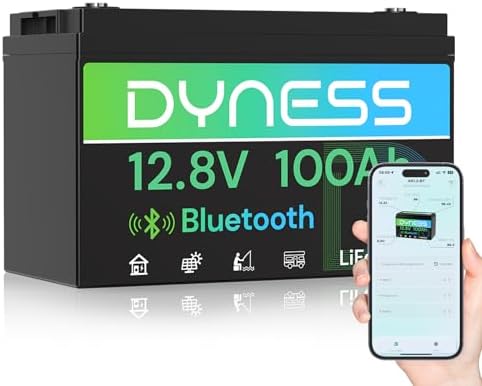
Converting the rig to lithium is a system change rather than a battery swap, because the converter’s charge profile, the cabling, and often the alternator charging path all need attention. The full walkthrough is in switching an RV to lithium batteries, and the charging side is covered in best RV converters for lithium batteries.
What Solar Realistically Contributes
Solar is the recovery system, not the power source. A well built RV roof array produces a few hundred watts to perhaps a bit over a kilowatt in ideal conditions, and only for part of the day. Against an air conditioner drawing well over a thousand watts continuously, the array slows the drain rather than covering it.
Where solar earns its place is between runs and overnight into the following morning, refilling what the afternoon took. That is genuinely valuable, since it is the difference between one hot afternoon of cooling and being able to do it again tomorrow without a generator. Size the array against your daily consumption rather than against the air conditioner’s instantaneous draw, which is exactly the calculation in how much solar an RV actually needs.
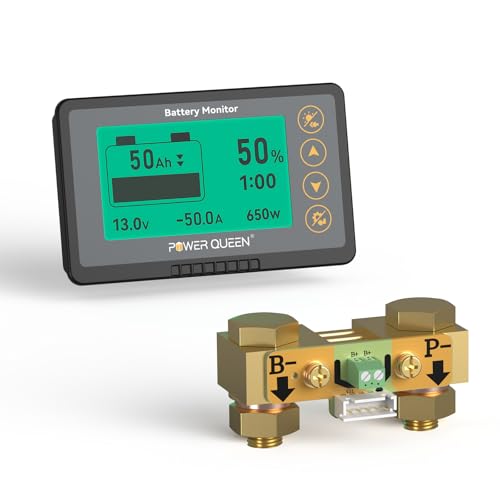
A battery monitor with a shunt is what turns all of this from theory into information. It shows current in, current out, and remaining capacity, so you know whether the bank has an hour left or three.
The Alternatives Worth Considering
Before committing to the full build, weigh the two cheaper routes. A quiet inverter generator will run a rooftop air conditioner all afternoon and costs a fraction of a large lithium bank, with the tradeoffs being noise, fuel, and the quiet hours rules at most campgrounds. Our comparison of RV inverter generators covers the quiet models.
The second route is not running the air conditioner at all. Shade, reflective window covers, roof vent fans, and camping at elevation solve a surprising amount of the problem for very little money, and they work when the batteries are empty. Our guide to keeping an RV cool in summer heat covers those, and upgrading the roof vents is often the highest value change per dollar in the whole category.
A safety note on generators
If a generator is part of the plan, keep its exhaust well away from windows, vents, and the area under the rig, and never run one in an enclosed space. Carbon monoxide has no smell and RV owners are injured by it every year. Keep a working carbon monoxide alarm inside the coach and replace it at the interval printed on the housing.
Where This Stops Being a DIY Job
The 12 volt side of this build is owner territory with the usual precautions: batteries disconnected while you work, correctly sized cable, a fuse close to the positive terminal, and no rings or watches. Mounting batteries, running DC cable, and fitting a battery monitor shunt are all normal driveway jobs.
The 120 volt side is not. Tying an inverter into the coach’s distribution panel, adding a subpanel or a transfer switch, and any wiring inside the rooftop air conditioner, including soft start installation, is work for a certified RV technician or a licensed electrician. Rooftop work also carries the ordinary risks of height and of walking on a roof that may not be rated for it. And if any component smells hot, discolors, or shows melted insulation under load, disconnect it and have it inspected rather than continuing.
Common Mistakes to Avoid
- Buying the inverter first. The inverter is the least limiting component. Size the battery bank before anything else.
- Expecting solar to run it live. A typical roof array produces less than the air conditioner consumes while running.
- Skipping the soft start. Without it, startup surge trips inverters and generators that could otherwise handle the running load.
- Using lead acid batteries. Usable capacity and high current behavior both work against you, and the bank ages fast under this kind of load.
- Undersizing the cable or leaving out the fuse. At these currents that is a fire risk rather than an inefficiency.
- Ignoring the cheap fixes. Shade, reflective covers, and a good roof vent fan reduce the load you are trying to power.
Frequently Asked Questions
How many batteries do I need to run an RV air conditioner? For a couple of hours, roughly 200 amp hours of lithium is a common starting point. For an afternoon, plan on 400 amp hours or more. Lead acid banks are not practical for this at any realistic size.
Will a 2000 watt inverter run a rooftop air conditioner? Sometimes, with a soft start fitted and a smaller unit, but it is tight. The 3,000 watt class is the safer answer once other loads are present.
Does a soft start reduce how much power the AC uses? No. It reduces the startup surge only. Running consumption stays the same, which is why the battery bank still decides your runtime.
Can solar panels alone run the air conditioner? Not on a typical RV roof. Solar recharges the bank between runs, which is valuable, but it does not cover the load in real time.
Is a generator cheaper than a battery bank? Usually by a wide margin, with noise, fuel, and campground quiet hours as the tradeoff. Our inverter generator guide covers the quieter models.
The Bottom Line
Running a rooftop air conditioner off grid is a battery project wearing an inverter’s clothes. Fit a soft start, use a 3,000 watt pure sine inverter, and build a lithium bank sized to how long you actually want to be cool, because a 1,500 watt load pulls something like 130 to 150 amps from a 12 volt bank the whole time it runs. Treat solar as the recovery system, and hand the 120 volt work, including the soft start install, to a certified RV technician.