Last updated: August 14, 2026
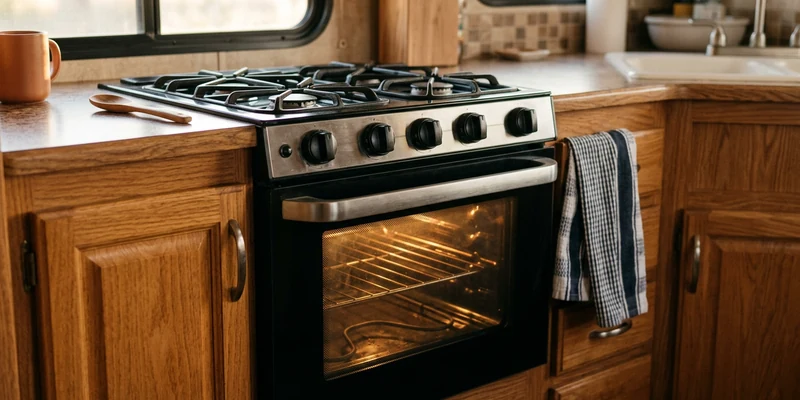
An RV stove and oven combo asks you two questions before it asks anything else. Will the unit physically fit the recess your old one came out of, and do you actually bake? Those two answers decide this purchase, and everything about finish, ignition, and burner layout is detail by comparison.
A combo unit is not a cooktop. It is a range that slides into a three dimensional opening in your cabinetry, so height and depth matter as much as width, and a unit that is an inch taller than the space simply does not go in. Plenty of owners also discover after the fact that the oven they paid for gets used twice a season while the storage drawer it replaced was used every day. This guide covers measuring the recess properly, judging whether the oven earns its space, and where the installation stops being a weekend job.
This article contains affiliate links. If you buy through them, we may earn a commission at no extra cost to you. Learn more.
Quick Answer
Which RV stove and oven combo should you buy?
- For most trailers, a three burner LP range with the oven underneath, from an established RV appliance brand, sized to the recess you measured rather than to the model you replaced.
- Measure three dimensions, not one: the width of the opening, the height of the recess, and the depth to the back wall including the gas connection.
- Be honest about the oven. If you bake a few times a year, a countertop appliance plus a cooktop and a drawer may serve you better than a full range.
What to Check Before You Buy
Seven points decide whether a range fits and whether you will be glad you bought it. The first three are measurements and they are non negotiable, because a range that does not go into the hole cannot be adapted the way a cooktop sometimes can.
| What to check | Why it matters | What to look for |
|---|---|---|
| Recess height | The dimension people forget, and the one that stops the job dead | Measure floor to underside of the counter, and compare to the unit’s overall height |
| Opening width | Decides which family of ranges is even a candidate | Compact units cluster around seventeen inches, full size around twenty one to twenty two |
| Depth to the back | The gas connection and any heat shield live behind the appliance | Measure to the back wall and note where the gas line comes in |
| Oven ignition | Changes what you do on a cold morning | A manual pilot to light per the manual, or electronic ignition that needs 12 volt power |
| Burner count on top | You are choosing a cooktop at the same time | Three is the common layout, two on compact units, four on wide ranges |
| Broiler drawer | Some ovens have one, some do not, and owners use it differently | Decide whether you want it or would rather have the storage |
| Door and handle projection | An open oven door in a narrow aisle is a real constraint | Check the aisle width and whether the door clears the opposite cabinet |
If your current oven simply will not heat, that is often a pilot, thermocouple, or igniter issue rather than a dead appliance. An RV oven that is not working covers what the symptoms mean before you spend anything on a replacement.
Measure the Recess, Not the Old Appliance
You want the width of the opening at its narrowest point, the height from the floor of the recess to the underside of the countertop, and the depth to the back wall. Write all three down and compare them to the overall dimensions of any candidate, not just to the cutout figure.
Height is where these projects fail. Cabinetry gets built around the appliance originally fitted, and a replacement an inch taller has nowhere to go. Trim, kick panels, and countertop overhangs all eat into what looks like plenty of room in a photograph.
Brands overlap but they do not standardize
Suburban, Atwood, Wedgewood, Furrion, Greystone, and Magic Chef have all built ranges in similar size families, which is why cross brand swaps happen all the time. It is also why they sometimes do not, because a half inch of extra height or a different flange design turns a swap into cabinetry work. Use a brand cross reference to build a shortlist, then confirm every dimension yourself. RV stove parts and what fits what explains how these families relate.
Our Top Picks at a Glance
How we chose: we compared widely available LP gas RV ranges on fitment dimensions, oven ignition type, burner layout, oven usability, and the complaints and compliments that repeat across owner feedback. Our assessment is based on published specifications and that feedback rather than any trial of our own. The first pick suits the largest share of trailers, and the other two exist for compact rigs and for owners who want a more modern look.
🏆 Best Overall
A full size three burner LP range with the oven underneath from an established RV appliance brand such as Suburban, in the roughly twenty one to twenty two inch width family. This is the layout most trailers were built around, so it is the swap most likely to be a straight exchange, and service parts for these are the easiest to find years later. Confirm the overall height against your recess and check whether your model uses a manual pilot or electronic ignition before ordering.

🚐 Best for Compact Rigs
A two burner LP range in the compact width family, around seventeen inches, for small trailers, truck campers, and older rigs built around a narrow galley. The oven is genuinely small, which is a limitation and also the point, since it heats faster and takes less propane to do it. Measure the recess height carefully here, because compact cabinetry has the least slack of all.

✨ Best Modern Look
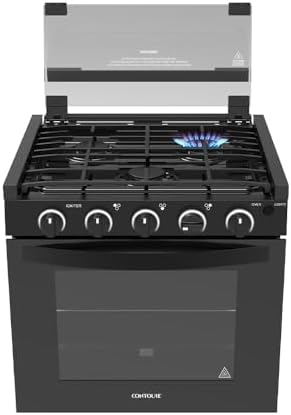
A Furrion RV range with a glass cooktop lid and a black or stainless finish, for owners updating a dated galley as much as a failing appliance. The lid doubles as a splash guard while cooking and as a flat surface when it is down, which matters in a narrow kitchen. Check that the raised lid clears your range hood, since that combination catches people out more than any other dimension on these units.
Do You Actually Need the Oven?
Be honest about this before you spend on it. RV ovens are small, heat unevenly, and put moisture and warmth into a space you may be trying to keep cool. Owners who bake regularly consider theirs essential, and owners who bake twice a season usually find the space would have been better spent as a drawer.
The alternatives are real. A countertop convection oven or air fryer does most of what an RV oven does, with better temperature control, provided you have the shore power to run it. Both keep the cabinetry space free.
Four situations, four answers
- You bake, roast, and cook full meals on board. Buy the range. Nothing else replaces it when you are off grid, since the oven runs on propane and needs no pedestal.
- You are on full hookups most of the time. Consider a cooktop plus a countertop convection oven, and read electric and induction cooking in an RV for what that costs in amps.
- Weekends and simple food. A cooktop and a drawer, covered in RV cooktops by burner count, is usually the better use of the space.
- Small rig, tight galley. A compact range if you bake, a two burner cooktop if you do not. There is no middle answer in a space that narrow.
Two Things That Make an RV Oven Usable
RV ovens have a reputation for burning the bottom of everything, and it is largely deserved. These two inexpensive items fix most of it and both fit any range you buy.
🌡️ The One That Tells You the Truth
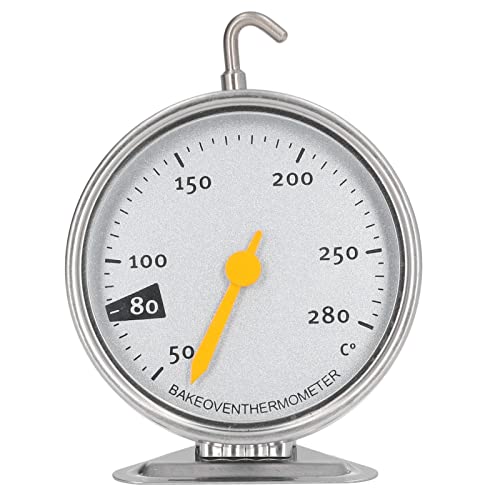
A standalone oven thermometer you hang from the rack. RV oven thermostats are approximate at best, and the dial setting often has a loose relationship with what is happening inside. Knowing the real temperature turns guesswork into cooking, and it is the first thing experienced owners fit to a new range.
🍕 The Fix for Burned Bottoms
A pizza stone, baking steel, or heat diffuser plate placed on the lower rack. RV ovens fire from below with very little mass between the flame and your food, so heat arrives in a concentrated band. A stone or a diffuser spreads it, evens out the hot spot, and makes baking predictable. Measure your rack before ordering, since these ovens are narrower than home ones.

Where the Job Stops Being Yours
Removing the trim, sliding the old range out once the gas is disconnected by someone qualified, cleaning the recess, and sliding the new one in is owner work. Connecting the appliance to the propane system is not. Gas lines, flare fittings, regulators, gas valves, burner tubes, and orifices are work for a certified RV technician, and we do not publish do it yourself instructions for any of it, because a leak in a small enclosed living space offers no margin for a learning mistake. The technician also performs the leak test that has to follow the connection.
Lighting the oven pilot according to your own owner manual is fine and expected. Adjusting a thermocouple, a burner, or an orifice is not, and neither is any 120 volt wiring if your range has an ignition circuit that needs one.
Stop using it immediately if you see any of these
Gas smell, a sounding carbon monoxide alarm, soot, a yellow or floating flame, or scorch marks on the cabinetry. Shut the appliance off, close the valve at the propane bottle, ventilate, get everyone outside, and call a certified RV technician. Fit a working carbon monoxide alarm and check the expiry date on the back. Baking also releases a lot of moisture, so run the range hood and crack a vent, or you will find it on the windows the next morning, as covered in stopping condensation and mold in an RV.
Common Mistakes to Avoid
- Measuring only the width. Recess height is what stops most of these swaps, and it is the dimension nobody writes down.
- Buying an oven you will not use. A drawer you open daily beats an oven you light twice a year.
- Forgetting the door swing. An open oven door in a narrow aisle can block the only route through the rig.
- Overlooking the raised lid. Glass lids need clearance under the range hood in the up position, not just the down one.
- Doing the gas connection yourself. The one job here with no acceptable margin for error.
- Baking without a thermometer. The dial is a suggestion. The thermometer is the fact.
Where to Go From Here
Before you replace anything, confirm the old range is genuinely finished. RV oven not working and an RV stove that will not light between them cover the pilot, igniter, and electrode faults that account for most complaints, and those parts cost a fraction of an appliance.
If you are going ahead, how to replace an RV stove walks through the removal and refitting side, and our Suburban RV stove review covers the brand most of these swaps end up involving. If the range hood above it is tired, it is far easier to deal with while the appliance is out, and RV range hoods, vents and replacements covers the options.
Frequently Asked Questions
What size RV range do I need? Measure the width of the opening, the height of the recess, and the depth to the back wall. Compact units cluster around seventeen inches wide and full size ones around twenty one to twenty two, but your three measurements decide it, not the category.
Are RV ranges interchangeable between brands? Frequently, because the size families overlap across Suburban, Atwood, Wedgewood, Furrion, Greystone, and Magic Chef. Confirm overall height and depth as well as width before assuming a swap.
Can I install an RV range myself? You can handle the removal, the recess, and setting the new unit in place. The propane connection and the leak test that follows it belong to a certified RV technician.
Why does my RV oven burn everything on the bottom? The flame is close to the food with little mass in between. A baking stone or heat diffuser on the lower rack spreads that heat, and an oven thermometer tells you what the dial will not.
Is an RV oven worth it, or should I use a countertop appliance? If you bake off grid, the propane oven is worth it because it needs no hookup. If you are usually on shore power and bake rarely, a countertop convection oven plus the reclaimed cabinet space often serves better.
Do I need to light a pilot every time? Depends on the model. Some RV ovens use a manual pilot you light per the owner manual, others use electronic ignition that needs 12 volt power. Check which one a candidate uses before you buy.
The Bottom Line
Choose an RV stove and oven combo on three measurements and one honest answer. The measurements are the opening width, the recess height, and the depth to the back wall, and the height is the one that ends most projects. The honest answer is whether you bake often enough to give a cabinet to an oven, because a cooktop and a drawer serve a lot of owners better. If the oven earns its place, buy a full size three burner range for a standard galley or a compact unit for a narrow one, fit a thermometer and a baking stone on day one, and hand the propane connection to a certified RV technician.