Last updated: August 14, 2026
A Suburban RV stove is the appliance equivalent of a work truck. Nobody buys one because it is beautiful, and years later it is still lighting every morning while the fashionable alternative is waiting on a part that nobody stocks. Suburban has been building RV cooking, heating, and water heating appliances in the United States for decades, and its ranges and cooktops turn up in a large share of North American trailers and motorhomes.
The question worth answering is whether the things Suburban does well, parts availability, straightforward mechanics, and long service life, outweigh the things it does not, namely styling and features. For most owners they do, and this review explains where that stops being true.
This article contains affiliate links. If you buy through them, we may earn a commission at no extra cost to you. Learn more.
Quick Answer
Is a Suburban RV stove worth buying?
- Yes for owners who value long service life and easy parts sourcing over looks, especially if the rig already has a Suburban appliance in it.
- The mechanics are conventional and well supported, which means most faults are a cheap service part rather than a new appliance.
- Skip it if you are updating a galley for appearance, since the styling is plain and the feature list is short by design.
The Suburban Range at a Glance
What the brand is and what it is not, before any judgment about whether it suits you.
| Aspect | What it is |
|---|---|
| What they build | LP gas drop in cooktops and slide in ranges with an oven, plus RV furnaces and water heaters |
| Fuel | Propane, sharing the rig’s LP system with the furnace and water heater |
| Typical layouts | Two, three, and four burner cooktops, and ranges in compact and full size width families |
| Ignition | Piezo or electronic on the cooktop, with oven ignition varying by model |
| Design approach | Conventional, serviceable, low on features and high on availability of parts |
| Parts situation | The brand’s strongest argument, with grates, burners, igniters, and knobs widely sold |
| Where owners complain | Plain looks, oven heat distribution, and pilot or thermocouple issues as units age |
| Best suited to | Owners replacing like for like, and anyone who values a long service life over styling |
Our assessment here is based on published specifications and the patterns that repeat across owner feedback rather than on any trial of our own. We do not test gas appliances, because durability and combustion behavior only show themselves across years of use in many rigs.
What It Gets Right
Parts availability is the headline, and it is not a small thing in the RV world. When an igniter stops sparking or a grate cracks, the replacement is generally sold, generally in stock somewhere, and generally cheap. Owners of appliances from brands that come and go discover the opposite at the worst possible moment.
The second strength is that the design is conventional. Burners, an igniter, an electrode, a knob, a valve, all laid out the way an RV technician expects. That keeps diagnosis short and labor bills lower, and it keeps the owner side of the job doable. Our guide to Suburban RV stove parts and replacements covers what is worth keeping on the shelf.
It is built to be boring, which is the point
These appliances have to survive hundreds of vibrating miles and then months of disuse. There are no touch panels to fail and no proprietary electronics to become unavailable, and owners consistently report units running for many years on nothing but routine cleaning.
Where It Falls Short
Three honest limitations, none of which is really a defect so much as the flip side of the design philosophy.
First, the looks. A Suburban range looks like an RV appliance from a catalog, and it will not help a galley you are updating for appearance. Second, oven heat distribution. Like most RV ovens it fires from below with little mass in between, so the bottom cooks faster than the top, which is a category problem fixed with a baking stone and a thermometer rather than a different badge. Third, pilot and thermocouple complaints show up in owner feedback as units age, and that work belongs to a certified RV technician.
The feature list is genuinely short
No glass lid on most cooktops, no sealed burner styling across the range, no app, no clock. If those absences bother you, they will keep bothering you, and a brand with a more contemporary product line is the better spend. If they do not, you are getting the same cooking performance with fewer things that can fail.
The Versions Worth Buying
Two appliances and one small part cover almost every Suburban purchase. Confirm every dimension against your own measurements first, since RV cooktop and range sizes cluster into families rather than standardizing.
🏆 The One Most Owners Need
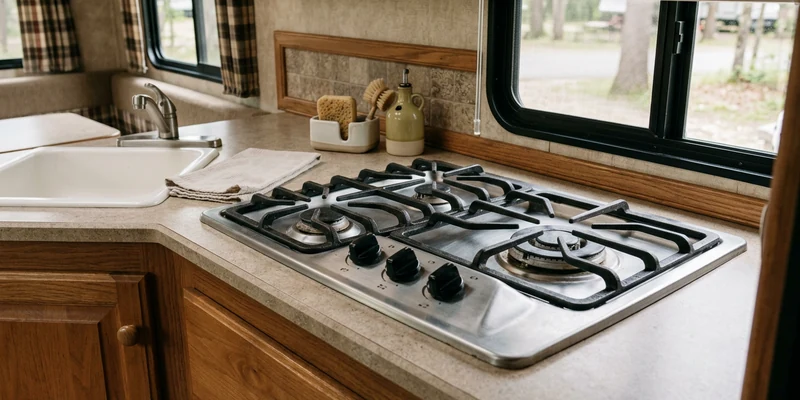
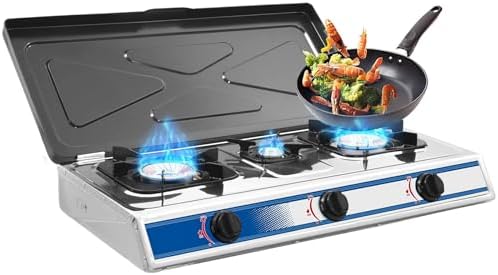
A Suburban three burner LP drop in cooktop with a recessed top and piezo ignition. This is the straight replacement for a large share of trailers, and parts for it will still be available years from now. Measure the countertop cutout, front to back and side to side, and compare it to the stated cutout dimension rather than to the width of the old appliance.
🍞 If You Want the Oven Underneath
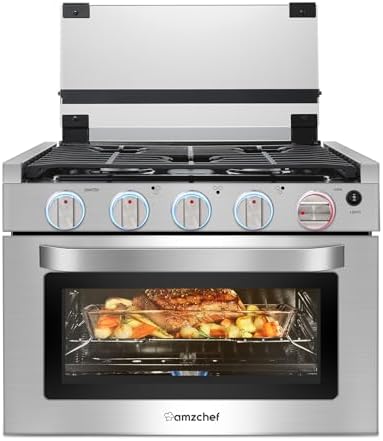
A Suburban LP range with the oven below the burners, in the width family that matches your galley. The critical dimension here is recess height rather than cutout width, because cabinetry gets built around the original appliance and a taller replacement has nowhere to go.
🔧 The Part Worth Having Before You Need It
A replacement grate and burner cap set matched to your model. Grates take the abuse in an RV, and a warped one makes pans rock and makes a stove cover sit unevenly. Confirm the model reference against the label on your appliance, since grate spacing differs between families.

Who It Is For, and Who Should Skip It
The decision is mostly about what you are optimizing for, longevity or appearance, and secondarily about what is already fitted in the rig.
- Buy it if you are replacing a failed appliance like for like and want the swap to be as close to a drop in as RV appliances get.
- Buy it if you keep rigs for a long time, or your furnace or water heater is already Suburban and you value one parts ecosystem.
- Skip it if the galley refresh is about looks, where a glass topped unit from a more contemporary line will please you more every day.
- Skip it if you have decided to move to electric or induction cooking, which is a power system decision as much as a cooking one, covered in electric and induction RV cooktops.
The Safety Line, Which Applies to Every Brand
Cleaning an igniter electrode, replacing grates and knobs, lighting the appliance per your own owner manual, and keeping ventilation clear are owner jobs. Gas lines, regulators, gas valves, burner tubes, orifices, burner adjustment, and thermocouple work are not, and we do not publish do it yourself instructions for any of it, because a leak in a small enclosed living space gives no second chance. The gas connection on a new appliance, and the leak test that follows it, is work for a certified RV technician.
Stop using the appliance immediately if you smell gas, hear a carbon monoxide alarm, or see soot, a yellow or floating flame, or scorch marks. Shut it off, close the valve at the propane bottle, ventilate, get everyone outside, and call a certified RV technician. Fit a working carbon monoxide alarm and check the expiry date on the back.
Frequently Asked Questions
Are Suburban RV stoves good? They are conventional, durable, and exceptionally well supported with parts, which is what matters most over the life of an RV. They are plain looking and light on features, which is the trade.
Will a Suburban cooktop fit where my old stove was? Often, since RV cooktop widths cluster into families. Measure the countertop cutout and the depth below it, and compare to the stated cutout dimensions rather than assuming.
Are Suburban and Atwood parts interchangeable? Sometimes for generic items like knobs and grates, rarely for burner and valve components. Match parts to the model label on your appliance, which is covered in RV stove parts and what fits what.
Why does my Suburban oven burn the bottom of everything? RV ovens fire from below with little mass in between. A baking stone or diffuser on the lower rack and a standalone oven thermometer fix most of it.
My burner clicks but will not light. Is the stove finished? Almost certainly not. A dirty or wet electrode, a cracked ceramic, or a dead igniter battery accounts for most of these, as covered in an RV stove igniter that is not sparking.
Can I install a Suburban range myself? You can remove the old unit and set the new one in place. The propane connection and the leak test after it belong to a certified RV technician.
The Bottom Line
A Suburban RV stove is the sensible default rather than the exciting choice, and in an appliance that survives years of vibration and long disuse, sensible is worth more. The mechanics are conventional, the parts are available, and most faults are a cheap service item rather than a replacement. Buy it if you are swapping like for like or keeping the rig a long time, and look elsewhere only if the refresh is really about looks. Whatever brand you fit, the gas connection is technician work.