Last updated: August 14, 2026
An RV oven not working usually turns out to be one of three very different complaints wearing the same name. Either it will not light at all, or it lights and then dies the moment you let go of the knob, or it lights perfectly and bakes so badly that owners assume it is broken. The first is often free to fix, the second is a gas control fault that belongs to a technician, and the third is not a fault at all.
Telling them apart takes one baking session and a thermometer. This guide walks the lighting procedure the way your own manual intends it, explains what the pilot and flame sensing logic is actually doing when the burner will not stay lit, and covers the practical fixes for the uneven heat that makes people give up on RV ovens entirely. It also draws the line we do not cross: pilot assemblies, thermocouples, safety valves, orifices, and burner tubes are certified RV technician work, and we do not publish instructions for any of it.
This article contains affiliate links. If you buy through them, we may earn a commission at no extra cost to you. Learn more.
Quick Answer
Why is my RV oven not working?
- If it will not light, confirm propane first, then light it exactly as your own manual prints it. Many RV ovens use a standing pilot that has simply blown out, and the correct relight sequence is model specific.
- If it lights and dies as soon as you release the knob, the flame is not being sensed and the safety valve is closing. That is a gas control fault. Do not adjust anything, book a certified RV technician.
- If it lights and bakes unevenly, that is normal for a single burner RV oven. A thermometer, a diffuser, and a longer preheat fix most of it. And keep a working CO alarm in the coach with its expiration date checked.
Symptoms, Causes, and What to Do
Match your symptom, then work the action column. The rows run in diagnosis order, from the free checks down to the point where the job leaves your hands.
| What the oven does | What it usually means | What to do |
|---|---|---|
| Nothing at all, cooktop also dead | Propane supply, not the oven | Confirm the tank and valve, see not getting gas |
| Cooktop works, oven will not light | Pilot out, or ignition fault at the oven | Relight exactly as your manual prints it |
| Pilot lights, goes out on knob release | Flame not being sensed, safety valve closing | Certified RV technician, no owner adjustment |
| Pilot stays lit, main burner never fires | Gas control or valve fault | Certified RV technician |
| Electronic ignition does not click | No 12V to the module, or a blown fuse | Check the fuse and house battery voltage |
| Lights, then quits after several minutes | Overheat or flame sensing dropping out | Note the timing and hand it over, do not keep relighting |
| Burns the bottom, raw on top | Normal single burner RV oven behavior | Add a diffuser, raise the rack, extend the preheat |
| Dial temperature is nowhere near real | Uncalibrated dial, common on RV ovens | Measure with an oven thermometer and cook to the real number |
| Pilot blows out in wind or while towing | Draft through the vent, or a marginal pilot | Turn the oven off before travel, then have the pilot checked |
| Soot on the racks or a yellow flame | Incomplete combustion | Shut it off, close the tank valve, ventilate, call a technician |
| Gas smell at any point | Unburned propane in the coach | Everyone outside, tank valve closed, ventilate, technician |
How to Light an RV Oven
Light it the way the label on your appliance says to, and nothing else. RV ovens are not consistent between brands or even between model years, so the printed sequence for your unit is the only correct one. The instructions are usually on a sticker inside the storage drawer, on the oven door frame, or on the back of the lower access panel, and they are worth photographing before the sticker fades.
In broad terms, standing pilot ovens follow a familiar pattern: ventilate the galley first, confirm the tank valve is fully open, open the oven door and remove the lower panel if your manual says to, set the knob to the pilot position, press and hold it, apply a flame at the pilot with a long lighter, and keep holding for the interval your manual states, commonly somewhere around thirty to sixty seconds, so the flame sensing element warms up enough to hold the valve open. Then release slowly and set your temperature.
Things that are not optional
If the pilot does not catch within the time your manual allows, turn the knob to off, wait the full period your manual specifies before trying again, usually several minutes, and let the gas clear. That waiting period exists because unburned propane pools in the bottom of an oven cavity, and lighting into it is how people get hurt. If two attempts fail, stop and get it looked at rather than continuing to cycle the knob.
🔥 For reaching a pilot without reaching into the oven
A long reach refillable butane lighter with a flexible neck, which lets you apply a flame at the pilot from outside the cavity. Use it only in the sequence your own manual prints, and never after repeated failed attempts without airing the oven out first.

🚨 Non negotiable in any coach with propane
A working carbon monoxide alarm, or a combined CO and propane detector, with the expiration date on the housing checked. An oven burns propane inside a closed cabin for an hour at a time, which is precisely the scenario these alarms exist for.

Pilot Models Versus Electronic Ignition
Knowing which you have changes the diagnosis completely. A standing pilot oven keeps a small flame burning continuously while the oven is in service, and that flame both lights the main burner and holds the safety valve open through a flame sensing element. When the pilot blows out, the valve closes and the oven is simply dead until the pilot is relit.
An electronic ignition oven has no standing flame. It sparks or glows on demand, senses the resulting flame electronically, and needs 12V power to do any of it. That means an oven with no click and no glow is often a fuse or a low house battery rather than a gas fault. A healthy house battery usually reads around 12.6 to 12.8 volts at rest, and control boards get unreliable well before that.
The travel day habit
Standing pilots and highway wind do not get along, and a pilot that blows out while you drive leaves gas flowing until the safety valve shuts. Turn the oven fully off before travel, and treat a pilot that will not survive a normal windy afternoon at camp as a fault to report rather than a quirk to accept.
The Free Checks Before You Call Anyone
Five checks, none of which cost anything, and between them they resolve a good share of oven complaints.
- Confirm you have propane. Read the gauge, then confirm it another way by weighing a portable bottle against the tare weight stamped on the collar. An oven is often the first appliance to notice a low tank because it runs the longest.
- Open the tank valve fully and slowly. A fast opening, especially after a refill, can trip the excess flow protection, which leaves just enough gas for a cooktop burner and not enough for an oven.
- Prove supply with the cooktop. If a cooktop burner lights and burns blue, propane is reaching the appliance and the fault is in the oven section.
- Check 12V if you have electronic ignition. Find the fuse for the range in the distribution panel, look at the element rather than through the plastic, and check house battery voltage.
- Clear the vents. Oven cavities vent through slots at the top of the door or through a wall vent, and a towel over the vent or a storage bin against an exterior vent changes how the burner behaves. Keep them clear and keep the range hood running while you bake.
It Lights, Then Goes Out
This is the single most common oven complaint, and it has a precise meaning. The oven got gas and got ignition, so both are proven. What failed is the safety logic: the flame sensing element has to prove there is a flame, and while it does, the gas valve stays open. When that proof stops arriving, the valve closes within seconds. That is the system working correctly, not failing.
What sits behind it is a pilot assembly, a thermocouple or sensing probe, and a gas valve, and all three are certified RV technician parts. We do not publish instructions for cleaning, adjusting, positioning, or replacing them, and we would encourage you not to follow instructions that do. What helps your technician is detail: how long the flame survives after you release the knob, whether the pilot itself stays lit or dies with the main burner, and whether it happens only when the oven is already hot.
It Works, It Just Bakes Badly
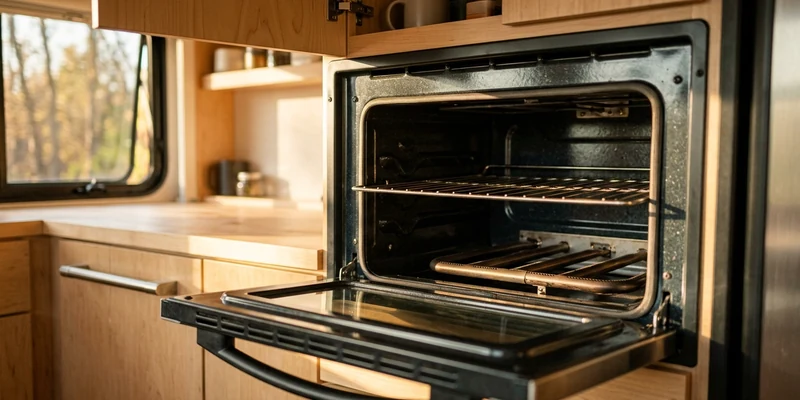
An RV oven is a thin steel box with one burner at the bottom, no fan, and very little insulation. Scorched cookie bottoms with pale tops are the design, not a defect. Four habits change the result more than any repair would.
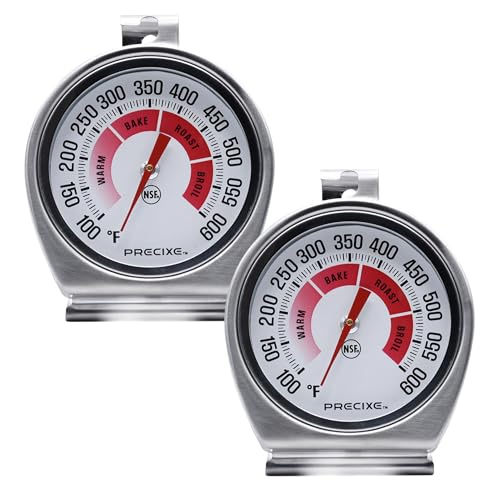
Measure the real temperature with a standalone oven thermometer, because RV dials are frequently off by a wide margin and cooking to the real number solves half the complaints on its own. Preheat longer than you would at home, since a thin box gives up heat as fast as it gains it. Use a heat diffuser, a pizza stone, or an inverted baking sheet on the lowest rack to break up the direct flame and spread the heat. And rotate the pan halfway through, because the back corners always run hotter than the front.
What not to do
Never line the oven floor with foil. It blocks the airflow the burner depends on and reflects heat back into components that were not designed for it, and on a gas oven that can change combustion. A stone or a rack mounted diffuser does the same job without covering the burner area.
🌡️ Measure before you diagnose
A standalone oven thermometer that hangs from a rack. Knowing the oven runs well above or below the dial turns a vague complaint into a number, and it usually explains everything the owner was blaming on the appliance.
🍕 The single best fix for burned bottoms
A baking stone or steel sized to sit on the lowest rack with clearance around the edges, which absorbs the direct flame and radiates it evenly. Measure your oven’s usable rack width before ordering, since RV cavities are much narrower than residential ones.

Where the Oven Job Stops Being Yours
Lighting the oven per your manual, keeping vents clear, checking the fuse, measuring the real temperature, and adding a diffuser are yours. Everything else in an RV oven is gas work. We do not publish instructions for adjusting or replacing thermocouples and pilot assemblies, cleaning burner tubes, working on orifices, adjusting the flame or air shutter, or touching the gas valve, the supply line, or the regulator.
The reason is the same in every gas appliance article on this site. A slightly wrong setting on any of those parts does not stop the oven, it changes how completely the propane burns, and incomplete combustion is invisible and odorless. A certified RV technician can set and verify the appliance with a manometer, and an oven service call is one of the more routine visits in the trade.
Stop immediately if
Turn the oven off, close the tank valve at the bottle, open windows and roof vents, and get everyone outside if you smell gas, if a CO or propane alarm sounds, if you see soot on the racks or scorching around the vent, or if the flame burns yellow, lifts away from the burner, or roars. Do not bake on it again until a certified RV technician has checked it, and never look for a leak with a flame.
When Replacing Beats Repairing
A gas valve or pilot assembly failure on an older range often approaches the value of the appliance once labor is counted, which is the point where owners start weighing a swap. Rust through in the oven floor or burner box is the other clear signal, since corrosion around a burner is not something to patch.
If you are replacing, the practical side of the job is in how to replace an RV stove, and the shopping side depends on whether you want to keep an oven at all. A stove and oven combo keeps the baking, while many owners drop the oven entirely and fit a cooktop with a countertop appliance instead. Every swap involving a gas connection ends with a certified technician making and leak testing that connection.
Common Mistakes to Avoid
- Relighting over and over. Unburned propane pools in an oven cavity. Wait the interval your manual specifies between attempts.
- Improvising the lighting sequence. Follow the label on your own appliance, not a video about a different brand.
- Lining the oven floor with foil. It blocks airflow the burner needs and can change combustion.
- Blaming the oven for the dial. Measure the real temperature before concluding anything.
- Leaving a standing pilot lit while towing. Turn the oven fully off for travel days.
- Adjusting the thermocouple or pilot yourself. That is the exact repair that should be a technician visit.
- Baking with the vents blocked. Storage against an exterior vent changes how the appliance burns.
Frequently Asked Questions
Why does my RV oven light and then go out? The flame is not being sensed, so the safety valve closes. That points at the pilot assembly, the sensing element, or the gas valve, all of which are certified RV technician parts rather than owner repairs.
How do I light an RV oven with a pilot? Follow the printed sequence on your own appliance, which normally means ventilating, setting the knob to pilot, holding it in, applying a flame at the pilot, and holding for the interval your manual states before releasing slowly.
Why does my RV oven burn everything on the bottom? Single burner RV ovens heat from below with no fan. A baking stone or diffuser on the lowest rack, a longer preheat, and rotating the pan halfway solve most of it.
Does an RV oven need 12V power? Standing pilot ovens do not. Electronic ignition ovens do, so a blown fuse or a low house battery can leave the oven completely dead while the cooktop still works.
Can I clean the oven burner myself? No. Burner tubes, orifices, and pilot assemblies are gas components, and we do not publish steps for cleaning or adjusting them. That work belongs to a certified RV technician.
Should I leave the oven pilot lit while driving? Turn the oven off for travel. Wind through the vents can extinguish a pilot, and an oven is not something to run unattended on the road.
The Bottom Line
Split the complaint before you spend anything. An oven that will not light usually needs propane confirmed and the pilot relit exactly as your own manual prints it, waiting the specified interval between attempts. An oven that lights and dies on knob release is a flame sensing and gas valve fault, which is certified RV technician work and not something we publish steps for. An oven that bakes badly is behaving normally for a thin single burner box, and a thermometer, a stone, and a longer preheat fix it. Keep a live CO alarm in the coach and shut everything down if you smell gas or see soot.