Last updated: August 14, 2026
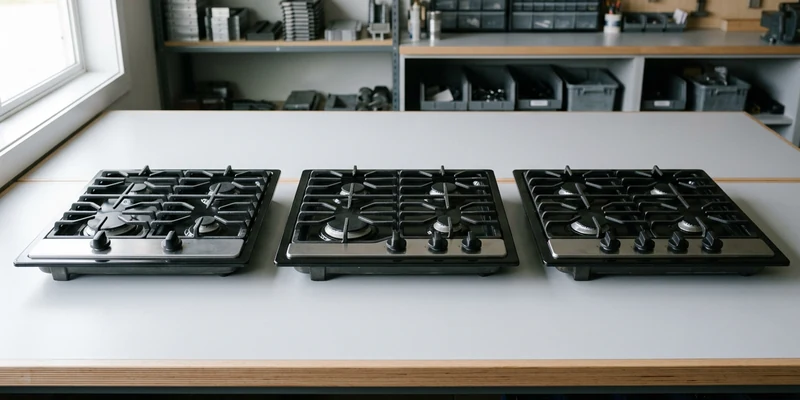
Shopping for RV stove tops comes down to one decision that most listings bury under finishes and features: how many burners are you willing to pay for in counter space? An RV galley has a fixed amount of horizontal surface, the cooktop takes a permanent bite out of it, and every extra burner makes that bite wider. That is the trade, and it is worth making deliberately.
Two burners, three burners, and four burners each suit a different kind of rig and a different kind of cook. This guide sorts cooktops by burner count rather than by brand or fuel, because that is the axis owners actually decide on, and it is the one they most often get wrong in both directions. If you already know the burner count you want and need help with fuel or fitment, the propane and electric guides handle those questions separately.
This article contains affiliate links. If you buy through them, we may earn a commission at no extra cost to you. Learn more.
Quick Answer
How many burners does an RV cooktop need?
- Three burners is the right answer for most trailers and motorhomes. It lets you run a pan, a pot, and a kettle without taking over the whole counter.
- Two burners suits vans, teardrops, truck campers, and anyone whose real constraint is prep space rather than cooking capacity.
- Four burners only makes sense on a wide galley where you still have working surface either side. On a narrow counter it is a downgrade that looks like an upgrade.
Burner Count Compared
Here is what each layout costs you and what it buys, before any brand or fuel enters the conversation. Read the counter space column first, because that is the one you live with every day.
| Burners | Typical width family | What it costs in counter | Who it suits |
|---|---|---|---|
| Two | Commonly the narrowest RV cooktops | The least, and often comes with a lid that gives some back | Vans, teardrops, truck campers, weekend cooking |
| Three | The mid family, the most common in trailers | Moderate, and manageable with a cover board | Most travel trailers and motorhomes, full timers included |
| Four | The widest bodies | The most, and it is permanent | Wide galleys in large fifth wheels, cooks who use all four |
| Portable single | Sits on the counter, no cutout at all | None when stowed, all of it when in use | Rigs cooking outside, or as a second burner in summer |
Widths cluster rather than standardize across Suburban, Atwood, Wedgewood, Furrion, Greystone, and Magic Chef, so treat any burner count as a family of sizes and confirm your countertop cutout with a tape measure before shortlisting anything.
Why Three Burners Wins for Most People
Three is the compromise that survives contact with reality. It covers the standard weeknight pattern of a main pan, a pot of something starchy, and a kettle or a small pan for sauce, and it does that without swallowing the entire counter. When you are not cooking, a cover board turns it back into work surface, which is a trick that works far better on three burners than on four.
The reason four burners disappoints in an RV is not the burners, it is what is left around them. Once a wide cooktop is in, the remaining counter is often too narrow to use as anything but a landing spot, so you gain a burner you use occasionally and lose the space you used constantly. In a large fifth wheel with a genuinely wide galley that trade never arises, which is exactly why four burner units belong there and rarely anywhere else.
When two is the smarter buy
In a van or a compact trailer, prep space is scarcer than heat. Two burners plus a hinged glass lid gives you a splash guard while cooking and a flat surface the moment you are done, and most owners in small rigs report they cook the same meals they always did. If you occasionally need a third pan, a portable burner used outside costs nothing in permanent counter.
Our Top Picks at a Glance
How we chose: we compared widely available RV cooktops on cutout compatibility, burner layout and output spread, grate and top design, ignition type, and the complaints and compliments that repeat across owner feedback. Our assessment is based on published specifications and that feedback rather than any trial of our own. These are sorted by burner count, so pick the row that matches your galley rather than the one with the most features.
🏆 Three Burners, Best Overall
A three burner LP drop in RV cooktop from an established RV appliance brand, with a recessed top, a raised edge, and a piezo or electronic igniter. This is the layout most galleys were designed around, which makes it both the most likely straight swap and the easiest to find parts for later. Look for a mix of burner outputs rather than three identical ones, since a single hotter burner does most of the work in practice.

🚐 Two Burners, Best for Small Galleys
A two burner LP RV cooktop, ideally with a hinged tempered glass lid. In a van, truck camper, or compact trailer this is the layout that leaves you a kitchen instead of an appliance, and the lid earns its place twice over as a splash guard and a work surface. Check the lid clears your range hood in the raised position, which is the dimension owners most often miss.

🍳 Four Burners, for Wide Galleys Only
A four burner LP cooktop with heavy continuous grates, so pans slide between zones instead of being lifted over gaps. Buy this if your counter is wide enough that you keep usable surface on both sides and you genuinely cook full meals on board. Continuous grates also sit steadier under a tall pot on an unlevel site, which is a small thing until it is not.

Fuel Is a Separate Question
Burner count and fuel are independent choices, and mixing them up is how people end up with the wrong appliance. Propane is the default in almost every rig because it works with no hookup at all, shares the LP system already feeding your furnace and water heater, and does not care what the campground pedestal offers. Electric and induction cook cleanly and add no combustion moisture, but they lean heavily on your power situation.
Work out the burner count from your counter, then choose the fuel from how you camp. Propane RV stoves covers the standard drop in units and how to measure for them, and electric and induction RV cooktops covers what a burner really draws on thirty amp service or through an inverter. If you want an oven underneath rather than a cooktop alone, RV stove and oven combos is a different measuring job again, because the recess height comes into play.
Grates and tops matter more than the spec sheet suggests
Heavy cast grates are steadier under a pot and quieter on rough roads than light wire ones, though they add weight and take longer to cool. Glass tops wipe clean and look modern, while porcelain and steel shrug off abuse. Neither choice changes how food cooks, so decide on cleaning habits and how much you care about rattles. If your existing glass top is cracked, that is a service part rather than a reason to replace the appliance, as covered in RV stove glass tops, grates and burners.
Two Things to Buy With Any Cooktop
The first one gives back the counter you just committed, and the second is the accessory that changes what a three burner cooktop can do.
🪵 The Counter Space You Just Spent
A stove top cover cutting board sized to the cooktop you chose. In a galley where the cooktop is a third of your counter, this is not an accessory, it is the thing that makes the layout work. Measure the fitted cooktop rather than ordering from the listing dimensions, and remember it only ever goes on a completely cold stove.

🔥 The Extra Cooking Surface That Costs No Counter
A cast iron griddle or reversible grill plate sized to sit across two burners. It turns a three burner cooktop into a breakfast station, holds heat far better than thin RV grates deliver it, and stores flat under the sink. Match the length to your burner spacing so it sits on the grates rather than balancing on one.

Where the Job Stops Being Yours
Lifting the old cooktop out, cleaning the opening, fitting trim, and setting the new unit into the countertop is owner work. The propane connection is not. Gas lines, flare fittings, regulators, gas valves, burner tubes, and orifices belong to a certified RV technician, and we do not publish do it yourself instructions for any of it, because a leak inside a small living space does not leave room for a learning mistake. The technician also does the leak test that has to follow the connection.
On an electric or induction unit, the same line applies to the 120 volt side. Any new circuit, breaker, or panel work is for a certified RV technician or a licensed electrician, not a weekend with a crimp tool.
The symptoms that end the conversation
Gas smell, a sounding carbon monoxide alarm, soot around a burner, a yellow or floating flame, or scorch marks on the cabinetry. Turn the appliance off, close the valve at the propane bottle, open windows and roof vents, get everyone outside, and call a certified RV technician before using it again. Fit a working carbon monoxide alarm and check the expiry date printed on the back, since these units age out on a date rather than on use.
Common Mistakes to Avoid
- Buying burners you will not light. Counter space is used every day. The fourth burner is used on holidays.
- Measuring the appliance instead of the cutout. The hole in the counter is what decides fitment.
- Forgetting the lid clearance. A hinged glass lid needs headroom under the range hood when raised.
- Assuming all three burner units are the same width. The families overlap, they do not standardize. Measure.
- Skipping the cover board. Without it, a cooktop is dead space between meals in a kitchen that has none to spare.
- Replacing a cooktop that needed an igniter. Electrodes, igniters, grates, and knobs are inexpensive service parts.
Where to Go From Here
If the cooktop you have is annoying rather than dead, fix it first. RV stove repair and what you can fix yourself covers the cheap causes, and an RV stove that will not light handles the single most common complaint in this whole category.
If you are buying, how to replace an RV stove covers the removal and fitting, our Furrion RV stove review looks at the brand that shows up most in newer rigs, and RV stove covers and cutting boards is where the counter space comes back. If you cook enough to steam up the windows, deal with the extraction at the same time using RV range hoods, vents and replacements.
Frequently Asked Questions
How many burners should an RV cooktop have? Three suits most trailers and motorhomes, two suits vans and compact rigs where counter space is the scarcer resource, and four only makes sense on a genuinely wide galley.
Are RV cooktops a standard size? No. Widths cluster into families across the main RV appliance brands, which makes swaps common but never guaranteed. Measure your countertop cutout and compare it to the stated cutout dimensions.
Is a glass top better than porcelain or steel? Glass wipes clean and looks modern, porcelain and steel take more abuse. Neither affects how food cooks, so choose on cleaning habits.
Can I fit a cooktop over a two burner opening? Only if the countertop can be cut safely and the cabinetry below allows it, which turns a swap into a modification. Get the cutout assessed before buying a wider unit.
Do I need a range hood over a cooktop? Strongly recommended. Cooking puts a lot of moisture into a small space, and in cold weather that moisture ends up on the windows and in the corners.
Can I connect a new cooktop to the propane myself? No. Setting the appliance in place is owner work, the gas connection and the leak test that follows belong to a certified RV technician.
The Bottom Line
Choose an RV cooktop by burner count first, because that decides how much of your counter is committed permanently. Three burners suits most trailers and motorhomes, two suits vans and compact rigs, and four belongs only in a wide galley where usable surface remains on both sides. Decide fuel separately, measure the cutout before shortlisting anything, buy a cover board at the same time so the counter comes back between meals, and hand the propane or 120 volt connection to a certified technician.