Last updated: August 14, 2026
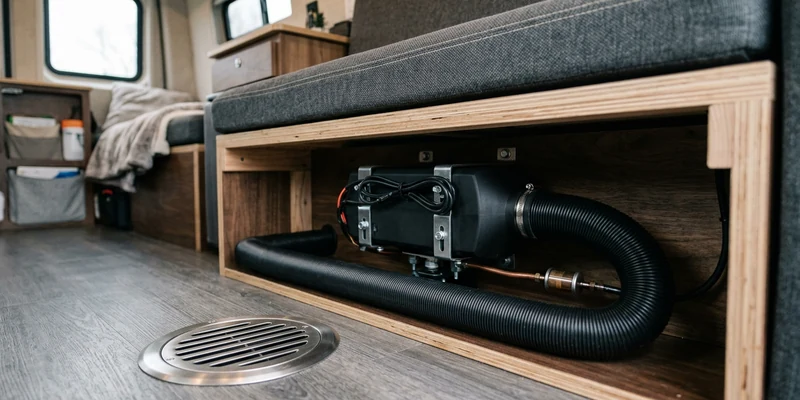
An RV diesel heater is the reason a lot of owners stopped dreading November. It burns fuel rather than propane, draws modest current once running, and produces dry heat continuously instead of the on and off blast of a forced air furnace. Permanently mounted units live under the floor or in a sealed box in a storage bay, with ducting carrying warm air inside and the exhaust routed outside where it belongs.
The differences between units are real, but not the ones marketing focuses on. What decides whether you are happy in year three is sizing relative to your rig, how the unit draws power during its glow cycle, where its fuel comes from, whether the controller handles altitude, and how easy it is to buy a glow plug or a dosing pump when you need one.
This article contains affiliate links. If you buy through them, we may earn a commission at no extra cost to you. Learn more.
Quick Answer
Which RV diesel heater should you buy?
- Size it to your rig rather than buying the biggest available, because an oversized heater runs on its lowest setting constantly and that is exactly what builds carbon.
- Check the glow cycle draw against your battery bank, since the startup current is what decides whether the heater is comfortable to run off grid.
- A carbon monoxide alarm with an unexpired sensor is mandatory, the exhaust always terminates outside away from windows and vents, and fuel tank tapping is technician work.
What Actually Separates One Unit From Another
Eight things decide whether a diesel heater suits your rig. Output rating gets all the attention, but it is only the first row, and several of the others matter more once the unit is installed and you are living with it.
| What to check | Why it matters | What to look for |
|---|---|---|
| Rated output vs rig size | Oversizing forces permanent low output running, which sooties the burner | An output matched to the length and insulation of your rig, not the maximum available |
| 12V or 24V | The wrong system voltage simply will not work on your rig | 12V for almost all RVs, 24V mainly on trucks and some larger chassis |
| Glow cycle current draw | Startup is the heaviest load and the moment weak banks fail | A published startup figure, usually somewhere in the 8 to 12 amp range, against your bank |
| Fuel source | Where the diesel comes from shapes the whole install | A separate tank is a simpler owner install, tapping the vehicle tank is technician work |
| Altitude compensation | Less oxygen at elevation means sooting and weak heat without it | A controller with an altitude mode if you camp in the mountains |
| Control type | Comfort in practice comes from how the unit is told what to do | Thermostat control that holds a temperature, rather than only fixed power levels |
| Noise from pump and fan | The dosing pump ticks and the fan hums, all night, near where you sleep | Rubber isolated pump mounting and a fan you can live with on low |
| Service part availability | Glow plugs and pumps are wear items, not surprises | Parts you can actually buy for that specific unit, from more than one seller |
To understand why those rows matter, our explainer on how a diesel heater works in an RV walks through the glow, prime, and burn sequence, and it makes the sizing argument below easier to follow.
Choosing an Output: Smaller Is Often Smarter
The instinct is to buy the biggest heater that fits, and it is usually the wrong instinct. These units are happiest cycling up to a decent output and then modulating down, because higher combustion temperature burns fuel more completely. A heater too large for the space reaches setpoint almost immediately, drops to its lowest burn, and stays there, which is the condition that packs carbon onto the glow screen and into the exhaust. Forum threads consistently mention that the same model behaves very differently in a van than in a large trailer.
Rough sizing by rig type
Take these as starting points rather than rules, because insulation, window area, and how cold your nights get all move the answer. A small campervan or truck camper is generally served by the smaller units, commonly rated around 2 kW. A midsize travel trailer sits in the middle, where the common 5 kW class is the usual choice, with the caveat that it will spend much of its time modulated down. A large trailer, fifth wheel, or Class A with a lot of glass is where the larger output earns its place, and some owners fit two smaller units at opposite ends rather than one large one, which distributes heat better than a single long duct run.
Power Draw and What It Means for Your Battery Bank
A diesel heater is a two phase electrical load. During the glow cycle the plug draws heavily, usually somewhere in the 8 to 12 amp range depending on the unit, for a minute or two at startup and again on any restart. Once the flame is established the glow plug switches off and consumption falls a long way, to the fan and the dosing pump, a modest continuous draw that most banks handle overnight.
That shape is why the heater is easy to run and hard to start. A lead acid bank worked all evening can run the fan for hours and still sag out of range the moment the glow plug bites, giving you a heater that starts fine in the morning and refuses at midnight. Lithium banks hold voltage far more steadily under load, which is why owners who switch report the heater becoming more reliable without anything changing on the heater itself.
Sizing the system around it
Plan the electrical side around the startup peak rather than the running draw, and keep supply wiring short and generously sized so voltage drop does not do the damage instead. Our walkthrough on switching an RV to lithium batteries covers what changes, and how much solar an RV actually needs is the place to start if you plan to recharge off grid. Solar production in winter is the weakest it gets, which is precisely when the heater runs most.
Our Top Picks at a Glance
How we chose: we compared widely available permanently mounted diesel air heaters on published output ratings, startup current, controller features including thermostat and altitude modes, fuel source options, and the themes that repeat in owner feedback across RV forums. Our assessment rests on manufacturer information and that feedback rather than any trial of our own.
🏆 Best Overall
A complete 12V all in one kit, commonly rated around 5 kW, with a display controller and mounting hardware included, is the default answer for most trailers and midsize motorhomes. The value in a kit is that ducting, exhaust, fuel line, pump, and mounting plate arrive matched to each other. Look for a controller that holds a set temperature rather than only fixed power levels, and confirm the kit includes the floor grommet and heat shielding.
💰 Best Compact Pick
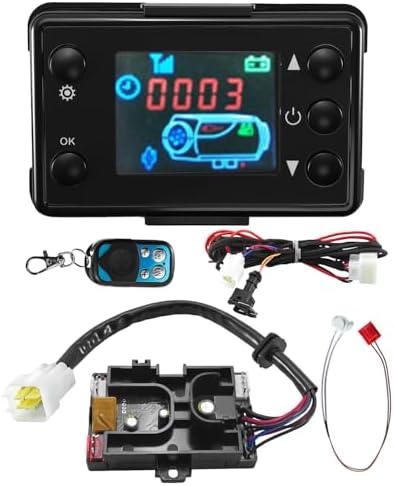
A smaller kit, commonly rated around 2 kW, suits campervans and truck campers far better than the larger class. The output matches the space so the unit cycles properly instead of idling, and the reduced startup draw is meaningfully easier on a modest battery bank. Owners of well insulated vans consistently report the smaller unit is plenty.
⭐ Upgrade Pick
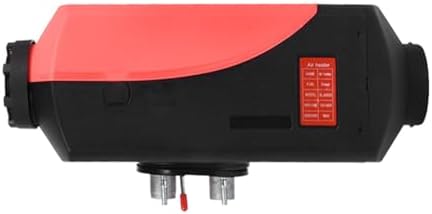
A branded unit from Webasto or Espar costs considerably more than the generic kits, and what you are buying is not raw output. It is a dealer service network across North America, documented error codes that match published manuals, parts availability years from now, and installation instructions written to a professional standard. For full timers, and for anyone handing the install to a shop, that support structure is the whole argument.

Which Setup Suits Your Rig?
Output is only half the decision. Where the unit lives, where its fuel comes from, and how the heat is distributed change the answer as much as the rating on the box does.
| Your rig and use | What matters most | What usually works |
|---|---|---|
| Campervan or truck camper | Small space, limited battery, short duct runs | A compact unit around 2 kW, own tank, single outlet |
| Midsize travel trailer | Even heat without permanent low output running | A 5 kW class unit with thermostat control and two or three outlets |
| Large trailer or fifth wheel | Long distances for warm air to travel | Larger output, or two smaller units at opposite ends of the rig |
| Class A motorhome | Volume, glass area, and existing tank access | Higher output, often with a professionally fitted tank pickup |
| Mountain and winter camping | Thinner air changes the fuel to air ratio | A controller with altitude compensation, plus regular high output runs |
| Occasional shoulder season use | Simplicity and not committing to an install | A cased portable unit instead, covered in our separate guide |
If that last row is you, our roundup of the best portable diesel heaters for RVs covers the cased all in one units you set outside the rig, along with the ventilation rules those bring with them.
Two More Items You Should Not Install Without
The three picks above cover the heater itself. These two cover the parts of the job owners most often postpone and should not.
🚨 The Part That Is Not Optional
A 12V carbon monoxide alarm made for RV use, with the sensor expiration date visible on the housing. A diesel heater is a combustion appliance a few feet from where you sleep, carbon monoxide has no smell, and these alarms expire on a schedule that has nothing to do with whether the test button still beeps. Mount it at the height the maker specifies and note the replacement year.

🔩 The Kit That Makes the Install Right
An exhaust and installation kit with muffler, clamps, heat shielding, and a floor grommet. The exhaust gets extremely hot, so it must be routed clear of anything flammable and clear of the fuel line, and it has to terminate outside away from windows, doors, air intakes, and roof vents. If you are not confident about the through floor penetrations or the sealing, have this part done by a certified RV technician.

Installation and Safety: The Non Negotiable Parts
Mounting the heater box, running ducting, and wiring the 12V supply are within reach of a competent owner. The combustion side is where the rules stop being suggestions.
- The exhaust always terminates outside. Away from windows, doors, air intakes, and roof vents, and away from where you or your neighbors sit. Never route it into a bay that is not sealed from the living space.
- Never run the heater in an enclosed space. Not in a tent, not in a closed garage, not under a closed awning, and not with the exhaust discharging into any of those.
- The exhaust runs hot. Keep it clear of anything combustible and clear of the fuel line, and fit the heat shielding rather than leaving it in the box.
- Fuel work belongs to someone experienced. Tapping the vehicle tank, fitting a standpipe, running line through bulkheads, and mounting the dosing pump at the correct angle are jobs where getting it wrong shows up later. If in doubt, a certified RV technician.
- Exhaust smell inside means stop. Shut down immediately, ventilate, check the carbon monoxide alarm, and do not restart until the leak has been located and corrected.
- Never cut power to a running heater. The purge cycle clears remaining fuel and cools the chamber. Interrupting it is a reliable way to coke up a healthy unit.
Common Mistakes to Avoid
- Buying on output alone. Bigger is not better here. An oversized unit runs on low permanently and carbons up faster than a right sized one.
- Ignoring the glow cycle draw. A bank that runs the fan happily all night can still refuse to start the unit at midnight.
- Undersized supply wiring. Long thin leads create their own voltage drop, and the heater blames your battery for it.
- Mounting the dosing pump flat. These pumps want the angle the maker specifies so air passes through instead of collecting inside.
- Skipping altitude compensation. If you camp in the mountains, running a sea level fuel dose produces soot and weak heat.
- Treating the carbon monoxide alarm as optional. It is the cheapest item in the whole install and the only one that matters at three in the morning.
Where to Go From Here
If you already have a unit and it is misbehaving rather than missing, start with diesel heater repair and the common faults, which covers the symptom table, the free checks, and the parts that genuinely wear out.
If your rig also has a propane furnace, the diagnosis for that side is in RV furnace not working. And if the real question is surviving a cold week rather than picking a heater, how to stay warm in an RV in freezing weather covers insulation, condensation, and keeping the plumbing alive, all of which change how much heater you need.
Frequently Asked Questions
What size diesel heater do I need for my RV? Match it to the length and insulation of the rig rather than buying the largest available. Compact units around 2 kW suit vans and truck campers, while the 5 kW class is the common choice for midsize trailers.
How much power does an RV diesel heater use? The glow cycle at startup is the heavy moment, usually somewhere in the 8 to 12 amp range, and consumption drops a long way once the flame is established and only the fan and pump are running.
Can I run a diesel heater off my RV fuel tank? Many installations do, using a standpipe or a tank pickup, but that work involves the vehicle fuel system and belongs to someone who does it regularly or to a certified RV technician. A separate tank is the simpler owner install.
Is a diesel heater cheaper to run than a propane furnace? Owners generally report lower fuel consumption for the same amount of heat, plus far less electrical draw once running than a propane furnace blower. The tradeoff is a more involved installation.
Do I need a carbon monoxide alarm with a diesel heater? Yes, without exception, and it needs an unexpired sensor. Any combustion appliance in a living space calls for one, and the date on the housing matters more than the test button.
Are branded units worth the extra over generic kits? If you rely on the heater year round, the dealer network, documented codes, and long term parts availability from Webasto or Espar are the argument. For occasional use, a well installed generic kit satisfies plenty of owners.
The Bottom Line
Size the heater to your rig rather than to the biggest number on the shelf, because permanent low output running is what carbons these units up. Check the glow cycle draw against your battery bank, prefer a controller with thermostat and altitude modes, and confirm that glow plugs and dosing pumps are genuinely available for the model you pick. Then treat the exhaust routing, the fuel tapping, and the carbon monoxide alarm as the parts of the job you do not cut corners on.