Last updated: August 14, 2026
When the electric side heats the tank normally but the burner refuses to light, the fault is somewhere in the propane path or in the ignition sequence, and the fastest way to narrow it is to stand at the outside access door and listen. A healthy unit gives you a distinct pattern: a series of rapid clicks from the spark electrode, then a soft whoosh as the burner catches, then silence apart from a steady low roar. Which part of that pattern is missing tells you where to look, and it is the difference between a five minute fix and a technician visit.
Most of the time, an RV water heater not working on gas is not a fault in the appliance at all. It is propane that is not arriving, because a valve is closed, a bottle is empty, a changeover regulator has switched to a spent tank, or air has been drawn into the line after a refill. Those cost nothing to check. This guide starts there, then works through ignition, and it draws a hard line at the components we will not give instructions for.
This article contains affiliate links. If you buy through them, we may earn a commission at no extra cost to you. Learn more.
Quick Answer
Why will my RV water heater not light on propane?
- Check the propane supply first: bottle level, tank valve fully open, changeover regulator pointing at a full bottle, and whether your stove lights normally as a cross check.
- Confirm 12 volt power. Electronic ignition needs the battery even in gas mode, so a blown fuse or a flat battery stops the spark entirely.
- Listen at the outside access door. No clicks, clicks with no light, or lights then dies each point at a different cause.
- Insect nests in the burner area are extremely common. Clearing the outside of the vent is yours; anything inside the burner tube is a certified technician job and we do not publish those steps.
What the Ignition Sequence Tells You
Switch the heater to gas with the tank cold, then stand at the outside access door and listen for thirty seconds. Match what you hear to the left column.
| What you hear at the access door | What it usually points to | What to do next |
|---|---|---|
| Nothing at all, no clicking | No 12 volt power, switch off, or a tripped high limit | Check the fuse, the switch and the reset button |
| Clicks repeatedly, never lights | Propane not arriving, or a fouled electrode | Verify gas supply, then clean the electrode and its ground |
| Clicks, lights, then dies within seconds | Flame not being sensed, or restricted airflow | Clear the vent exterior, then call a technician |
| Lights and runs a minute, then locks out | Combustion or venting problem | Stop using gas mode and book a technician |
| Single click, then silence and a fault lamp | Board has locked out after failed attempts | Switch off, wait, restart the sequence once |
| Runs fine but only after a refill delay | Air drawn into the line after the bottles ran empty | Purge by running the stove, then retry the heater |
| Runs on one bottle, not the other | Empty bottle or a changeover regulator not switching | Swap manually and confirm which bottle is live |
| Yellow or lifting flame, soot, or a smell | Combustion fault | Shut it down, close the tank valve, call a technician now |
If neither mode works, the fault is in shared territory instead: see dead on gas and electric. For the general symptom map, start at where to start.
Start at the Propane Supply
Before you look at the appliance, prove that gas is reaching it. The quickest test in any rig is another propane appliance: light a stove burner and watch it. A stove that lights instantly and burns with a steady blue flame tells you the bottles, the valve and the regulator are all doing their job, and the fault is at the water heater. A stove that struggles the same way tells you the problem is upstream and affects everything.
Then check the obvious in order. Is there gas in the bottle, weighed or gauged rather than guessed? Is the tank valve fully open? On a two bottle setup with an automatic changeover regulator, is the indicator showing green or red, and is the selector pointing at a bottle that actually has gas in it? Owners routinely run one bottle dry, never notice the changeover, and then find both empty weeks later.
Air in the line and the excess flow lockout
Two supply quirks catch people out. After bottles run completely empty or are refilled, air can sit in the line, and the heater will click and fail while a stove burner slowly clears it. Running the stove for a couple of minutes usually purges enough to let the heater light.
The other is the excess flow device built into modern tank valves. Open the valve too quickly and it senses the rush as a leak and restricts flow to a trickle, which starves every appliance. The cure is to close the valve, wait a moment, and open it slowly. If your fridge is also refusing to run on gas, that pattern is covered in RV fridge cools on electric but not propane, and a furnace showing the same behavior is in RV furnace not working.
The 12 Volt Side Still Matters in Gas Mode
This is the misunderstanding that sends the most owners down the wrong path. An electronic ignition water heater needs battery power to run its board, generate the spark and hold the gas valve open. Plugged into shore power with a disconnected or flat battery, the gas side does nothing at all, which looks like a propane problem and is not one.
Pull the water heater fuse and inspect the element rather than glancing through the plastic; these circuits commonly use a small blade fuse in the 5 to 15 amp range. Then read battery voltage, which at rest usually sits somewhere around 12.6 to 12.8 volts on a healthy 12 volt system. A weak supply produces a lazy spark that fails to ignite reliably, which shows up as intermittent lighting rather than total failure.
The Electrode, the Ground, and the Vent
Two owner level jobs are worth doing before anyone else touches the appliance, and both are outside the components we refuse to write about.
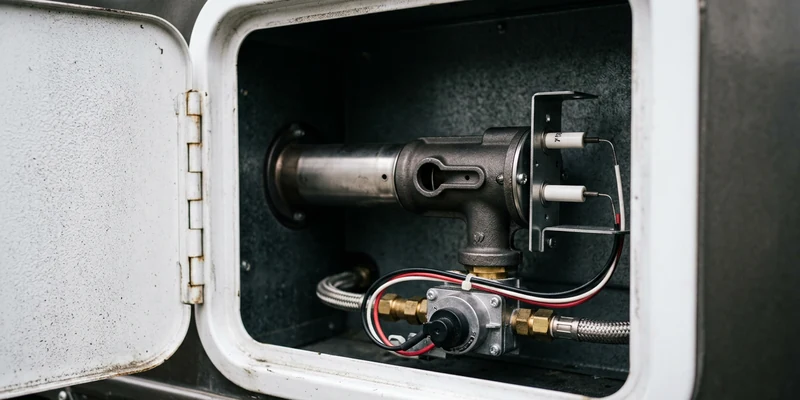
The first is the spark electrode. It sits in the burner area with a small ground tab, and it sparks across a gap. Soot, corrosion or spider silk on either surface weakens or shorts the spark. With the appliance switched off, the propane closed at the tank, and everything cold, the electrode and its ground contact can be cleaned gently with a fine brush or an abrasive pad until the metal is bright. Do not bend anything, do not adjust the gap, and do not go further into the burner assembly than the electrode itself.
The insects nobody expects
The second is the vent. Mud daubers, wasps and spiders love the warm, sheltered airflow around an RV water heater burner, and a nest is one of the most common reasons a heater clicks without lighting or lights and immediately dies. Clearing debris, leaves and nests from the exterior of the vent and the access area is fully owner territory, and fitting a screen prevents the recurrence.
Anything inside the burner tube is not. Cleaning out a blocked burner tube is a real and frequent repair, and it is also a job where a poorly reassembled or misaligned burner produces carbon monoxide. We do not publish those steps. Describe the symptom to a certified RV technician and let them do it.
🐝 The part that prevents the most common gas fault
A stainless insect screen sized to your water heater’s exterior vent. It installs on the outside, keeps mud daubers out of the burner area, and costs a fraction of the callout it prevents. Measure the vent opening before ordering, since sizes differ between Suburban and Dometic style doors.

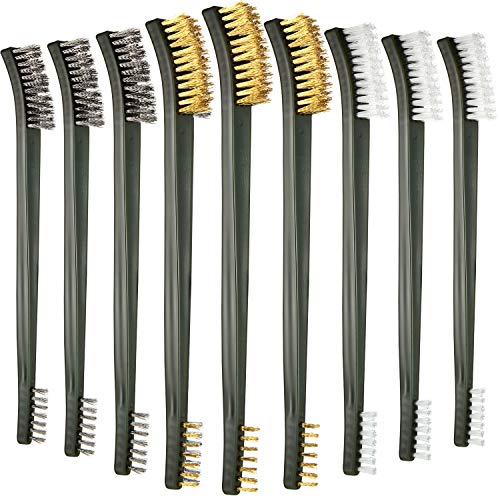
🧽 For a weak or missing spark
A small set of fine brushes and abrasive pads for cleaning the igniter electrode and its ground contact back to bright metal. Work only with the appliance off, the propane closed at the tank and the unit fully cold, and clean the surfaces without bending or repositioning anything.
Lockouts, Levelling, and Other Conditions
Control boards give up after a set number of failed ignition attempts and enter a lockout, which is why a heater that clicked away happily an hour ago now does nothing. Switch the gas mode off, leave it a minute, and switch it back on to start a fresh sequence. If it locks out again immediately, you have a real fault rather than a stuck state.
Two environmental factors also matter. A rig parked well out of level can affect burner performance and, on some units, the thermostat sensing, so level up before you conclude anything. And at high altitude, appliances commonly run less willingly on the same setup they were happy with at sea level. Neither is a repair; both are worth ruling out before you spend money.
Where This Stops Being a DIY Job
This is a gas appliance, so the boundary here is stricter than anywhere else on the site, and we would rather lose the click than publish something that hurts someone.
- We do not publish instructions for gas lines, regulators, gas valves, burner tubes, orifices, burner adjustment or thermocouple adjustment. Errors in those components produce carbon monoxide or a propane leak, and neither gives a useful warning. Describe the symptom to a certified RV technician instead.
- Anything on the 120 volt side. Element and thermostat wiring and breaker work belong to a certified technician or licensed electrician.
- A hot or pressurized tank. Never open the drain, the anode rod or the relief valve on a warm tank. Switch off, cool for several hours, shut the water supply, open a hot tap, then lift the relief valve lever.
- Repeated lockouts, or a burner that lights and dies. That is a combustion or venting diagnosis with proper tools, not a reset to keep pressing.
Stop immediately if you smell gas, if a carbon monoxide alarm sounds, if you see soot around the vent, if the flame is yellow or lifting off the burner, or if there are scorch marks on the door or the surrounding wall. Shut the appliance off, close the valve at the propane tank, ventilate, get everyone outside, and do not use it again until a certified technician has passed it.
🚨 The alarm most owners never check
A combination propane and carbon monoxide alarm made for RV use. These carry a service life printed on the housing, commonly five to ten years from the date of manufacture, and an expired alarm behaves exactly like a working one until the day it matters. Turn yours over and read the date now.

Common Mistakes to Avoid
- Assuming gas mode works without the battery. Electronic ignition is a 12 volt system first, and this catches more owners than any other single thing.
- Opening the propane tank valve fast. The excess flow device restricts the supply and starves every appliance in the rig.
- Trusting the changeover regulator indicator. Confirm which bottle is live by hand rather than by the color of a small window.
- Cycling the switch a dozen times. Repeated failed attempts push the board into lockout and dump unburned gas into the burner area.
- Poking around inside the burner tube. A common repair, and a genuinely dangerous one to improvise. Let a technician do it.
- Ignoring a yellow flame because it still makes hot water. Flame color is a combustion signal, and a yellow one means stop.
Where to Go From Here
If the electric side has now stopped working too, the fault has moved to shared components and dead on gas and electric is the right path. If electric alone is the problem, see not heating on electric.
Brand specifics matter for reset locations and layout: we cover Suburban units and Dometic and Atwood units separately, and the type overview is in our RV water heater guide. If the appliance turns out to be finished, propane tankless models are worth understanding before you replace like for like.
Frequently Asked Questions
Why does my RV water heater click but not light? Either propane is not reaching the burner or the spark is too weak to ignite it. Verify gas supply with another appliance first, then clean the igniter electrode and its ground contact. Persistent failure after that is a technician job.
Does the water heater need 12 volt power to run on propane? Yes, on any electronic ignition model. The control board, the spark and the gas valve all run on the battery, so a blown fuse or a flat battery stops the burner even with full bottles.
Why does my heater light and then go out after a few seconds? That pattern usually means the flame is not being sensed or airflow is restricted, often by an insect nest in the burner area. Clear the outside of the vent, then have a certified technician inspect the burner and venting.
Can I clean the burner tube myself? We do not publish instructions for it. Burner tubes, orifices and gas valves are certified RV technician work because incorrect reassembly can produce carbon monoxide. Clearing the exterior of the vent is fine.
Why does my propane heater not work after refilling the tanks? Air can enter the line when bottles run dry or are refilled. Run a stove burner for a couple of minutes to purge it, and open the tank valve slowly so the excess flow device does not restrict the supply.
What should the flame look like? Steady and blue. A yellow, lazy or lifting flame, soot around the vent, or a gas smell all mean shut the appliance down, close the tank valve, ventilate, and call a certified technician before using it again.
The Bottom Line
Prove the propane first with another appliance, then confirm the 12 volt fuse and battery, because electronic ignition will not spark without them. Listen at the access door and let the sequence tell you where the fault sits: no clicks, clicks without light, or lights then dies each mean something different. Clean the electrode and clear the outside of the vent yourself, fit an insect screen, and hand every gas component and any repeated lockout to a certified RV technician.