Last updated: August 14, 2026
An RV stove igniter not working is one of the few propane appliance faults where a lot of the diagnosis genuinely belongs to the owner. The ignition system is electrical, not gas. It makes a spark, and either it makes one or it does not. Sorting out whether you have no click, a click with no spark, or a spark landing in the wrong place tells you almost everything, and none of those observations require you to touch a gas component.
What this article will not do is take you past the burner face. The ceramic electrode sits in the burner assembly, and while wiping and drying it is fine, replacing it, adjusting its gap, or working on anything attached to it is certified RV technician territory. The good news is that the cheap causes, a dead battery, a greasy button, a wet electrode after a wash day, account for a large share of these complaints.
This article contains affiliate links. If you buy through them, we may earn a commission at no extra cost to you. Learn more.
Quick Answer
Why is my RV stove igniter not clicking or sparking?
- No click at all usually means no power to the ignition: a dead battery in the holder under the cooktop, or a blown fuse on the 12V feed if your stove uses electronic ignition. Piezo systems have no power source and fail mechanically instead.
- Clicking with no visible spark, or a spark that jumps to the wrong place, is nearly always a dirty, greasy, wet, or cracked ceramic electrode. Cooled and with the gas off, wipe the tip and the surrounding surface and let it dry fully.
- If it still will not spark after that, the module or electrode has failed and it is a service part. Replacing anything mounted in the burner assembly is technician work, and so is every gas component behind it.
Symptoms, Causes, and What to Do
Find what your igniter is doing, then work the action column. The rows run from free fixes to the point where a technician takes over.
| What the igniter does | What it usually means | What to do |
|---|---|---|
| No click on any burner | No power to the module, or a failed module | Change the battery in the holder, or check the 12V fuse for the cooktop |
| No click on one burner only | Switch or wiring for that position | Note it and hand it over, the parts sit at the burner |
| Clicks steadily, no visible spark | Fouled, wet, or cracked electrode | Cooled and gas off, clean and dry the tip, then retest in a dim galley |
| Sparks to the burner cap or the pan support | Electrode grounding in the wrong place, often after a spill | Clean the area and reseat the burner cap squarely |
| Weak, thin, orange spark | Low battery, or moisture in the circuit | Fresh battery, then let the appliance dry out completely |
| Clicks constantly, even with knobs off | Stuck switch or moisture bridging a contact | Cut power to the ignition and get it looked at, do not leave it clicking |
| Worked until the rig was washed | Water in the electrode area or the switch | Dry it out fully, often overnight, before concluding anything |
| Sparks fine, burner still will not light | Ignition is proven, gas is not arriving | See stove will not light and not getting gas |
| Sparks, lights, dies on knob release | Flame sensing or valve fault, not ignition | Certified RV technician |
| Any gas smell during testing | Unburned propane in the galley | Knobs off, tank valve closed, ventilate, everyone outside |
Piezo or Electronic: Which One Do You Have?
These two systems fail differently, so identify yours before you start. A piezo igniter is purely mechanical. You press a separate button, a spring loaded hammer strikes a crystal, and it produces a single loud snap and one spark. No battery, no fuse, no wiring beyond the high tension lead.
An electronic igniter produces a rapid series of clicks for as long as you hold the knob in, and it needs power to do it. On many RV cooktops that power comes from a single AA or D cell in a holder mounted under the cooktop or behind the drawer below the oven. On others it comes from the coach 12V system through a fuse in the distribution panel.
Why the distinction matters
If you have a piezo system, replacing batteries is not a possible fix and a dead button is mechanical. If you have an electronic system, a flat cell or a blown fuse explains a total loss of clicking and costs almost nothing to resolve. Owners waste a lot of time here because both types look similar from above.
No Click at All
Start at the power source, because that is where most total failures live. Find the battery holder first: it is usually a small black cylinder on a wire, clipped under the cooktop, inside the oven drawer cavity, or behind the lower trim panel. A cell that has been in there for a couple of seasons is often flat or corroded at the contacts.
If your ignition runs from the coach 12V system instead, check the fuse labeled for the range or cooktop in the distribution panel, pull it and look at the element rather than squinting through the plastic, and confirm house battery voltage is healthy, usually around 12.6 to 12.8 volts at rest. Ignition modules become unreliable well before a battery is anywhere near flat.
If power is good and it still does not click
Then the module or the switch behind the knob has failed. Both are service parts, both sit under the cooktop next to gas components, and replacing them is a job we hand to a certified RV technician. It is a short visit, and it is far cheaper than the alternative of a stove nobody trusts.
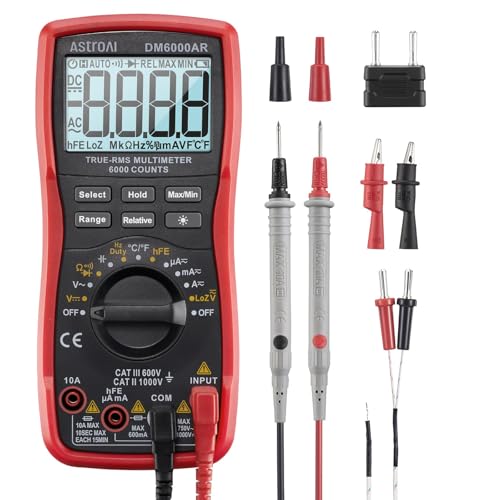
🔌 For confirming power before you buy parts
A basic digital multimeter is the single most useful tool in an RV, and here it settles the question in seconds: is the cell in the holder actually delivering, and is the 12V feed live at the fuse. Auto ranging models are easier if you use one rarely.
It Clicks but Nothing Sparks
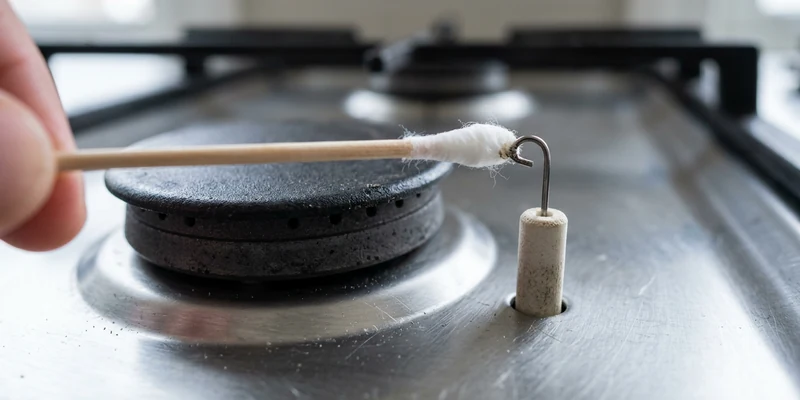
A steady click with no spark means the circuit is energized and the spark is not making it across the gap at the electrode. Nine times out of ten the cause is on the surface: cooked on spill residue, a film of grease, cleaning spray that ran into the burner cap, or plain water after a wash.
Test in a dim galley with the gas off and the knob turned only far enough to trigger the igniter, which on most cooktops is a distinct detent before the gas position. Watch the tip. A healthy spark is a bright blue white snap jumping a small gap to the burner. If you see nothing, or a faint orange flicker, you have your answer.
The safe way to clean an electrode
Wait until the cooktop is completely cold, turn every knob off, and close the tank valve. Lift off the burner cap, wipe the ceramic tip and the surrounding surface with a soft cloth, dry it thoroughly, and let the area air dry for a while longer than you think it needs. A soft brush is fine for loose crumbs. What is not fine is scraping the ceramic, bending the electrode, adjusting the gap, or pushing anything into the burner head or its ports. Reseat the burner cap flat and square when you are done.
🧽 For the residue that stops a spark
A non abrasive cooktop cleaning kit with a soft brush and a cloth. Keep abrasive pads and wire brushes away from the ceramic tip and the burner face, since a scratched electrode and a bent one both cause the same complaint you are trying to fix.

Sparking in the Wrong Place
A spark that jumps to the pan support, the edge of the burner cap, or the cooktop surface instead of into the burner is a grounding problem, and it usually follows a boil over. The spark takes the easiest path it can find, and a crust of dried food or a misaligned cap gives it one.
Clean the area as described above, then check that the burner cap is seated flat and fully home. A cap that sits proud on one side, often because it was refitted in a hurry, moves the spark path enough to stop ignition entirely. If the cap is warped or corroded, replace it rather than persuading it to sit flat, which is covered along with grates and lids in RV stove glass tops, grates and burners.
Where the Igniter Job Stops Being Yours
Cleaning, drying, checking a battery, and checking a fuse are yours. Everything past that is not, and we are explicit about why. The electrode is mounted in the burner assembly, alongside the burner tube, the orifice, and on ovens the flame sensing components. We do not publish instructions for setting an electrode gap, removing burner assemblies, cleaning burner tubes, working on orifices, adjusting the flame, or touching gas lines, valves, and the regulator, and we would encourage you not to follow instructions that do.
The reason is not liability theater. Those components are what stand between a controlled blue flame and incomplete combustion in a small sealed living space, and incomplete combustion is invisible. A certified RV technician can replace an ignition module or electrode and verify the burner afterward with a manometer, which is the part no video can do for you.
Stop immediately if
Shut the knobs off, close the tank valve at the bottle, open windows and roof vents, and get everyone outside if you smell gas while testing, if a CO or propane alarm sounds, if you see soot or scorch marks near a burner, or if a flame ever burns yellow or lifts away from the burner. Never test for a leak with a flame, and never keep triggering an igniter in a galley that smells of gas.
🚨 Non negotiable in any coach with propane
A working carbon monoxide alarm, or a combined CO and propane detector, with the expiration date on the back of the housing checked. Ignition testing means gas cycling in and out of a small space, which is exactly when you want a live alarm on the wall.

Living With It Until It Is Fixed
If your manual describes a hand lighting procedure for your model, that is a legitimate stopgap while a part is on order, and only in the printed sequence. Do not invent one. A stove that has to be lit by hand every time is a fault waiting on a repair, not a new normal, and the longer it goes the more likely someone in the family does it in the wrong order.
The wider diagnosis, including what a working spark actually proves about the gas side, is in RV stove will not light, and the parts overview for the whole appliance is in RV stove parts and what fits what. Owners of Suburban units will find the model specific detail in Suburban RV stove parts.
Common Mistakes to Avoid
- Assuming the igniter failed because the burner did not light. Watch for the spark itself in a dim galley before spending anything.
- Testing with the gas on. Use the igniter detent before the gas position, so you are looking at a spark and not filling the galley.
- Scrubbing the ceramic tip with an abrasive pad. A scratched or chipped electrode is a new problem on top of the old one.
- Bending the electrode to close the gap. That is a setting, not a bodge, and it belongs to a technician.
- Ignoring a burner cap that sits crooked. Misaligned caps send the spark to the wrong place every time.
- Leaving a stove that clicks constantly. A continuous clicker is a stuck switch or moisture, and it should be shut down until it is diagnosed.
- Forgetting the battery holder exists. Many owners never knew their cooktop had one until it went flat.
Frequently Asked Questions
Does an RV stove igniter have a battery? Many electronic ignition cooktops use a single cell in a holder under the cooktop or behind the lower panel. Others run from the coach 12V system through a fuse. Piezo igniters use no power at all.
Why does my igniter click but not spark? The circuit is live and the spark is not crossing the gap, almost always because the ceramic electrode is wet, greasy, or coated in spill residue. Clean and dry it cold with the gas off, then retest in a dim galley.
Can I replace the igniter electrode myself? We do not recommend it and we do not publish steps for it. The electrode is mounted in the burner assembly next to gas components, so replacement and gap setting belong to a certified RV technician.
My igniter clicks nonstop even with the knobs off. That is usually a stuck switch or moisture bridging a contact. Cut power to the ignition, pull the cell or the fuse, and have it looked at rather than leaving it sparking.
The igniter stopped working right after I washed the RV. Water in the electrode area or the switch is a common cause and often clears on its own. Let the appliance dry fully, ideally overnight, before you order any parts.
Is it safe to keep using the stove if only the igniter is broken? Only where your manual describes hand lighting, and only as a stopgap. Get the ignition repaired, because a workaround performed in the wrong order releases gas before there is a flame.
The Bottom Line
Split the symptom first: no click points at ignition power, which is a battery in a holder or a 12V fuse, while clicking without a spark points at a wet, greasy, or cracked electrode you can clean cold with the gas off. A spark landing on the cap or the pan support usually means a boil over or a burner cap that is not seated flat. If it still will not spark, the module or electrode has failed, and replacing anything mounted in the burner assembly, along with every gas component behind it, is certified technician work. Keep a live CO alarm on the wall and stop everything if you smell gas.