Last updated: August 14, 2026
When owners ask how to calculate tongue weight, the honest answer is that you do not calculate it, you measure it. The percentage everyone quotes tells you what the answer should look like, not what your trailer is actually doing. The single most common mistake is using the dry tongue weight from the brochure, a number recorded at the factory before water, batteries, propane, tools, bikes, and everything else in the pass through went aboard.
The good news is that measuring is not hard and you have three practical ways to do it at home or at a scale a few miles away. What matters is that you measure the trailer the way you tow it, and that you check the result against every rating printed on your vehicle and trailer labels rather than against a percentage alone.
This article contains affiliate links. If you buy through them, we may earn a commission at no extra cost to you. Learn more.
Quick Answer
How do you calculate RV tongue weight at home?
- Measure rather than estimate: a public truck scale, a dedicated tongue weight scale, or a bathroom scale with a lever setup will all give you a real number for a loaded trailer.
- Weigh the trailer exactly as you travel, with tanks at their normal travel level and gear stowed where it lives, because dry figures from the brochure describe a trailer nobody tows.
- Compare the result against the range commonly cited as roughly 10 to 15 percent of loaded trailer weight, and against the tongue weight limits on the ball, ball mount, receiver, and the vehicle door jamb label.
Three Ways to Measure, Compared
All three methods give you a usable number. They differ in what they cost you in time, what else they tell you, and how heavy a tongue they can handle. Start with the row that matches the tools you already have.
| Method | What you need | What you learn | Best for |
|---|---|---|---|
| Public truck scale | A certified scale that lets you weigh in two passes | Tongue weight plus every axle weight in the combination | Anyone who also wants to check GVWR, GAWR, and payload |
| Tongue weight scale | A dedicated scale placed under the coupler | Tongue weight only, repeatable in your own driveway | Owners who reload often and want to recheck each trip |
| Bathroom scale and lever | Scale, a sturdy beam, two pipes or blocks, patience | Tongue weight only, within the limits of the setup | Lighter trailers where the tongue stays inside the scale range |
| Percentage estimate | Loaded trailer weight and arithmetic | A target zone, not a measurement | Sanity checking a measurement, never replacing one |
| Guessing by fender height | Nothing | Whether something changed, not what the number is | Spotting a problem between real measurements |
Notice the last two rows. A percentage is a target and a squatting rear end is a symptom. Neither one is a measurement, and neither one tells you whether you are inside your ratings.
Why the Brochure Number Is Not Your Number
Dry weight and dry tongue weight are recorded before the trailer has a battery, propane, fresh water, or a single item of gear. Fresh water alone is heavy, and where the tank sits relative to the axles decides whether filling it raises or lowers your tongue weight.
Every addition since delivery moves the balance too. A second battery on the A frame, a generator in the front compartment, a bike rack on the rear bumper, and a full pass through of tools all pull in different directions. That is why owners who add gear over a season and never remeasure can drift out of range without a single obvious change, which is one of the quieter causes behind what causes trailer sway.
Weigh the Trailer You Actually Tow
Before any method, pack for a real trip. Tanks at the level you travel with, propane on board, awning and chairs in their spots, everything in the bays where it usually rides. If you tow with fresh water some trips and empty on others, measure both ways, because that one variable can move the number more than anything else you carry.
Method One: The Public Truck Scale
This is the most useful method because tongue weight comes out as a byproduct of information you want anyway. The principle is simple: weigh the tow vehicle with the trailer attached, then weigh the tow vehicle alone, and the difference is what the trailer is pressing down on the ball.
Do it in this order. Pull the whole combination onto the scale with the tow vehicle axles and the trailer axles on separate platforms and record every reading. Then move to a spot where you can safely drop the trailer on its jack, chock the trailer wheels, unhitch, and weigh the tow vehicle by itself. Subtract the solo tow vehicle weight from its hitched weight and you have measured tongue weight.
What Else the Ticket Tells You
That same ticket gives you your loaded trailer weight to compare against GVWR, your trailer axle weight to compare against GAWR, and your tow vehicle axle weights to compare against its ratings and payload. Working out which number governs is covered in RV weight ratings explained. If any figure lands above a rating, the fix is cargo, not hardware.
Method Two: A Dedicated Tongue Weight Scale
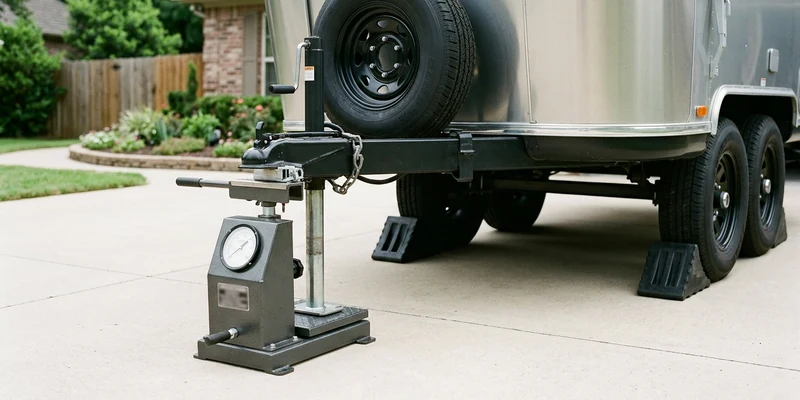
A tongue weight scale sits under the coupler and reads the download directly. It is the fastest way to answer the question in your own driveway, and it makes rechecking after a reload a two minute job instead of a trip across town.
Setup matters more than people expect. The trailer wheels need to be chocked front and back before anything else happens, the coupler should sit at normal towing height rather than nose high or nose down, and the ground under the scale should be firm and level. A trailer measured nose high reads differently from the same trailer measured at towing height, so repeat the same setup every time you want to compare.
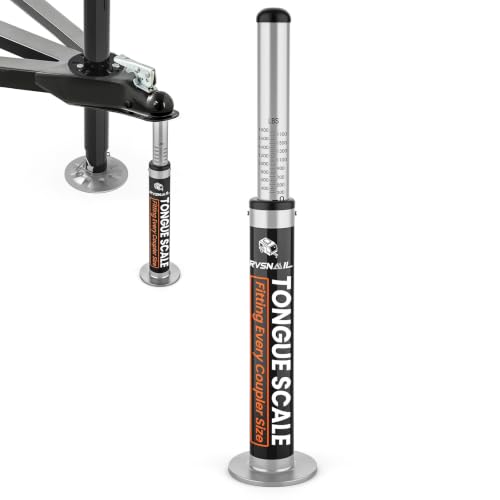
Match the capacity to your rig before buying. A scale that tops out below your likely tongue weight is not just useless, it is a component being loaded past its rating, which is exactly the habit this whole exercise exists to break.
Method Three: The Bathroom Scale and Lever Setup
The classic driveway method uses leverage to bring a heavy tongue inside the range of an ordinary scale. You rest the coupler on a beam, support one end of the beam on a fixed block and the other end on the scale, and the reading multiplies by the ratio of the distances involved. A beam supported so the scale sits three times farther from the coupler than the block does will read roughly a third of the actual tongue weight.
It works, and owners have used it for decades, but it demands respect. Chock the trailer wheels first and keep them chocked. Use a beam that will not bend under load, keep the coupler at towing height, keep your hands and feet clear of anything the tongue could drop onto, and never let any part of you end up under the coupler. Stop and use a different method if the setup flexes, if the blocks shift, or if the arithmetic puts you near the top of the scale’s range.

Where This Method Runs Out
Large trailers and fifth wheels put down more than a driveway setup handles sensibly. Once the numbers get big, the leverage gets long, the beam gets heavier, and the failure modes get worse. That is the point to use a scale ticket instead.
Reading the Result Against Your Ratings
Two checks decide whether your number is good, and both have to pass. The first is balance: conventional bumper pull trailers are commonly targeted at roughly 10 to 15 percent of loaded trailer weight, and fifth wheel pin weights run considerably higher as a share of trailer weight. Below that range, the trailer starts behaving like a pendulum, which is the mechanism explained in can too much tongue weight cause sway.
The second check is capacity. Tongue weight sits on the ball, the ball mount, and the receiver, each with its own rating, and it consumes tow vehicle payload from the door jamb label. The lowest number in that chain is the one that governs, and no accessory raises it. Some receivers list one rating for weight carrying use and a higher one for weight distributing use, so read the label rather than the marketing.
What to Do When the Number Is Off
If the tongue is too light, move dense items forward of the trailer axles in stages and remeasure after each change. Water tanks, tool boxes, and generators are the heavy movers. Do not simply add weight to the A frame until the percentage looks right, because that raises loaded trailer weight and eats payload at the same time.
If the tongue is too heavy, resist the urge to slide everything behind the axles. That is the fastest route to genuine sway. Move cargo rearward in small measured steps, and use a properly adjusted weight distribution hitch to restore ride height and front axle load, as covered in our guide to weight distribution hitches with sway control. Spring bars should be rated for your measured loaded tongue weight, not the brochure figure.

Where This Stops Being a Driveway Job
Measuring is a home job. Anything structural is not. If you find cracks or bends in the A frame, elongated holes at the receiver or coupler, corrosion around receiver mounting points, or damage after a hard sway event, stop and have a qualified hitch shop inspect it before the next trip. The same applies if measured weights come out over a rating and you are not sure which item to remove.
And the rule that outranks all of the above: a weight distribution hitch, airbags, helper springs, and stiffer shocks change how a load feels, not what your vehicle is rated to carry. Ratings come from the manufacturer, they appear on the labels, and no amount of hardware moves them.
Common Mistakes to Avoid
- Using dry tongue weight. It was recorded before water, batteries, propane, and every item you added since.
- Measuring a half packed trailer. Weigh it the way you travel, or the number describes a trip you are not taking.
- Measuring nose high. Coupler height changes the reading, so set it to towing height every time.
- Skipping the chocks. Every method involves the trailer sitting on its jack with the tow vehicle gone or about to be.
- Chasing the percentage only. A perfect 12 percent still fails if it exceeds the receiver rating or your payload.
- Adding weight to the A frame to fix a light tongue. Move existing cargo forward instead of increasing total weight.
Frequently Asked Questions
What should RV tongue weight be? For conventional bumper pull trailers the commonly cited target is roughly 10 to 15 percent of the loaded trailer weight. The measured figure also has to fit inside the tongue weight ratings of the ball, mount, receiver, and tow vehicle.
Can I measure tongue weight with a bathroom scale? Yes, using a beam and a fulcrum so the scale reads a known fraction of the actual load. Chock the wheels, keep the coupler at towing height, stay out from under the tongue, and switch to a truck scale once the numbers get large.
Does a full fresh water tank change tongue weight? It can change it a lot, in either direction, depending on whether the tank sits ahead of or behind the axles. Measure both loaded and empty if you tow both ways.
How often should I remeasure? After any change in how the trailer is packed, after adding a battery, generator, or rack, and at the start of each season. A tongue weight scale makes the recheck quick enough that there is no excuse.
Does a weight distribution hitch change my tongue weight? It redistributes the load onto the tow vehicle front axle and the trailer axles so the rig sits level, but the trailer still presses the same weight on the ball, and no rating goes up. See RV weight ratings explained for how the numbers interact.
Is fifth wheel pin weight measured the same way? The two pass scale method works the same way, but the target share of trailer weight is considerably higher than for a bumper pull, and the load lands on the truck bed rather than a receiver.
The Bottom Line
Tongue weight is measured, not calculated, and the only trailer worth measuring is the one packed the way you tow it. A public truck scale gives you tongue weight plus every axle figure you need, a dedicated tongue weight scale makes rechecking easy, and a beam and bathroom scale works for lighter tongues if you chock the wheels and stay clear. Judge the result against both the commonly cited 10 to 15 percent range and every rating on your labels, and fix problems with cargo placement and a properly adjusted weight distribution hitch rather than with hardware that promises to raise a limit.