Last updated: August 14, 2026
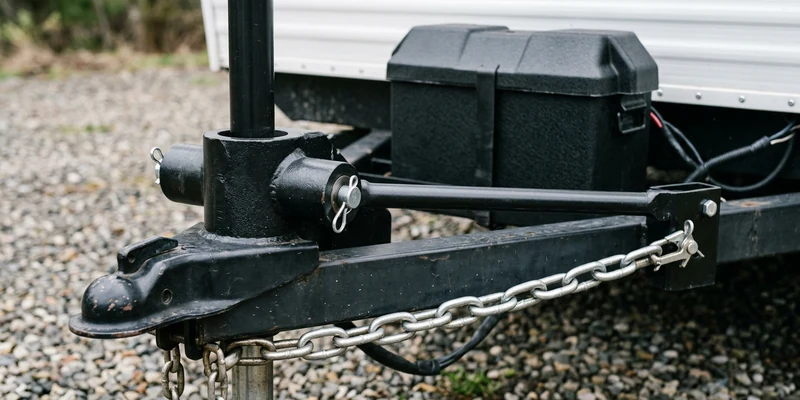
A trailer sway control hitch is doing two jobs at once, and understanding the split is what makes this purchase straightforward. The weight distribution half uses spring bars to apply leverage against the trailer’s A-frame, moving part of the tongue load off the tow vehicle’s rear axle and onto its front axle and the trailer’s own axles. That is what restores level stance, steering feel, and braking balance. The sway control half then resists the trailer’s tendency to rotate around the hitch ball, either with friction, with cams, or with the geometry of the chains themselves.
Which sway control method a hitch uses matters less than getting the spring bar rating right, and that is where most bad purchases start. A hitch whose bars are rated far above your loaded tongue weight rides harshly and does not distribute properly, while one rated below it is not doing the job at all. This guide covers how to size a kit, what separates the main designs, and which models from established towing brands suit which rigs.
This article contains affiliate links. If you buy through them, we may earn a commission at no extra cost to you. Learn more.
Quick Answer
Which weight distribution hitch with sway control should you buy?
- Size first: pick the kit whose spring bar rating brackets your actual loaded tongue weight, including anything in the tow vehicle’s bed and the trailer’s propane and battery.
- For most travel trailers, a trunnion bar kit with integrated sway control built into the head is the easiest to live with, since there are no friction pads to adjust.
- Chain style systems apply sway resistance continuously and stay connected in weather, while friction based systems are cheaper and often need to be released in rain and ice.
What Separates a Good Kit From a Frustrating One
Six things decide whether a weight distribution hitch suits your rig. Work down this list before you compare brands, because a correctly sized entry level kit outperforms an oversized premium one.
| What to check | Why it matters | What to look for |
|---|---|---|
| Spring bar rating window | Bars too stiff ride badly and do not distribute; too soft and they are overloaded | A published tongue weight range that brackets your measured loaded tongue weight |
| Gross trailer weight rating | The kit is rated as a system, not just by the bars | A rating at or above your loaded trailer weight, checked against the trailer label |
| Sway control method | Decides setup effort and weather behavior | Integrated head, cams, chain tension, or add-on friction bars |
| Shank adjustability | Coupler height varies enormously between rigs | Enough rise and drop range for your combination, plus a fine adjustment |
| Hookup effort | You do it at every departure | Bars that snap or lift into place without a long lever, if that matters to you |
| Grease and noise | Friction surfaces need lubrication or they groan | Greaseless or sealed designs if you tow often and park in tight spots |
Notice that none of those criteria mention capacity of the tow vehicle. That is deliberate. A weight distribution hitch changes how load sits, not how much your vehicle is rated to carry, and that distinction is covered in RV weight ratings explained.
How to Size the Kit Correctly
Sizing is done on loaded tongue weight, not on trailer dry weight, and that catches people out. The number you need includes the trailer as you actually travel with it: full propane, a battery, the gear in the front pass through, and whatever sits in the tow vehicle’s bed behind the rear axle, since that adds to the load the bars have to work against.
Measure it rather than estimating. Trailer and hitch makers publish a recommended tongue weight as a percentage of loaded trailer weight, commonly cited in the low teens, and a scale removes the guesswork. Our walkthrough on calculating tongue weight at home covers the methods, and tongue weight and sway explains why that percentage is the single most influential number in the whole setup.
Round bar or trunnion bar?
Trunnion bars mount into the head horizontally and generally give more ground clearance and a bit more capacity for the same size, which is why most current travel trailer kits use them. Round bars hang below the head and are common on lighter and older designs. Both distribute weight the same way, so choose on clearance, on the sway control that comes with them, and on what fits your coupler height.
Our Top Picks at a Glance
How we chose: we compared widely available weight distribution hitches on published rating windows, sway control design, shank adjustability, hookup effort, and the maintenance themes that repeat in owner feedback. Our assessment rests on manufacturer information and that feedback rather than any hands on trial of our own.
🏆 Best Overall
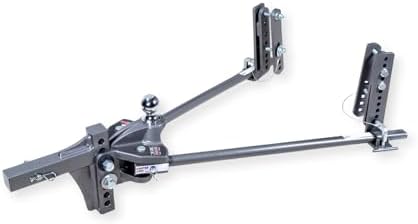
A trunnion bar kit with sway control built into the head is the easiest of these systems to live with day to day. There are no separate friction bars to fit, nothing extra to disconnect before backing, and setup is a ride height measurement plus the maker’s bar tension procedure. Match the rating window to your measured loaded tongue weight, and confirm the shank gives enough rise or drop for your coupler height.
💰 Best Budget Pick
A round bar weight distribution kit bundled with a friction sway control bar is the accessible way into this category, and for a moderate travel trailer that mostly sees calm highways it covers both jobs. The trade-offs are the extra bar to connect at every departure, the instruction to release it in wet or icy weather, and slightly less ground clearance under the bars. Check that the bundle actually includes the sway control ball.

🔗 Upgrade Pick
A chain style system holds the spring bars under continuous tension in brackets on the trailer frame, so sway resistance is always applied rather than triggered. Owners commonly mention that it is quieter than friction hardware, that it stays connected in weather where friction bars are supposed to be released, and that backing at an angle is less of a ritual. Setup is more involved the first time, and the payoff is less fiddling afterward.

Which Sway Control Method Suits You?
All four approaches work. They differ in how much attention they want, how they behave in weather, and what they sound like in a parking lot.
| Method | How it resists sway | Trade-off |
|---|---|---|
| Add-on friction bar | A clamped bar resists rotation at the coupler | Cheapest, but usually must be released in rain and ice |
| Integrated head friction | Friction surfaces inside the hitch head | Nothing extra to connect; may need periodic lubrication |
| Cam style | Cams push the trailer back to center after a turn | Self centering feel, more parts and more setup |
| Chain tension | Bar geometry under continuous tension resists rotation | Always on and quiet, higher initial setup effort |
If you would rather add sway control to a hitch you already own than replace the whole system, that is a legitimate route and it is covered in our roundup of trailer sway bars and control kits.
Two More Picks for Specific Situations
The three above cover most travel trailers. These fill in at the ends of the range, where hookup effort or trailer weight becomes the deciding factor.
🧼 Easiest to Live With
A greaseless system removes the part of weight distribution that owners like least, which is a set of steel bars that need grease and leave marks on everything they touch. Designs that use a friction cone or a sealed arrangement instead of greased trunnions also tend to be lighter to handle at the coupler, and that matters if you are hitching alone. Confirm the rating window and coupler compatibility, since these systems have specific fitment requirements.

🏋️ Best for Heavier Trailers
Once loaded tongue weight climbs toward the upper end of what a half ton setup handles, the kit needs bars in a higher rating window and a shank rated to match. Heavier kits are also where dual friction bars or cam based sway control start appearing as standard rather than optional. Size it on measured numbers, not on trailer brochure figures, and confirm your hitch receiver carries a weight distribution rating of its own.

Setup, Ride Height, and the Habits That Matter
A weight distribution hitch that is installed but not adjusted is close to useless, and this is the step most likely to be rushed. The procedure every maker publishes is the same in outline: measure the tow vehicle’s front and rear fender heights unhitched, hitch up, then adjust the head angle and bar tension until the front fender height returns close to where it started.
Follow the manufacturer specification for head tilt, washer count, chain links, or bar tension, because those settings vary between designs and a generic number would be a guess. Torque every fastener to the specification in your instructions, then recheck after the first short drive since fresh hardware settles. Recheck ride height whenever the load changes noticeably, because a trailer packed for a two week trip is not the trailer you set the hitch up with.
Where this stops being a driveway job
Assembling and adjusting a kit on a sound hitch is reasonable home work. Anything structural is not. Drilling a hitch shank or ball mount is only acceptable where the manufacturer explicitly permits it, welding brackets to a trailer frame is shop work, and a receiver with cracked welds, elongated holes, or corrosion damage goes to a hitch shop before it goes back on the road. If your tow vehicle or receiver does not carry a weight distribution rating, that is a hard stop rather than a detail to work around.
Common Mistakes to Avoid
- Sizing on dry weight. Bars are chosen on loaded tongue weight, including propane, battery, gear, and anything in the truck bed behind the axle.
- Buying bars that are too stiff. Oversized bars ride harshly and distribute poorly. Bigger is not safer here.
- Skipping the ride height measurement. Without before and after numbers, you have installed hardware rather than set it up.
- Ignoring the receiver’s own rating. Many receivers list separate weight carrying and weight distributing ratings, and they are not the same number.
- Forgetting the weather instruction. Add-on friction bars usually need releasing in rain and ice. Chain and integrated systems often do not, but the manual decides.
- Never rechecking torque. Fasteners settle after the first heat cycle and the first miles. A recheck is part of the install, not an optional extra.
Where to Go From Here
If you are not yet sure whether weight distribution is what your rig needs, look at the stance rather than the catalog. A tow vehicle that sits level when hitched may only want sway resistance, which is a much cheaper afternoon. Our explainer on how a trailer sway bar works covers that distinction, and what causes trailer sway covers the causes worth eliminating before any hardware goes on.
For lighter rigs, sizing is a different conversation and we handled it separately in our guide to sway bars for light travel trailers. And for what to do when sway happens at speed, see how to stop trailer sway while towing.
Frequently Asked Questions
Do I need a weight distribution hitch? Many tow vehicle and trailer makers require one above a stated trailer weight, and the practical sign is a rear end that squats when you hitch up. Check your owner’s manual and the receiver label, since both carry ratings.
How do I know what spring bar rating to buy? Size on measured loaded tongue weight, including propane, battery, gear, and anything in the truck bed behind the rear axle. Choose the kit whose published window brackets that number rather than the biggest available.
Is a weight distribution hitch the same as sway control? No. Weight distribution moves load onto the front axle and trailer axles, while sway control resists rotation at the coupler. Most modern kits include both, but some include only distribution.
Round bars or trunnion bars? Trunnion bars usually offer more ground clearance and more capacity for the same size, which is why current travel trailer kits favor them. Round bars still work fine within their rating.
Do I have to remove it to back up? Integrated and chain style systems normally stay connected for normal maneuvering. Add-on friction bars often need to be disconnected before sharp backing, so follow the manual for your kit.
Can a weight distribution hitch raise my tow rating? No. Ratings come from the vehicle door jamb placard, the receiver label, and the trailer weight label. The hitch changes how the load sits, never how much you are allowed to tow.
The Bottom Line
Size the kit on measured loaded tongue weight and pick the rating window that brackets it, because that decision matters more than which brand is on the head. Trunnion bar systems with sway control built in are the easiest to live with for most travel trailers, chain style systems apply resistance continuously and stay connected in weather, and budget bundles with an add-on friction bar work if you accept the extra step at every departure. Then set ride height by the manufacturer procedure, because an unadjusted hitch is just weight in the receiver.