Last updated: August 14, 2026
Campground water is the most unpredictable input in the whole rig. One park hands you clear, neutral tasting water at a sensible pressure, the next one delivers something that smells of chlorine, leaves grit in the strainer, and stains the shower. Choosing an RV water filter system is really about deciding how much of that variability you want to deal with, and how much space and money you are willing to give the problem.
There are only four real answers: a disposable inline filter on the hose, a canister system with replaceable cartridges, an under sink filter for drinking water only, and a treatment setup for hard water. This guide sorts them by how you actually camp, weekend trips against full timing, occasional parks against boondocking with unknown fill points, and names the setup that fits each.
This article contains affiliate links. If you buy through them, we may earn a commission at no extra cost to you. Learn more.
Quick Answer
Which RV water filter system should you buy?
- For most owners, a two stage canister system on the hose, a sediment prefilter followed by a carbon block, is the setup that solves the widest range of campground water complaints.
- For weekend trips and minimal storage, a disposable inline hose filter handles taste, odor, and coarse sediment with no installation at all.
- Add a pressure regulator whatever you choose, since campground pressure is the thing most likely to damage your plumbing, and a filter does nothing about it.
What Actually Separates These Systems
Five things decide whether a filter setup suits your rig, and brand is not among them. Work down this list and the shortlist writes itself.
| What to check | Why it matters | What to look for |
|---|---|---|
| Number of stages | A sediment prefilter keeps the fine carbon stage from clogging early | Two stages for most owners, one for occasional use |
| Micron rating | Finer media captures more but restricts flow more | Around 5 micron for sediment, 0.5 micron for a carbon block |
| Flow rate | Too much restriction and the shower goes weak | A rating comfortably above your pump output |
| Where it mounts | Outside on the hose, in a bay, or under the sink | Exterior canisters need somewhere dry to live and to store |
| Cartridge cost and availability | You will buy filters far longer than you own the housing | Standard 10 inch cartridge sizes, widely stocked |
| Freeze exposure | Housings full of water crack in a hard freeze | A setup you can drain and store easily off season |
One thing no filter does is control pressure. That is a separate device, and skipping it is the most common expensive mistake in this category, as we cover in RV water pressure and how much is too much.
The Four Types, in Plain Terms
Each type answers a different question, and mixing two of them is normal rather than excessive. Most full timers end up running a hose stage plus something at the galley tap.
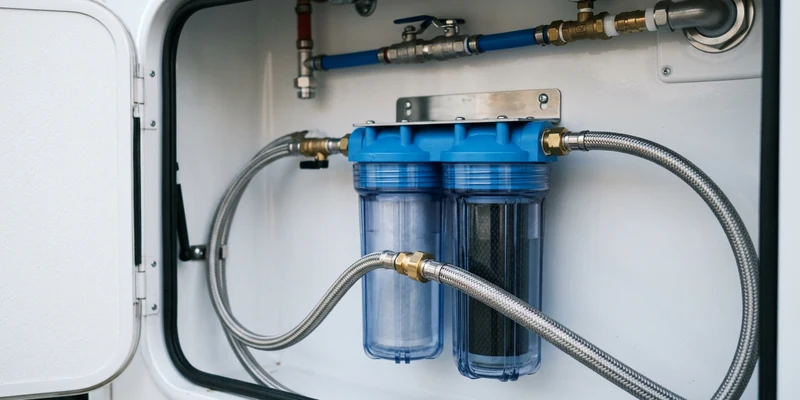
Inline hose filters are the blue cylinders you see screwed onto hoses at every park. They are granular carbon, they mainly address chlorine taste and odor plus coarse sediment, and they get thrown away at the end of the season. Canister systems use replaceable cartridges in reusable housings, which is what lets you choose the media and combine a sediment stage with a fine carbon block. Under sink filters treat only the drinking tap, which means a small volume gets thorough treatment without slowing the shower. Softeners and scale treatment address hard water, which is a mineral problem rather than a filtration problem and needs its own hardware.
Where the confusion usually starts
A carbon filter improves taste and odor and captures particles down to its rating. It is not a purifier and it does not make an unknown water source into a known one. If you have any doubt about a supply, ask the park about it, follow any posted advisory, and treat the filter as a comfort and equipment protection device rather than a guarantee.
Micron Ratings and Flow: The Real Tradeoff
Micron rating is the size of particle a filter is designed to capture, and smaller is not automatically better. A 0.5 micron carbon block catches far more than a coarse granular filter, and it also restricts flow more and clogs sooner on sediment heavy water. That is precisely why two stage systems exist: the cheap sediment cartridge takes the abuse so the expensive carbon block lasts.
Match the rating to your water and your patience. Parks with visibly clean water do fine on a single carbon stage. Water that leaves grit in an aerator or discolors a white filter housing within a week wants a sediment prefilter in front, changed on its own schedule. If a shower suddenly goes weak, the first suspect is a loaded cartridge, not the pump; our guide to common RV water pump issues covers how to tell them apart.
Our Top Picks at a Glance
How we chose: we compared widely available RV water filter setups on stage design, cartridge availability, flow restriction, how well they store and winterize, and the themes that repeat in owner feedback and technician recommendations. Our assessment rests on published specifications and that feedback rather than any trial of our own. Fit matters more than price here, so start with how you camp.
🏆 Best Overall
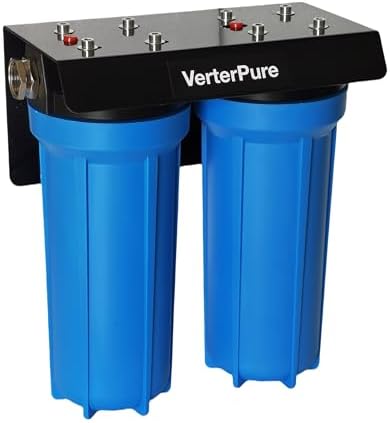
A two stage exterior canister system on the hose: a sediment cartridge first, a fine carbon block second, both in standard housings that take widely stocked cartridges. This is the setup that answers the most complaints at once, taste, odor, and visible sediment, while keeping the fine stage from clogging in a week. Look for a mounting bracket and a wrench in the box, and give it somewhere dry to live in a bay.
💧 Simplest Setup
A disposable inline hose filter, the format most owners start with and many never leave. It screws between the spigot and the hose, needs no bracket, no housing, and no cartridge decisions, and it handles chlorine taste and coarse sediment on ordinary park water. Add a flexible hose protector so the weight does not strain the spigot threads. We compare the format in detail in our guide to the best inline RV water filters.

⬆️ Upgrade Pick
A three stage canister system, typically a sediment cartridge, a carbon block, and a fine final stage rated at a fraction of a micron. It is the setup full timers gravitate to when fill points vary constantly and nobody wants to think about the water again. Expect a real housing, a real bracket, and a genuine commitment of bay space, plus a cartridge schedule you actually have to keep.

Matching the Setup to How You Camp
Your camping pattern narrows this faster than any spec comparison. Weekend use and full timing are genuinely different problems.
| How you camp | What matters most | Which setup fits |
|---|---|---|
| A few weekends a season | Zero installation, easy storage | Inline hose filter, replaced yearly |
| Extended trips, varied parks | Consistent taste, sediment protection | Two stage canister on the hose |
| Full timing | Set and forget across unknown sources | Three stage canister plus an under sink filter |
| Boondocking with hauled water | Protecting the fresh tank from what goes in | Filter at the fill point, plus tank sanitizing |
| Hard water regions | Scale on fixtures and in the water heater | Portable softener ahead of the filter stages |
| Drinking water only | Thorough treatment at low volume | Under sink cartridge with its own faucet |
Hard water deserves a note of its own, because it is the source of a lot of water heater complaints. Scale accelerates the consumption of the anode rod and leaves sediment in the tank, which is one contributor to the classic sulfur smell in RV hot water.
Three More Picks for Specific Situations
The three above cover most rigs. These fill the gaps that appear once you are drinking from the galley tap daily, camping where the water is hard, or plugging into a pedestal you do not trust.
🚰 Best for Drinking Water
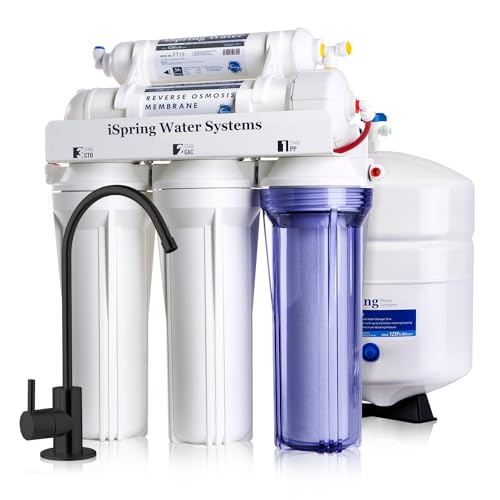
An under sink cartridge filter with its own small faucet, treating only the water you drink and cook with. Because the volume is low, you can run a finer cartridge than you would ever put in front of the shower, and the whole assembly hides in the cabinet. It pairs naturally with a hose stage rather than replacing it.
🛡️ Protect the Whole System
An adjustable brass water pressure regulator with a gauge, installed at the spigot ahead of everything else. Campground pressure varies wildly and RV plumbing is not built for the high end of it. A regulator is the cheapest insurance in the bay, and the gauge tells you what you were actually being served.

🧴 For Hard Water Regions
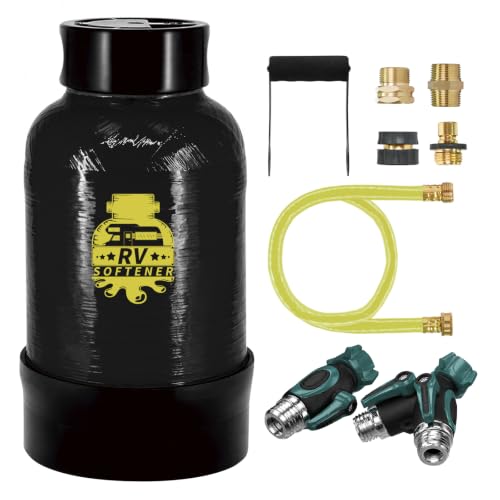
A portable RV water softener, the tall resin tank that sits between the spigot and the filter. It addresses minerals rather than particles, which is why it belongs upstream of your cartridges, and it needs periodic regeneration with plain table salt. Owners in the Southwest and parts of the Midwest talk about these constantly for a reason.
Installing and Maintaining It Without Losing Flow
Order matters more than most owners expect. From the spigot, the sequence that works is regulator, then softener if you use one, then sediment stage, then carbon stage, then your drinking water hose to the rig. Putting the regulator last means every housing upstream sees full pedestal pressure.
Use a drinking water rated hose, keep a separate hose for tank rinsing and anything on the waste side, and support the weight of a canister assembly with its bracket rather than hanging it off the spigot. Sanitize the fresh system at the start of the season, since a filter does nothing about what is already sitting in your tank; the routine is in our guide to sanitizing an RV fresh water tank.
Cartridge and freeze discipline
Change cartridges on a schedule rather than waiting for a problem, and note the date on the housing with a marker. Sediment cartridges usually need replacing more often than carbon ones, and both go faster on rough water. Before any freezing weather, drain and store the housings indoors, since water left in a canister is one of the more reliable ways to crack one, a cousin of the problems covered in keeping RV pipes from freezing.
Common Mistakes to Avoid
- Filtering without regulating. Pressure is what splits fittings. A filter does nothing about it.
- Running a fine carbon block with no prefilter. It clogs quickly on sediment heavy water and your flow rate pays for it.
- Leaving cartridges in over winter. Wet media in a cold housing is a cracked housing waiting to happen.
- Assuming a filter fixes a bad source. Treat it as taste, odor, and sediment control, and respect any local advisory.
- Using the same hose for everything. Keep the drinking hose separate from anything used on the tank side, always.
- Ignoring flow rate. A restriction that starves the shower will get blamed on the pump for months.
Where to Go From Here
If a disposable inline filter is where you want to start, the format is worth a closer look on its own terms, including which versions hold up and how long they realistically last; that is covered in our guide to the best inline RV water filters and in our Camco TastePURE review.
And if your complaint is really about flow rather than water quality, the filter is the wrong end of the problem. Start with common water pump issues, and if the pump itself is tired, our comparison of the best RV water pumps covers what to replace it with.
Frequently Asked Questions
Do I need a filter if I only use city water at parks? Not strictly, but park water varies enormously in taste, chlorine, and sediment. A filter is the difference between drinking from the tap happily and hauling bottled water for the whole trip.
Is a two stage system worth it over an inline filter? If you camp often or move between parks, yes. The sediment stage protects the carbon stage, cartridges are replaceable rather than disposable, and the flow rate holds up better over a season.
Where should the filter go, before or after the pressure regulator? After. Put the regulator at the spigot so nothing downstream ever sees full pedestal pressure, then the softener if you use one, then the filter stages.
How often do I change RV water filter cartridges? Follow the maker’s interval as a baseline and shorten it if flow drops or taste returns. Sediment cartridges normally need replacing more often than carbon blocks, and rough water accelerates both.
Will a water filter stop my hot water smelling of sulfur? Not by itself. That odor forms inside the water heater tank, so it needs a flush and an anode rod check as covered in our guide to RV water heater smell, with filtration helping on the input side.
Can I leave a canister filter connected in freezing weather? No. Drain the housings and store them indoors. Water left inside a canister expands as it freezes and cracks the housing or the fittings.
The Bottom Line
Pick the setup that matches how often you camp, not the one with the most stages. A two stage canister on the hose is the sweet spot for most owners, a disposable inline filter is genuinely enough for occasional weekends, and full timers with unpredictable fill points are the ones who benefit from a third stage or an under sink filter. Whatever you choose, put a pressure regulator ahead of it and drain everything before the first freeze.