Last updated: August 14, 2026
Choosing the best RV water pump is easier than the spec sheets make it look, because only three numbers really matter and one of them is the one most people get wrong. Flow rating, cutoff pressure, and current draw decide how the pump behaves in your rig, and flow is the figure owners routinely over buy. A bigger pump does not give you a better shower if your plumbing and fixtures cannot pass the water, and it will draw more from the battery and make more noise while failing to.
The pump that suits most travel trailers is a self priming diaphragm unit in the 3 gallon per minute class with a built in pressure switch and standard half inch ports. Larger rigs with two bathrooms or several fixtures running at once benefit from something in the 4 to 5.5 gallon per minute range with variable speed control. This guide covers how to pick between those, what the numbers mean in practice, and the three accessories that do more for the way a pump behaves than the pump choice itself.
This article contains affiliate links. If you buy through them, we may earn a commission at no extra cost to you. Learn more.
Quick Answer
Which RV water pump should you buy?
- For most trailers and vans with one bathroom, a 12V self priming diaphragm pump in the 3 gallon per minute class with a built in pressure switch is the right size and the easiest swap.
- Step up to the 4 to 5.5 gallon per minute range with variable speed control only if you have two bathrooms or regularly run more than one fixture at a time.
- Match the port thread and the mounting footprint to what you already have, and budget for a silencing kit at the same time. Noise complaints are usually installation, not the pump.
What to Check Before You Buy
These seven points decide whether a pump fits your rig and behaves the way you want. The first three are the ones that actually differentiate models, and the last four are the ones that turn a bolt in swap into an afternoon of adapters.
| What to check | Why it matters | What to look for |
|---|---|---|
| Flow rating | Decides how many fixtures you can run at once, not how strong one shower is | Around 3 GPM for one bathroom, 4 to 5.5 GPM for larger rigs |
| Cutoff pressure | Sets the pressure at the fixture and when the pump stops | Most RV pumps cut off somewhere in the 40 to 55 psi range |
| Current draw | Matters most when you are off grid and counting amp hours | Check the rated amps against your existing fuse, commonly 10 to 15 amps |
| Variable speed | Smooths pressure and cuts cycling on small draws | A multi chamber design with a bypass, if quiet running matters to you |
| Port thread and size | The difference between a bolt in and a parts store trip | Half inch NPT is common, and swivel fittings make alignment far easier |
| Mounting footprint | Bay space is tight and screw spacing varies | Measure the existing base and check the new pump’s dimensions |
| Self priming and dry run | Every RV pump has to lift water from a tank below it | Self priming with a stated lift, and a design that tolerates a brief dry run |
If your current pump is misbehaving rather than dead, replacing it may not be necessary at all. Check valves, pressure switches, and strainers are sold as service parts, and our repair guide covers which faults are worth fixing.
Why Flow Rating Is the Number People Over Buy
Gallons per minute is a maximum the pump can deliver, not the pressure you feel at the shower head. What you feel is a combination of the pump’s cutoff pressure, the restriction in your plumbing, and the fixture itself, and in most rigs the fixture is the tightest point in the chain. Fitting a 5.5 gallon per minute pump behind a low flow shower head changes almost nothing except your current draw.
Where the higher flow does help is simultaneous demand. If someone is showering while the kitchen tap runs, a 3 gallon per minute pump has to divide what it has and both fixtures notice. In a rig with two bathrooms, that happens often enough to justify the bigger unit. In a single bathroom trailer it happens rarely, and the smaller pump is quieter, lighter on the battery, and generally cheaper to replace.
Cutoff pressure is the number to look at instead
Cutoff is where the pressure switch tells the motor to stop, and it is what determines how firm the water feels. Most RV pumps sit somewhere in the 40 to 55 psi band, which is deliberately in the same range that RV plumbing is designed for. Anything much higher is a stress on fittings rather than a better shower, which is the same reason a regulator matters on city water, as covered in how much RV water pressure is too much.
Our Top Picks at a Glance
How we chose: we compared widely available 12V RV pumps on flow rating, cutoff pressure, current draw, port and mounting compatibility, and the complaints and compliments that repeat across owner feedback. Our assessment is based on published specifications and that feedback rather than any trial of our own. Almost everyone should be choosing between the first two, and the third exists because a like for like swap is sometimes the right answer.
🏆 Best Overall
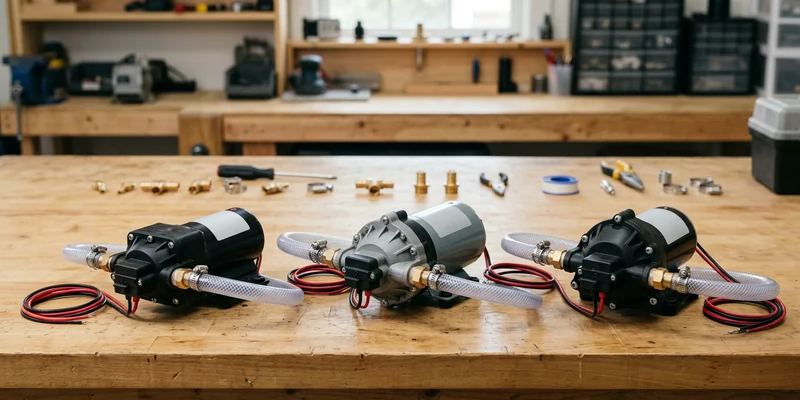
A Shurflo Revolution class 12V pump, roughly 3 gallons per minute, with a multi chamber design, an internal bypass, and a built in pressure switch. It is the default replacement in the RV world for a reason: the flow suits a single bathroom rig, the bypass smooths pressure and cuts short cycling on small draws, and service parts are available almost everywhere. Half inch ports and a common footprint make it a bolt in swap in a large share of trailers.

⬆️ Upgrade Pick
A variable speed 12V pump in the 4 to 5.5 gallon per minute range for rigs with two bathrooms or several fixtures in regular simultaneous use. The extra capacity means the pump spends more time running below its maximum, which owners consistently report as steadier pressure and less noticeable cycling. Check the current draw against your existing fuse and wiring before ordering, since these draw more than the pump they replace.

💵 Best Simple Replacement
A straightforward 12V diaphragm pump around 3 gallons per minute with a built in pressure switch and half inch NPT ports, for when the old one has died and you want the same thing back with the least fuss. It will not be the quietest option and it has no variable speed, but paired with a silencing kit it does the job a factory pump did and costs less than the models above.

Matching the Pump to Your Rig
Four situations cover most owners, and the right answer is different for each. Work out which one describes you before you look at any product page.
- Single bathroom trailer or van. A 3 gallon per minute pump is right. Anything larger buys you capacity you will not use and costs you amp hours you might need.
- Fifth wheel or motorhome with two bathrooms. Go to the 4 to 5.5 gallon per minute range, ideally variable speed. This is the case where simultaneous demand is real and the bigger pump earns its place.
- Off grid and counting amp hours. Look hard at the current draw and lean toward the smaller pump. A pump is not a large load compared to a fridge, but it runs at the least convenient times and adds up over a week.
- Light sleepers in a small rig. Prioritize noise behavior over flow. That means variable speed, soft mounting, and flexible hoses, and it is enough of a topic on its own that we cover it separately in the quietest RV water pumps.
Check fitment before you order
Measure three things: the port thread, the distance between the mounting screws, and the space in the compartment including the fittings and the wiring loom. A pump that arrives with a different footprint is not a disaster, since a small plate solves it, but knowing beforehand turns a two hour job into a forty minute one.
The Three Accessories That Change How It Behaves
These do more for day to day satisfaction than the difference between two decent pumps, and owners who fit them stop complaining about noise almost entirely. Buy at least the first one at the same time as the pump.
🔇 The One to Buy With the Pump
A silencing kit with short flexible hoses for the inlet and outlet ports. Rigid plumbing bolted straight to the pump transmits every pulse into the walls and floor, and flexible connections stop that at the source. It is the single most effective noise fix on an otherwise healthy pump. Match the thread size to your pump’s ports before ordering.

💧 For Steadier Pressure and Less Cycling
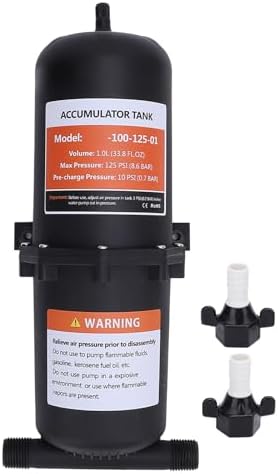
An accumulator tank plumbed on the outlet side. It stores a small volume of pressurized water so the pump does not restart every time someone rinses a cup, which reduces both cycling and the pulsing you feel at the faucet. On a pump without variable speed it makes the biggest single difference to how the water feels.
🧽 The Cheap Part That Protects the Rest
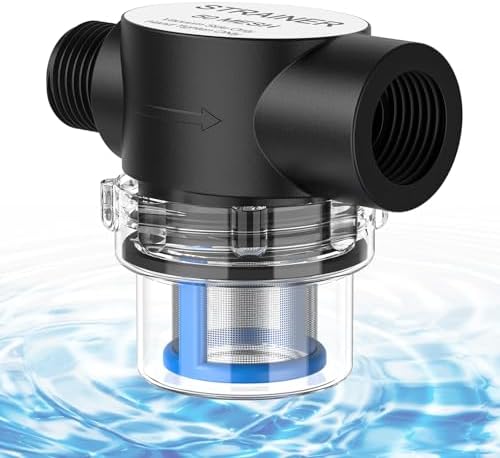
A clear inline strainer at the pump inlet with a removable screen. It keeps sediment and tank debris out of the valve seats, and because it is clear you can see a problem building before it becomes weak flow. If your existing one is cracked, cloudy, or missing, fit a new one while the plumbing is already apart.
Fitting It Yourself
A pump swap is one of the friendlier RV jobs and the sequence rarely varies. Switch the pump off, pull its fuse or disconnect the negative battery cable, then open a faucet to release the pressure in the system. Put a towel underneath, because the lines hold water regardless of how carefully you drained.
Photograph the wiring before you disconnect anything, since polarity matters and the wire colors are not always what you expect. Unscrew the inlet and outlet fittings, unbolt the mount, and fit the new pump on its rubber feet without crushing them. Use fresh sealant tape on threaded ports, connect the wiring, restore power, and run the system with a faucet open until the flow is steady and free of air. Then check every joint under pressure, and check again the next morning, because slow weeps announce themselves overnight.
Where it stops being your job
Twelve volt pump work is owner territory. Anything on the 120 volt side, including a residential style pump or a system tied into shore power wiring, belongs to a certified RV technician or a licensed electrician. The same goes for repeated fuse failures, which point at a short or a seized motor rather than a fuse problem, and for any sign that water has been sitting in the floor or the walls.
Common Mistakes to Avoid
- Buying on gallons per minute alone. Your fixtures are usually the restriction. Extra flow buys capacity, not pressure.
- Ignoring the current draw. A larger pump on an unchanged fuse and wiring is a problem waiting for a hot night off grid.
- Bolting it down hard to stop vibration. Rigid mounting transmits noise into the structure. The rubber feet exist for a reason.
- Reusing tired fittings. New pump, old swivel O rings, same air leak. Replace the small parts while everything is apart.
- Skipping the strainer. Debris in the valve seats is how a new pump starts behaving like the old one.
- Replacing a pump that only needed a switch. Check valves and pressure switches are inexpensive service parts, and they cause most of the classic symptoms.
Where to Go From Here
If you have not definitively established that the pump is finished, spend ten minutes ruling out the cheap causes first. Troubleshooting an RV water pump step by step is the sequence to follow with a meter in hand, and the two most common single part failures have their own guides in the check valve and the pressure switch.
Once the new pump is in, a little maintenance keeps it there. RV water pump maintenance covers the four habits that prevent most failures, winterizing without a blowout kit handles the fall job that kills more pumps than anything else, and a filter on the fill hose keeps the debris out in the first place, as covered in inline RV water filters.
Frequently Asked Questions
What size water pump do I need for my RV? Around 3 gallons per minute suits most single bathroom trailers and vans. Move up to the 4 to 5.5 gallon per minute range only if you have two bathrooms or regularly run several fixtures at once.
Will a bigger pump give me a better shower? Usually not. The restriction is normally the shower head and the plumbing, so a larger pump adds capacity and current draw rather than pressure at the fixture.
What pressure should an RV water pump run at? Most cut off somewhere in the 40 to 55 psi range, which matches what RV plumbing is built for. Higher is a stress on fittings rather than an improvement.
Are RV water pumps interchangeable? Largely, as long as the port thread, the voltage, and the mounting footprint match. Half inch NPT ports are common, and a small mounting plate solves most footprint differences.
How long does an RV water pump last? Owners commonly report several years of regular use. Freeze protection, water quality, and whether it has ever been run dry are the variables that matter most.
Do I need an accumulator tank? Not strictly, but it reduces cycling and smooths pressure, and it makes the most difference on a pump without variable speed control.
The Bottom Line
Most owners should fit a 12V self priming pump in the 3 gallon per minute class with a built in pressure switch, and only step up to the 4 to 5.5 gallon per minute range if two bathrooms or simultaneous demand genuinely calls for it. Check port thread, mounting footprint, and current draw before ordering, since those decide whether it is a bolt in or an afternoon. Then spend a little more on a silencing kit, an accumulator, and a clean strainer, because those three change how the pump behaves far more than the choice between two good models.