Last updated: August 14, 2026
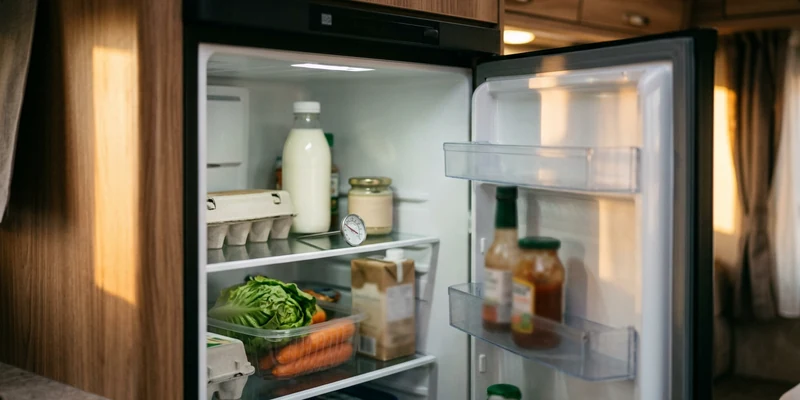
When an RV refrigerator is not cooling, the most common cause is not a dead refrigerator. It is a fridge that never got the heat, the power, or the airflow it needs to run its cycle. Absorption refrigerators, the tall cream-colored boxes in most travel trailers and motorhomes, do not have a compressor. They boil a fluid mixture with a propane flame or an electric heating element, and everything about their performance depends on that heat source working, the vents moving air, and the coach sitting reasonably level.
That is good news, because most of the checks that solve this cost nothing. Before you price a cooling unit, work through mode selection, the 12V fuse, the vent path, the door seal, and how the food was loaded. This guide walks the whole diagnosis in order, from the free checks to the parts that genuinely wear out, and it is honest about the point where the job stops being yours and becomes a certified RV technician’s.
This article contains affiliate links. If you buy through them, we may earn a commission at no extra cost to you. Learn more.
Quick Answer
Why is my RV refrigerator not cooling?
- Start free: confirm the fridge is actually powered and in the right mode, check the 12V fuse, park closer to level, and clear the outside vents.
- Weak cooling in hot weather is usually airflow, not failure. Heat has to leave through the roof or upper sidewall vent, and a packed fridge blocks the fins inside.
- Yellow residue, a sharp ammonia smell, or a burner that will not light are technician territory. Do not open, tap, or attempt to recharge a cooling unit or a propane component.
Symptoms, Causes, and What to Do
Read your symptom first, then work the action column. Nearly every refrigerator complaint falls into one of these rows, and the order below moves deliberately from free to expensive.
| What you see | What it usually means | What to do |
|---|---|---|
| No display, no lights, nothing happens | Lost 12V control power | Check the 12V fuse for the fridge, the house battery state of charge, and the on/off switch behind the lower vent |
| Runs on shore power but not on propane | Gas side is not firing | Confirm the tank is open and other appliances light, then have a technician inspect the burner and gas train |
| Cools on propane but not on electric | Heating element or its circuit | Verify the outlet or breaker feeding the fridge; element replacement is best left to a technician |
| Freezer is cold, fridge section is warm | Airflow or thermistor placement inside the box | Unpack the fins, add a circulation fan, confirm the thermistor is clipped where the manual shows |
| Cools poorly only in hot weather | Heat is not leaving the vent stack | Clear the vents, add a vent fan, park the vent side out of afternoon sun |
| Was fine, quit after a rough road or off-level night | Absorption fluid disturbed or briefly starved | Level the RV, shut the fridge off for several hours, then restart and watch |
| Yellow or greenish powder behind the fridge, ammonia smell | Cooling unit leak | Shut it off, ventilate the RV, and call a certified RV technician. This one is not repairable at home |
| Gurgling that never settles, warm boiler area, no cold at all | Blocked or failed cooling unit | Technician diagnosis; plan around replacement of the cooling unit or the fridge |
First, Know Which Refrigerator You Have
Three very different appliances are all called an RV fridge, and the diagnosis splits right here. Getting this wrong sends owners chasing propane problems on a refrigerator that never used propane.
Absorption refrigerators from Norcold and Dometic run on propane, 120V shore power, or both, and they need level parking and a working vent stack. 12V compressor refrigerators, including many Everchill, Furrion, and newer Dometic models, behave like a household fridge on a DC motor: they tolerate off-level parking fine but stop cold when house battery voltage sags. Residential refrigerators in larger coaches run only on 120V, so an inverter fault looks exactly like a dead fridge.
Why the distinction changes everything
On an absorption unit, warm output in hot weather is usually a heat rejection problem. On a compressor unit, the same symptom points at voltage, a door seal, or a fan. If a residential fridge quit while boondocking, start at the inverter with our guide to RV inverter problems.
Work the Free Checks Before You Buy Anything
Roughly in this order, these five checks resolve a large share of no-cooling complaints and none of them cost a dollar. Do them all before you decide the appliance has failed.
- Confirm the mode and the on switch. Many units have a physical power switch behind the lower exterior vent as well as the interior control panel. Auto mode can also sit waiting on a source that is not available.
- Check 12V power. Even an absorption fridge running on propane needs 12V for its controls and igniter. A blown fuse in the distribution panel makes the whole appliance look dead. A house battery at rest usually reads around 12.6 to 12.8 volts when healthy, and control boards get unhappy well before it drops to nothing.
- Get level. Absorption cooling depends on gravity moving fluid through the coils. Manufacturers generally ask for a couple of degrees off level side to side at most, which is roughly the tolerance of a comfortable night’s sleep. Long stretches parked badly off level can stall circulation.
- Open the outside vents and look. Mud dauber nests, cottonwood fluff, and leaves collect on the fins behind the lower vent, trapping heat exactly where the fridge is trying to shed it.
- Check the door seal and the load. Paper closed in the door should drag when you pull it, and food packed tight against the rear fins blocks the cold air path.
Airflow Is the Fix Most Owners Skip
An absorption refrigerator rejects heat by convection up the back of the cabinet and out through the roof vent or upper sidewall vent. When outside temperatures climb, that natural draft is often too weak, and the fridge quietly loses ground through the afternoon even though nothing has broken.
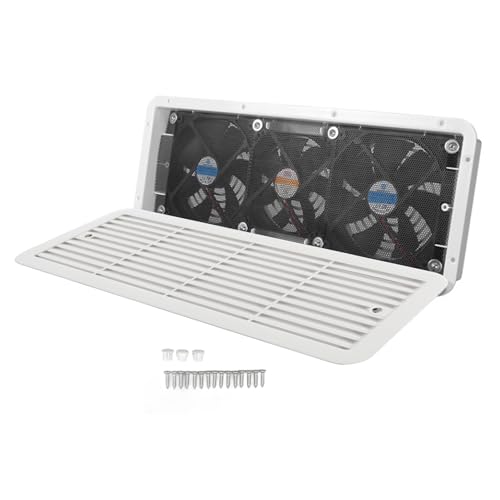
Owners report the single most effective change here is forced airflow behind the fridge, either a thermostatically controlled fan kit at the vent or a fan clipped near the condenser fins. Park with the vent side away from afternoon sun where you can. For the broader hot weather picture, see how to keep an RV cool in summer heat.
🔧 Best first upgrade for hot weather
A 12V vent fan kit pulls heat out of the stack instead of waiting for it to rise on its own, which is exactly what fails on hot afternoons.
Measure Instead of Guessing
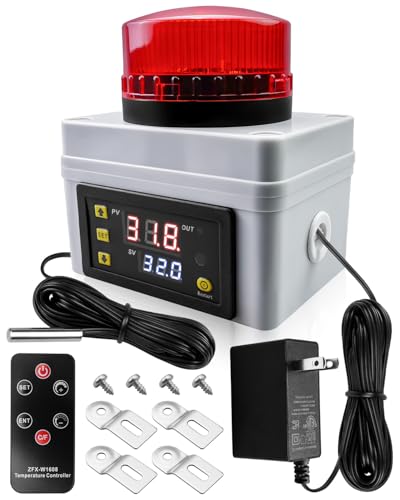
Hands are terrible thermometers. Before you conclude the fridge has failed, put a real number on it: a refrigerator compartment usually settles somewhere around 35 to 40 F and a freezer near 0 F, though loading, ambient heat, and door openings move both. Track the trend over a full day rather than judging after an hour, because a box that slowly climbs every afternoon (airflow) and one that never gets cold at all (heat source or cooling unit) need completely different repairs.
🔧 Best diagnostic tool for the job
A wireless fridge and freezer thermometer with a high temperature alarm turns a vague complaint into a pattern you can act on.
Leveling: Cheap Insurance for an Absorption Fridge
If your no-cooling story starts with a night on a sloped site, level parking is both the fix and the prevention. Absorption cooling has no pump, so a persistent tilt lets liquid pool where vapor should flow, and repeated episodes can leave permanent deposits inside the coils. Stackable blocks under the low side solve it in minutes, and our walkthrough on how to use RV leveling blocks correctly covers the stacking limits.
🔧 Best fix for uneven sites
Interlocking stackable leveling blocks let you correct side to side tilt on a gravel site without carrying lumber.

When It Is Not a DIY Job
This is the part most repair articles skip. An absorption refrigerator combines a sealed cooling unit under pressure, ammonia, and an open propane flame in a small space. Some of it is simply not homeowner work, and the failure modes are unforgiving.
Stop and call a certified RV technician if you find yellow or greenish residue behind the fridge, smell ammonia, see soot around the burner area, or the unit will not light on propane. Do not adjust, clean, or reseat gas line fittings, the regulator, or the burner orifice, and never attempt to tip, tap, or recharge a cooling unit. Because combustion happens inside your living space, a working carbon monoxide alarm with a current expiration date is not optional in any RV with a propane fridge, furnace, or cooktop. If the smell of gas is present at all, shut the tank valve, ventilate, and leave the coach before you troubleshoot anything.
Deciding between repair and replacement
When a cooling unit is confirmed failed, the choice is usually a replacement cooling unit, a new absorption fridge, or a switch to a 12V compressor model. Coaches with solar and lithium increasingly go the compressor route because it removes propane from the equation and tolerates rough roads better, though it demands real battery capacity. Our comparison of the best 12V RV refrigerators lays out what that swap actually requires.
Brand-Specific Next Steps
Once you know the fridge is genuinely misbehaving rather than starved of air or power, the brand matters, because control boards, thermistors, and known weak points differ by manufacturer.
Norcold owners should read the failure pattern around control boards and recall history in our guide to a Norcold refrigerator not cooling. Dometic owners have their own checklist in Dometic refrigerator not cooling. If yours is a 12V compressor model where the freezer works but the fresh food side does not, go to Everchill fridge not cooling but freezer works, and if the unit cools on shore power but never on gas, see RV fridge cools on electric but not propane.
Common Mistakes to Avoid
- Judging it after one hour. An absorption fridge can take most of a day to pull down from warm. Give it a full cycle before declaring failure.
- Loading it warm and full. These refrigerators remove heat slowly. Pre-chill food and leave gaps around the rear fins.
- Ignoring the vents. A nest behind the lower vent is a common and completely free fix that owners find after paying for a diagnosis.
- Tapping or tipping the cooling unit. Advice to invert a fridge circulates online. It risks an ammonia release in an enclosed space and is not a repair.
- Running an old CO alarm. These alarms expire. Check the date on the back before your next trip with a propane appliance.
Frequently Asked Questions
How long should an RV refrigerator take to get cold? Plan on most of a day for an absorption unit and several hours for a 12V compressor model. Starting it the night before a trip, while still on shore power, is the standard habit.
Does an RV really have to be level for the fridge to work? For absorption models, yes, within a couple of degrees. Compressor and residential refrigerators are far more tolerant, which is one reason boondockers like them.
Why is my RV fridge cold in the freezer but warm below? That pattern usually points to airflow inside the box or a thermistor that has slipped off its clip, not to a failed cooling unit. The freezer works but fridge does not walkthrough covers it in detail.
Can I run the fridge on propane while driving? Owners are split and rules differ by state and tunnel, especially at fuel stops. Many owners pre-chill hard, keep the doors shut, and run on propane only when parked.
Is a yellow stain behind the fridge serious? Yes. That residue is a classic sign of an ammonia leak from the cooling unit. Shut the appliance off, ventilate the RV, and have a certified RV technician inspect it.
The Bottom Line
Most RV refrigerator cooling complaints trace back to power, mode, level, or airflow, so run those free checks before spending anything. Put a thermometer in the box to learn whether it fades every afternoon or never cools at all, because those point to different repairs. Anything involving propane components, ammonia residue, or the sealed cooling unit belongs to a certified RV technician, and a current CO alarm belongs in every coach with a combustion appliance.