Last updated: August 14, 2026
A Norcold refrigerator not cooling usually fails in one of three Norcold-specific ways: the control board behind the lower vent has quit, the thermistor inside the box has slipped off its fin, or the unit is throwing a fault code and shutting itself down before it ever gets cold. Norcold absorption models are otherwise conventional, so the general checks still apply, but the brand has enough of its own habits that it is worth diagnosing as a Norcold rather than as a generic RV fridge.
Work this in the same order a technician would. Confirm the appliance has power and a mode it can actually use, read whatever the display is telling you, then look at the two components that account for most Norcold service calls. Along the way there are two hard stops, the propane side and the sealed cooling unit, and this guide marks both. The wider walkthrough for any brand lives in our guide to an RV refrigerator not cooling.
This article contains affiliate links. If you buy through them, we may earn a commission at no extra cost to you. Learn more.
Quick Answer
Why is a Norcold refrigerator not cooling?
- Read the display first. Norcold panels commonly report a no alternating current or no flame condition, which tells you which heat source the fridge could not find.
- The two parts that fail most often on these units are the power control board behind the lower exterior vent and the thermistor clipped to the fins inside the fresh food compartment.
- Check your model and serial against Norcold’s recall lookup and the NHTSA database. Several absorption model ranges have been recalled over the years, and that repair is never a home job.
Norcold Symptoms, Causes, and What to Do
Match the behavior you are seeing to a row, then work the action column. The free checks sit at the top on purpose, and the two rows at the bottom are the ones that end with a phone call rather than a tool.
| What the Norcold does | What it usually means | What to do |
|---|---|---|
| Display dark, no response at all | No 12V at the fridge, or the rear power switch is off | Check the house fuse for the fridge, the battery state of charge, and the on/off switch behind the lower vent |
| Fault code pointing at no alternating current | The 120V circuit or element side is not available | Verify the outlet and breaker feeding the fridge; element and wiring work is technician territory |
| Fault code pointing at no flame | The burner did not light or did not stay lit | Confirm propane is on and other appliances light, then hand the gas side to a certified RV technician |
| Cools inconsistently, board resets itself | Aging power control board behind the lower vent | Common Norcold failure; a technician can confirm before you replace the board |
| Freezer cold, fresh food side warm | Thermistor off its clip or airflow blocked inside | Reseat the thermistor per the manual position, unpack the fins, add a circulation fan |
| Only struggles on hot afternoons | Heat is not leaving the vent stack | Clear the vents, improve airflow behind the fridge, shade the vent side |
| Yellow residue or ammonia smell at the back | Cooling unit leak | Shut it off, ventilate, call a certified RV technician. Do not use the appliance |
| Model appears on a recall list | Known safety campaign | Stop using it and contact an authorized service center for the remedy |
Start With the Display, Not the Fridge
Norcold control panels tell you more than owners expect. A fault indicating no alternating current means the fridge looked for 120V and did not find it, which is a shore power, breaker, or element circuit question rather than a cooling question. A no flame indication means the ignition sequence ran and the board never confirmed a flame, which is a propane side question.
What each message rules out
That distinction saves hours. If the display complains about the electric side while the fridge cools fine on gas, nothing is wrong with the cooling unit at all. If it never cools on either source and shows no fault, you are usually looking at 12V control power, a board, or the cooling unit itself. Codes vary by model year, so confirm the meaning in your owner manual before acting on it.
The Norcold Power Control Board
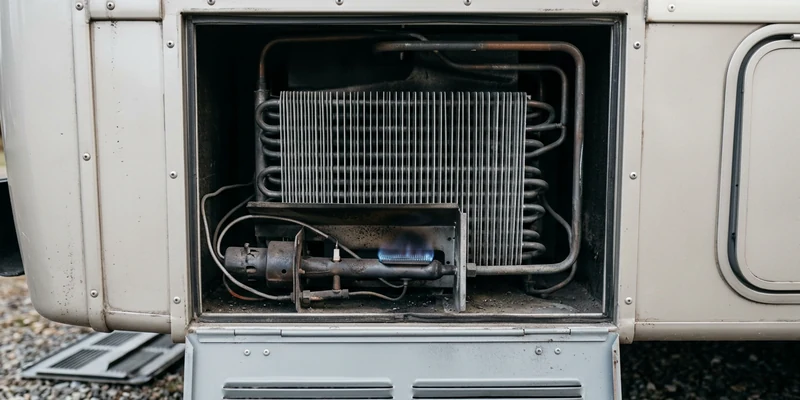
The board behind the lower exterior vent is the component technicians reach for most often on older Norcold units. It manages mode selection, ignition, and shutdown, and when it degrades the symptom is rarely dramatic. Owners report intermittent cooling, random mode switching, and units that seem fine for a week and then quietly stop.
Two things are worth knowing before you buy one. First, heat and moisture in that compartment shorten board life, so a fridge that has cooked all summer behind a sun-facing vent is a plausible candidate. Second, a board is not a cure for a blocked cooling unit, and swapping one on a hunch is an expensive way to learn that. Have a technician confirm the board before replacing it, especially since the same compartment holds propane components you should not be probing.
The Thermistor and the Airflow Inside the Box
If the freezer is cold and the fresh food section is not, the fault is almost never the cooling unit. On Norcold units the thermistor is a small sensor clipped to the cooling fins inside the fresh food compartment, and its exact position sets how the fridge reads temperature. Owners knock it loose while loading groceries more often than they realize, and a displaced thermistor makes the fridge think it is already cold enough.
Reseat it in the position your manual specifies, then look at the load. Bottles pressed flat against the rear fins block the cold air path, and a full fridge with no gaps cools unevenly no matter what the sensor says. A small battery powered fan inside the box evens out the temperature between the top shelf and the crisper, which is a cheap answer to a complaint that otherwise sounds like failure.
🔧 Best fix for a warm fresh food side
A battery powered circulation fan inside the compartment moves air across the fins so the whole box reads the same temperature.

Recalls, Overheating, and Why Norcold Owners Watch the Boiler
Norcold absorption refrigerators have been the subject of several safety recall campaigns across model ranges over the years, tied to cooling unit failures that can lead to overheating. This is the one piece of brand history every Norcold owner should check rather than assume. Look up your model and serial number through Norcold’s own recall lookup and the NHTSA recall database, and if it appears, stop using the appliance and contact an authorized service center.
Temperature protection as a habit
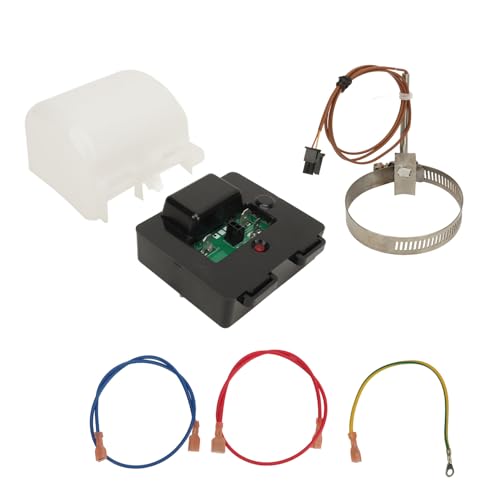
Partly because of that history, some owners add an aftermarket controller that monitors the boiler area of the cooling unit and cuts the heat source if the temperature climbs abnormally, which also protects the unit during long stretches parked off level. It does not repair anything and it is not a substitute for a recall remedy, but forum threads consistently mention it as peace of mind on older absorption units. Combustion inside the coach also means a working carbon monoxide alarm with a valid expiration date is mandatory equipment, not an accessory.
🔧 Best safeguard for an older absorption unit
A boiler temperature protection controller shuts the heat source down if the cooling unit runs abnormally hot, including during off-level stretches.
Where the Job Stops Being Yours
Two systems on a Norcold are off limits at home, and both are marked clearly for good reason. The propane side, meaning the gas line, the regulator, the valve, the orifice, and the burner, is work for a certified RV technician. There is no safe home procedure for cleaning an orifice or adjusting a flame in a compartment attached to your living space.
The sealed cooling unit is the second. It holds ammonia under pressure and cannot be recharged, tapped, or revived by tipping the fridge, whatever the internet says. Yellow or greenish powder at the back, a sharp ammonia odor, or soot around the burner area all mean the same thing: shut the fridge off, ventilate the RV, and get a technician involved. If the unit is confirmed dead, the practical choices are a replacement cooling unit, a new absorption fridge, or a switch to a compressor model, which our guide to the best 12V RV refrigerators covers.
Common Mistakes to Avoid
- Replacing the board on a guess. It is the most commonly blamed Norcold part and often not the failed one. Confirm first.
- Ignoring the display code. The fault tells you which heat source failed, which cuts the diagnosis in half.
- Skipping the recall lookup. Serial numbers matter here more than on most appliances.
- Packing the fridge tight. Airflow across the fins is part of the cooling system, not a suggestion.
- Trying gas repairs at home. Burner and orifice work near a living space is technician work, always.
Frequently Asked Questions
How do I reset a Norcold refrigerator? Most models reset by switching the appliance off at the interior panel, removing 12V power at the fuse or the rear switch for a few minutes, then restoring power. If it faults again immediately, the fault is real.
Where is the Norcold thermistor? It is a small sensor clipped to the cooling fins inside the fresh food compartment. Position matters, so match your manual rather than clipping it wherever it fits.
My Norcold cools on propane but not on electric. What is wrong? The cooling unit is fine, so the problem is on the 120V side, typically the outlet, breaker, or heating element circuit. Have a technician handle the element and wiring.
Is my Norcold under recall? Check the model and serial through Norcold’s recall lookup and the NHTSA database. Several absorption ranges have been recalled, and remedies are handled by authorized service centers.
Can I replace a Norcold cooling unit myself? It is not a home job. The unit is sealed, contains ammonia under pressure, and sits behind propane components. Treat a confirmed cooling unit failure as a decision between professional replacement and a new fridge.
The Bottom Line
On a Norcold, read the fault code before touching anything, because it tells you whether the electric or the propane side failed. Most repairable complaints come down to 12V power, the control board behind the lower vent, a displaced thermistor, or airflow inside a packed box. Check your model against the recall lists, keep a current CO alarm in the coach, and hand anything involving gas components or the sealed cooling unit to a certified RV technician.