Last updated: August 14, 2026
Shore power is plugged in, the pedestal breaker is on, and the house battery is still flat by morning. That is the situation that sends most owners searching for RV converter repair advice, and the useful news is that the converter itself is often not the part that failed. In a large share of cases the charging path is interrupted by something that costs nothing to fix: a tripped breaker, a blown fuse the size of your fingernail, or a battery ground that corroded quietly over two seasons.
This guide works in the order a technician would. First the checks that cost nothing, then a short multimeter test that tells you whether power is actually leaving the converter, and only then the decision about replacing the unit. It also draws a clear line around the part of the job that is not a driveway project, because the converter lives where 120V shore power meets your 12V system, and that half of it belongs to a certified technician.
This article contains affiliate links. If you buy through them, we may earn a commission at no extra cost to you. Learn more.
Quick Answer
What should you check first when an RV converter stops working?
- Most no charge complaints trace back to a tripped 120V breaker, a blown reverse polarity fuse on the converter, or a corroded battery connection, not to a dead converter.
- With shore power connected, a working converter usually pushes house battery voltage up to somewhere around 13.2 to 14.4 volts. If it sits near 12.6 volts or lower, the charging path is broken somewhere.
- Converters are almost never repaired at the circuit board level, they are replaced. Anything on the 120V side, including the replacement wiring, is work for a certified RV technician.
Symptoms, Likely Causes, and What to Do
Start by matching what you are seeing to the most common explanation. The pattern of the symptom matters more than the severity: a converter that works on some circuits and not others is telling you something very different from one that is completely silent.
| What you notice | What it usually means | What to do first |
|---|---|---|
| Battery drains overnight while plugged in | Converter is not charging, or charge current never reaches the battery | Check the 120V converter breaker, then the converter DC fuses, then the battery ground |
| 12V lights work on battery, dead on shore power | Converter output is missing, battery is carrying everything | Measure battery voltage with shore power on and off and compare |
| Lights flicker or dim when the fridge or pump cycles | Weak converter output, undersized charging, or a loose connection | Clean and tighten battery terminals and grounds, then measure under load |
| Loud constant fan or a fan that never runs | Converter is overheating or its thermal fan control has failed | Clear the vents, remove storage stacked against the unit, then reassess |
| Buzzing, hot plastic smell, or scorch marks | Failing internal components | Disconnect shore power immediately and stop troubleshooting |
| Voltage climbs but never past roughly 13 volts | Converter stuck in a low charge stage, or heavy voltage drop in the cables | Compare voltage at the converter output against voltage at the battery |
| New lithium batteries never reach full charge | Converter charge profile is designed for lead acid | Not a fault, this is a compatibility issue and needs a different converter |
If you want to work through the symptom list in more detail before touching anything, our breakdown of common RV converter problems covers each pattern separately.
What the Converter Actually Does
The converter is the box that turns 120V shore power into the 12V DC your RV runs on. Every interior light, the water pump, the furnace fan, the fridge control board, and the slide motors all live on 12V, and when you are plugged in, the converter feeds them directly instead of draining the battery. At the same time it acts as the battery charger.
That double role is why converter faults look so confusing. When the converter quits, nothing appears to break immediately, because the battery quietly takes over and everything keeps working. The failure only becomes visible a day or two later when the battery is empty in a campground with perfect shore power. If the difference between the converter and the inverter is still fuzzy, our explainer on the RV inverter versus converter question sorts out which box does what.
Start With the Checks That Cost Nothing
Work through this list before you buy anything. Owners report that a large share of converter complaints end somewhere in these six steps, and every one of them is free.
- Confirm the pedestal is live. Test the campground outlet or your home outlet with a known good load or a surge protector display before blaming anything inside the RV.
- Check the 120V breaker labeled converter. A tripped breaker often does not look tripped. Flip it fully off, then back on. Do this at the breaker handle only, do not open the panel.
- Check the battery disconnect switch. Many rigs have a cutoff that isolates the house battery from the converter. With it open, the converter can be working perfectly and the battery still goes flat.
- Look at the converter DC fuses. Most converters carry a pair of blade fuses on the 12V side that act as reverse polarity protection. They are commonly in the 30 to 40 amp range depending on the model, and the correct rating is printed on the unit. A blown pair kills charging completely.
- Inspect the battery terminals and grounds. Corrosion, a loose wing nut, or a chassis ground strap with a green crust under it will stop charging just as effectively as a dead converter.
- Clear the ventilation. Converters are usually mounted in a cabinet or under a dinette, and people store things against them. A unit that cannot shed heat will reduce its output or shut down until it cools.
If the fuses are the answer, replace them in pairs and with the exact rating on the label, never a higher one. A small assortment of automotive blade fuses is the cheapest insurance in an RV, because the same fuse type protects the pump, the lights, and the slide controller.

Detail on which fuse does what, and why it blew, is in our guide to the RV converter fuse.
The Multimeter Test That Settles It
One measurement separates a converter problem from a battery problem. You are comparing house battery voltage with shore power disconnected against the same reading with shore power connected, because a working converter has to visibly raise it.
With shore power off and the rig sitting for a while, a healthy lead acid battery usually reads around 12.6 to 12.8 volts at rest. Around 12.1 to 12.2 volts means roughly half discharged, and anything near 12 volts or below is deeply discharged. Now plug in shore power and measure again at the same terminals. A functioning converter typically lifts the reading to somewhere in the 13.2 to 14.4 volt band, depending on which charge stage it is in. If the number does not move at all, either the converter is not producing output or that output is not arriving at the battery.
To tell those two apart, measure at the converter’s own DC output terminals as well. Voltage present there but not at the battery points at cable, fuse, or ground problems between the two. Voltage missing at both points at the converter. The full procedure, including a voltage drop check across the cables, is laid out step by step in how to test an RV converter with a multimeter.
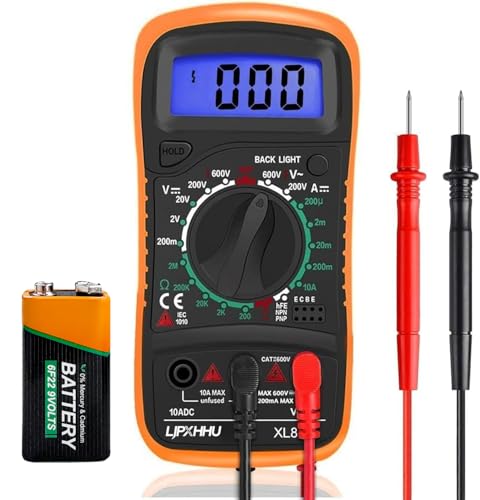
This is one test where the tool matters less than owning one at all. A basic digital meter that reads DC volts and continuity covers converter testing, fuse checks, and parasitic drain hunting.
When the Converter Itself Needs Replacing
If the free checks pass and the meter shows no output at the converter terminals, the unit is the problem. Converters are essentially never repaired at home. The internal parts are potted, board level diagnosis needs equipment most owners do not have, and a replacement deck or a whole new converter section costs less than the labor to chase a component fault.
Two paths exist. Many RVs use a power center where the converter is a removable deck that slides out of the distribution panel, which means you can often replace just that module and keep the existing breaker and fuse panel. Other rigs use a standalone converter mounted in a cabinet or bay, wired at both ends. Progressive Dynamics and WFCO are the two brands most commonly found in North American RVs, and both sell replacement units in the amperage range that matches typical factory installs.
Match three things: output amperage at or above what the original delivered, physical size for the opening, and the charge profile your batteries need. Undersizing the amperage is the mistake that leads to weeks of slow charging and a battery that never quite fills.

Where This Stops Being a DIY Job
The 12V half of converter work is normal owner maintenance. The 120V half is not, and the honest answer is that installing a converter crosses that line for most people. Here is the split.
Safe to do yourself, with the battery disconnect open and the shore cord unplugged: checking and replacing DC blade fuses, cleaning and tightening battery terminals and ground straps, clearing ventilation, measuring DC voltage, and resetting breakers at the handle. Work for a certified RV technician or a licensed electrician: any wiring on the AC input side, opening the distribution panel, replacing or adding breakers, hardwiring a new converter, and anything involving a burning smell, scorched insulation, or melted plastic. If you smell hot plastic, unplug the shore cord first and diagnose nothing until it is out.
One more boundary worth naming: repeated breaker trips are a symptom, not an inconvenience. A converter breaker that trips again after a reset is telling you there is a fault somewhere in that circuit, and resetting it a third time is not troubleshooting. Our article on RV breakers tripping at the pedestal covers what that pattern usually means.
Lithium Batteries Change the Answer
If you recently swapped to lithium and the batteries never seem to reach full charge, the converter is probably working correctly and simply speaking the wrong language. A standard lead acid converter typically finishes at a float voltage somewhere around 13.2 to 13.6 volts, which is comfortable for flooded batteries but leaves a lithium bank short of full.
Lithium banks generally want a higher, flatter charge profile, commonly in the 14.2 to 14.6 volt range with no long float stage. Some converters have a selectable lithium mode, some do not. Before buying a replacement, check the label on your existing unit, then read our walkthrough on switching an RV to lithium batteries and the shortlist in best RV converters for lithium batteries.
Common Mistakes to Avoid
- Replacing the battery first. A converter that stopped charging will kill a healthy battery, and the new one dies the same way a month later.
- Measuring at the wrong point. Reading voltage at a 12V socket instead of at the battery terminals hides the voltage drop that is often the real fault.
- Fitting a higher amp fuse. If the correct fuse keeps blowing, the fuse is doing its job. A bigger one just moves the failure to the wiring.
- Ignoring the ground side. Owners chase positive cables for hours while a corroded chassis ground quietly limits everything.
- Testing on a deeply discharged battery. Some converters behave oddly with a battery below roughly 10 volts, so confirm the battery is not the variable.
- Opening the AC panel to look around. There is nothing an owner needs to see in there, and the risk is real.
Frequently Asked Questions
Can you repair an RV converter, or does it have to be replaced? In practice they are replaced. External items like blade fuses, the cooling fan, and connections are serviceable, but internal board faults are not economically repairable, so a replacement deck or unit is the normal fix.
How do I know if it is the converter or the battery? Measure battery voltage with shore power off, then again with it on. If the reading does not rise into roughly the 13.2 to 14.4 volt band, suspect the converter or the path to the battery. If it rises normally but collapses under load, suspect the battery.
Does an RV converter have a reset button? Most do not. What people usually find is the 120V breaker feeding it and the pair of DC fuses on the unit. See where the RV converter reset button is for the full picture.
How long does an RV converter last? Owners commonly report many seasons of service, with heat, poor ventilation, and campground power surges being the factors that shorten it most. There is no fixed replacement interval.
Will a surge at the campground kill a converter? It can. The converter sits directly on incoming shore power, which is why a surge protector at the pedestal is a common recommendation for anyone who moves between parks.
The Bottom Line
Diagnose in order of cost: breaker, disconnect switch, DC fuses, battery connections, ventilation, and only then the converter itself. One multimeter comparison, battery voltage with shore power off against battery voltage with it on, tells you whether charge current is arriving at all. If the unit truly is dead, plan on replacement rather than repair, and hand the 120V side of that job to a certified RV technician.