Last updated: August 14, 2026
Anyone shopping for the quietest RV water pump is usually solving a very specific problem: somebody gets up at two in the morning, flushes the toilet, and the whole rig announces it. The frustrating part is that replacing the pump often does not fix that, because most of what you hear is not the pump itself. It is the pump’s vibration traveling into a plywood panel, rigid plumbing carrying pulses into the walls, and a motor that restarts for every half second of water use.
So this guide handles noise as its own problem rather than as a footnote in a buying decision. It starts with where the sound is actually coming from, then covers the pump designs that genuinely run quieter, and then the three fixes that make more difference than a new pump in most rigs. If you want the broader question of which pump suits your rig on flow and fitment, that is a different article, and it is our comparison of the best RV water pumps.
This article contains affiliate links. If you buy through them, we may earn a commission at no extra cost to you. Learn more.
Quick Answer
Which RV water pump is the quietest?
- A variable speed multi chamber pump with an internal bypass is the quietest category, because it ramps rather than hammering on and off and it stops short cycling for small draws.
- Before you replace anything, fit flexible hoses at both ports and soft mount the pump. That combination removes more noise than any pump upgrade on its own.
- Add an accumulator tank if the pump restarts constantly. Fewer starts is the single biggest change most owners notice at night.
Match the Noise to Its Source
Describe the sound to yourself first, because the fixes are completely different and only one of them involves buying a pump. The left column is what owners typically report hearing.
| What you hear | What it actually is | What fixes it |
|---|---|---|
| A deep buzz through the floor | Motor vibration transmitted into the mounting panel | Soft mounting, isolation pads, never bolted tight to thin plywood |
| A rattle or knock in the walls | Pulses traveling through rigid plumbing | Short flexible hoses at the inlet and outlet ports |
| Rapid on and off cycling | Pump restarting for every small draw | An accumulator tank, or a variable speed pump |
| A hard bang when a tap closes | Water hammer in unsupported lines | Secure loose lines, add an accumulator, check pressure |
| A high whine that was not there before | Worn motor bearings or a dry running history | Usually a replacement rather than a fix |
| Gurgling and spitting | Air being drawn in on the suction side | Tighten fittings between tank and pump, this is a fault not a noise issue |
| Runs on after the taps close | Pressure switch drifting, or a leak | Diagnose it, since a pump that never stops is loud for a reason |
| Echo in an empty bay | A hard walled compartment amplifying everything | Sound deadening material on the compartment walls |
Two of those rows are faults rather than noise complaints. If the pump gurgles, spits, or refuses to shut off, fix that first, because a healthy pump is quieter than any upgrade. Our repair guide covers both, and a pump that keeps running has its own walkthrough.
Why Most Pump Noise Is Installation
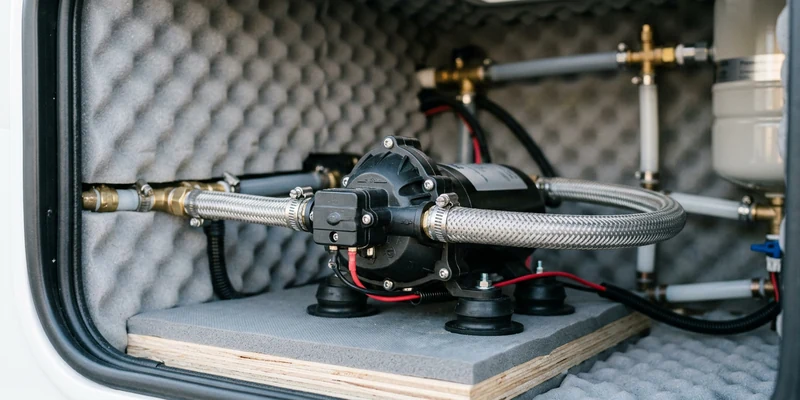
RV pumps are positive displacement units. They push water in pulses rather than a smooth stream, and that pulsing is inherent to the design rather than a sign of a cheap pump. What varies enormously is how much of it reaches your ears, and that is decided almost entirely by what the pump is bolted to and what it is plumbed with.
A pump screwed down hard onto a thin plywood panel turns that panel into a soundboard, which is exactly what a guitar body does on purpose. Rigid plastic pipe screwed directly into the ports carries the pulses along the plumbing runs and into the walls, where they are amplified again. Fix those two things and the same pump can go from clearly audible in a bedroom to something you have to listen for.
The exception worth knowing
If the noise appeared suddenly, or has a whine or a grinding character rather than a pulse, that is different. Bearings that have started to fail, a motor that has been run dry repeatedly, or a diaphragm that has hardened all change the sound in ways that mounting will not hide. That is a pump nearing the end rather than a pump installed badly.
Our Top Picks at a Glance
How we chose: we compared widely available 12V RV pumps and noise related accessories on pump design, bypass and variable speed behavior, mounting and connection options, and the complaints and compliments that repeat across owner feedback. Our assessment is based on published specifications and that feedback rather than any trial of our own. Note that the third pick is not a pump, and for a lot of owners it is the one that solves the problem.
🏆 Best Overall for Quiet Running
A Shurflo Revolution class 12V pump, around 3 gallons per minute, with a multi chamber design and an internal bypass. The bypass is the part that matters here: it lets the pump recirculate rather than slamming on and off for small draws, which removes the hard cycling that people find most intrusive at night. It is also the most common replacement in the RV world, so service parts and fitment information are easy to find.

⬆️ Upgrade Pick
A variable speed 12V pump in the 4 to 5.5 gallon per minute range, for larger rigs where the pump spends most of its life running well below maximum. Running below capacity is quieter than running flat out, which is why owners with two bathrooms often report a bigger pump sounding calmer than the smaller one it replaced. Check the current draw against your fuse and wiring first, since these ask more of both.

🔇 Best Fix Without Replacing Anything
A silencing kit with short flexible hoses for the inlet and outlet ports. This is where to start if your pump is healthy, because rigid connections are what carry pulses into the plumbing runs and the walls. Owners consistently report it as the single most effective noise fix, and it costs a fraction of a new pump. Match the thread size to your ports before ordering.

Stopping the Cycling, Which Is the Part You Hear at Night
A pump that runs steadily while you shower is background noise. A pump that snaps on and off half a dozen times while somebody washes their hands is what wakes people up, and it is a separate problem from raw loudness.
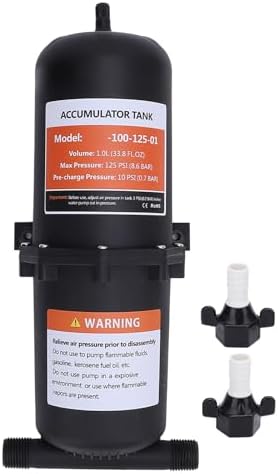
An accumulator tank is the direct fix. It is a small pressurized vessel plumbed on the outlet side that holds a reserve of pressurized water, so brief draws come out of the tank rather than starting the motor. It also smooths the pulsing you feel at the faucet, which is the difference most owners notice first. On a pump without variable speed control it is the most worthwhile accessory there is.
💧 For a Pump That Restarts Constantly
An accumulator tank with a pre charged air chamber, plumbed on the outlet side near the pump. Fewer starts means less noise, less wear, and steadier pressure at the fixture. Check the port thread and set the pre charge according to the instructions, since a tank at the wrong pressure does very little.
When cycling is a fault instead
If the pump cycles with every tap closed and nobody is using water, that is not a comfort problem, it is a leak or a failing check valve letting pressure bleed back. Look for drips first, including at the toilet valve, then test the valve. Both are covered in our guide to the RV water pump check valve, and a pump that will not reach cutoff at all is usually a pressure switch story.
Mounting It So the Rig Does Not Amplify It
This is the part that costs almost nothing and gets skipped almost always. Three principles cover it, and doing all three is what turns a noticeable pump into a quiet one.
- Never crush the rubber feet. RV pumps come with isolating feet and they only work if the screws are snug rather than tight. A pump clamped hard against its base is mechanically connected to the structure, and that structure is your floor.
- Do not mount to a thin unsupported panel. A large flat piece of plywood radiates sound beautifully. Mount to something stiff and well supported, or add a backing block so the panel cannot resonate.
- Give the hoses a gentle curve. Flexible connections only isolate if they are actually flexing. A short hose pulled straight and tight between two rigid points transmits almost as well as a pipe.
🧱 For a Pump That Buzzes Through the Floor
Rubber anti vibration isolation mounts or a dense isolation pad to sit between the pump base and its mounting surface. This is the cheapest fix on the list and it targets the exact path that carries motor buzz into the structure. Pair it with screws that are snug rather than cranked down.

🔉 For a Bay That Echoes
Closed cell sound deadening foam for the compartment walls around the pump. A hard walled bay behaves like a speaker cabinet, and lining it takes the edge off what escapes into the living space. Leave ventilation and access clear, and keep the material away from anything that gets warm.

Where This Stops Being a DIY Job
Twelve volt pump work with the battery disconnected or the fuse pulled is well within reach for most owners. These are the points where it is not.
- Anything on the 120 volt side. A residential style pump, a booster tied into shore power, or any work at the breaker panel belongs to a certified RV technician or a licensed electrician.
- A pump that blows fuses. That is a short or a seized motor, not a noise issue and not a fuse issue. Fitting a larger fuse is how wiring harnesses catch fire.
- New noise plus water where it should not be. Soft flooring, stains, or a musty smell means a leak has been running. Have the damage assessed rather than quietened.
- Cutting into the plumbing runs. Adding an accumulator at the pump is straightforward. Rerouting lines through walls or the underbelly to chase a noise is a bigger job than it looks, and a poor joint behind a panel is an expensive kind of quiet.
Common Mistakes to Avoid
- Buying a new pump before soft mounting the old one. Mounting and flexible hoses solve most complaints for a fraction of the cost.
- Tightening the mounting screws hard. Crushed isolation feet transmit everything they were fitted to stop.
- Pulling the flexible hoses tight. A hose under tension between two rigid points is effectively a pipe.
- Assuming louder means failing. Pulsing is normal for a positive displacement pump. A sudden whine or grinding is the sound that matters.
- Packing the bay with insulation. Line the walls, but leave ventilation and access clear and keep material off anything warm.
- Ignoring a pump that will not shut off. That is a fault, and no amount of sound deadening makes it acceptable.
Where to Go From Here
If you are replacing the pump anyway, get the sizing right at the same time rather than buying twice. Our comparison of the best RV water pumps covers flow ratings, cutoff pressure, current draw, and fitment, which are the factors this article deliberately leaves aside.
If the noise came with other symptoms, treat it as a fault first. Troubleshooting an RV water pump step by step is the diagnostic sequence, water pump maintenance covers the habits that keep a pump running smoothly for years, and how much RV water pressure is too much covers the hammering that comes from the city water side rather than the pump.
Frequently Asked Questions
What makes one RV water pump quieter than another? Mostly the design of the pumping chambers and whether there is an internal bypass. A multi chamber variable speed pump ramps rather than snapping on and off, which is the behavior owners find least intrusive.
Will a new pump fix my noise problem? Sometimes, but soft mounting and flexible hoses fix more complaints than a replacement does. Try those first unless the pump is whining, grinding, or failing.
Does an accumulator tank make the pump quieter? It makes it start far less often, which for most people is the same thing. It also smooths pulsing at the faucet.
Why is my pump suddenly louder than it used to be? A sudden change usually means wear, air on the suction side, or something having come loose. Check the mounting and the inlet fittings, then consider the motor itself.
Can I just put insulation around the pump? Lining the compartment walls helps, but do not pack material against the pump. It needs airflow, and blocking access makes future service harder.
Is a pulsing sound normal? Yes. RV pumps are positive displacement units and pulsing is inherent. Flexible hoses and an accumulator reduce how much of it you feel and hear.
The Bottom Line
The quietest setup is a variable speed multi chamber pump with an internal bypass, but the bigger gains usually come from the install: flexible hoses at both ports, isolation mounts, snug rather than crushed feet, and an accumulator tank so the motor stops restarting for every small draw. Work out which sound you are actually hearing before you buy, since buzz, rattle, and cycling have three different fixes. And treat a whine, a grind, or a pump that will not shut off as a fault rather than a noise complaint.