
Last updated: August 14, 2026
If you have walked through any campground in the last decade, you have seen Camco RV leveling blocks under someone’s tires. They are the yellow interlocking squares that show up in starter kits, on the shelf at every RV store, and in the storage bay of half the trailers on the row. That ubiquity makes them the default recommendation, which is exactly why it is worth asking what they do well and where they stop being the right answer.
The short version is that Camco’s blocks are a well executed take on a simple idea, and their limits are the limits of the format rather than of the brand. This review covers what the design gets right, where owners run into trouble, and which rigs should be shopping in a different tier entirely.
This article contains affiliate links. If you buy through them, we may earn a commission at no extra cost to you. Learn more.
Quick Answer
Are Camco leveling blocks worth buying?
- For most single and tandem axle travel trailers they are a sensible default: they interlock positively, stack in small increments, and double as pads under a tongue jack or stabilizer foot.
- Check the published per block capacity against the load on your heaviest single tire before buying, because the standard line is not aimed at the largest fifth wheels and coaches.
- They are not a fast setup solution. Owners who want to drive up once and be done are usually happier with a curved ramp leveler.
The Camco Block Range at a Glance
Camco sells more than one leveling product, and the differences matter more than the color they share. This is the general shape of the range as sold, and every capacity figure below should be read from the pack you actually buy.
| Aspect | What it is |
|---|---|
| Format | Interlocking molded resin blocks, sold in multi packs, usually with a carry bag on the larger sets |
| How it works | Stack in a stepped ramp to raise one or more tires, or lay flat as a pad under a jack or stabilizer foot |
| Interlocking | Tabs on each face lock layers together so the stack does not spread as a tire climbs |
| Capacity | Published per block, not per set; the standard and heavy duty lines carry different figures |
| Stack limit | A published maximum number of layers, which is a stability limit rather than a strength limit |
| Ideal for | Single and tandem axle travel trailers, and as jack pads on almost any rig |
| Also useful for | Spreading load on grass and gravel under stabilizer feet and tongue jacks |
| Care | Rinse grit off before storage so the interlocking tabs keep seating properly |
Two things are worth reading carefully on any pack: the per block capacity and the stack height limit. Those two numbers decide whether a set fits your rig far more than the count in the box does.
What the Design Gets Right
The interlocking system is the reason these blocks earned their reputation. Loose blocks squirt sideways as a tire climbs onto them, and the tabs on the Camco design stop that from happening in both directions, which is what lets you build a stepped ramp with confidence rather than a wall you drive at.
The second strength is versatility. The same blocks that raise a tire go under a tongue jack on soft grass, under a stabilizer foot on gravel, or under a portable step to stop it sinking. Owners consistently mention that they bought a set for leveling and then found half of it used for everything else, which is why the ten block packs get recommended more often than smaller ones.
Small Increments Are an Underrated Advantage
A ramp leveler is faster, but it commits you to whatever height the drive up gives you. Blocks let you add a layer, check the bubble, and adjust, which matters on sites where the difference between level and nearly level is one thin step. That control is the reason many owners carry both formats.
Where Owners Run Into Trouble
Almost every complaint traces back to one of three things, and all three are use rather than manufacture. The first is overhang: parking with part of the tire hanging off the edge of the top block puts load on an unsupported corner, and cracked corners are the result. The second is stacking past the published limit, which makes the tower unstable as the tire climbs. The third is cold, since plastic gets less forgiving as temperatures drop and a block dropped onto frozen ground can develop a hairline crack you do not notice until it is loaded.
The genuine limitation of the format is capacity. Blocks in the general purpose tier are rated for a share of one wheel’s load on a typical travel trailer, not for the per tire loads of a large fifth wheel or a Class A coach. That is a specification question rather than a quality question, and the way to answer it is your axle rating divided by the number of tires on that axle, as covered in RV weight ratings explained.
Check It Out
How we chose: we looked at published capacity and stack limits, how positively the pieces interlock, versatility as jack pads, and the themes that repeat in owner feedback across RV forums and retailer reviews, rather than any hands on trial of our own.
🏆 The Set Most Owners Should Buy
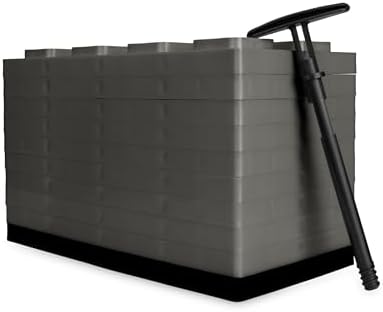
The ten block interlocking set is the version that makes sense, because a ramp under one tire eats several blocks on its own and you still want spares for the tongue jack and stabilizer feet. The carry bag included with most larger packs sounds like a detail until the first time you chase loose blocks around a storage bay in the dark. Confirm the published per block rating against your heaviest tire load before ordering.
Who They Suit, and Who Should Skip Them
They suit owners of single and tandem axle travel trailers who camp on varied sites and want fine control over height, and they suit anyone who needs pads under jacks and stabilizers regardless of what else they own. They also suit owners who like being able to replace one damaged block rather than an entire leveler.
Skip them, or at least do not rely on them alone, if you arrive late and set up solo and want the fastest possible routine, if you tow a large fifth wheel or drive a coach whose per tire loads sit above the standard tier, or if your usual sites are so uneven that you would be building towers past the published stack limit. In the last case the answer is a different site rather than a different block.
Alternatives Worth Comparing
These are the products owners most often weigh against the Camco blocks, each for a different reason.
🔁 The Other Familiar Yellow Block
The honeycomb style leveler covers the same ground with a slightly different structure, stacks and interlocks the same way, and is just as happy under a stabilizer foot. Owners tend to choose between the two on price, pack size, and whichever is in stock, and the same rules apply: keep the tire centered, respect the stack limit, and check the published capacity for your rig.

⏱️ For Fast Solo Setup
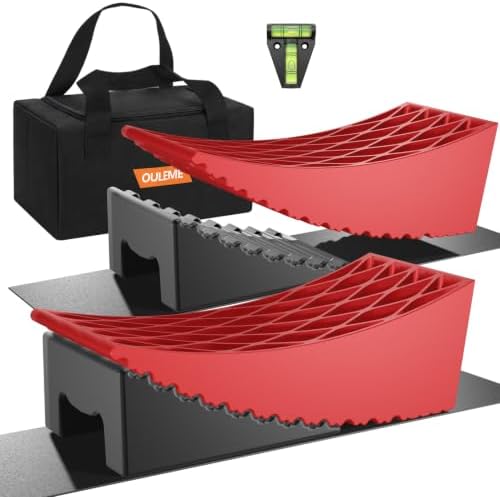
A curved ramp leveler replaces the stack with a drive up: position it, roll forward until the bubble reads right, and drop in the matching chock to hold the position. It is noticeably quicker when you camp alone, and it wants firm, reasonably even ground under its whole length to work properly. Many owners carry one of these and keep a block set for the sites where it will not sit flat.
🏋️ For Heavy Rigs
Large fifth wheels, big travel trailers, and Class A coaches put loads on one tire that the general purpose tier was not designed for. Heavy duty blocks use thicker sections and publish higher per block figures, which is the whole point of paying more. Our guide to heavy duty RV leveling blocks covers what to compare, and stacking limits still apply no matter how strong a block is.

Frequently Asked Questions
How many Camco leveling blocks do I need? Ten is the common pack size and covers most single and tandem axle trailers, with a few left over for the tongue jack and stabilizer feet. Tandem axle owners often carry two packs so both tires on the low side can be supported.
How high can you stack Camco leveling blocks? Only to the limit printed on the pack, which is commonly around four layers for interlocking blocks. That figure is about stability as the tire climbs, not about how strong the plastic is.
What weight can they hold? Capacity is published per block and differs between the standard and heavy duty lines. Compare it against the load on one tire, taken from your axle rating divided by the tires on that axle.
Can I put them under stabilizer jacks? Yes, and it is one of their best uses. A block spreads the load on grass or gravel and keeps the jack foot out of the mud.
Do they crack in cold weather? Quality RV blocks use UV stabilized resin and get used year round, but plastic is less forgiving in the cold. Drive up slowly, keep the tire centered, and check for hairline cracks before building a stack.
Do I still need wheel chocks? Always. Blocks set the height, chocks stop the trailer moving, and they go in as soon as side to side leveling is done. The full sequence is in how to use RV leveling blocks correctly.
The Bottom Line
Camco’s interlocking blocks are a sound default for single and tandem axle trailers, mostly because they lock together properly and are as useful under jacks as they are under tires. Their limits are the format’s limits: capacity is published per block and aimed at typical trailer loads, tall stacks are capped for stability, and setup is slower than a drive up ramp. Buy the ten pack, check the per block rating against your heaviest tire load, keep the tire centered, and chock every time.