Last updated: August 14, 2026
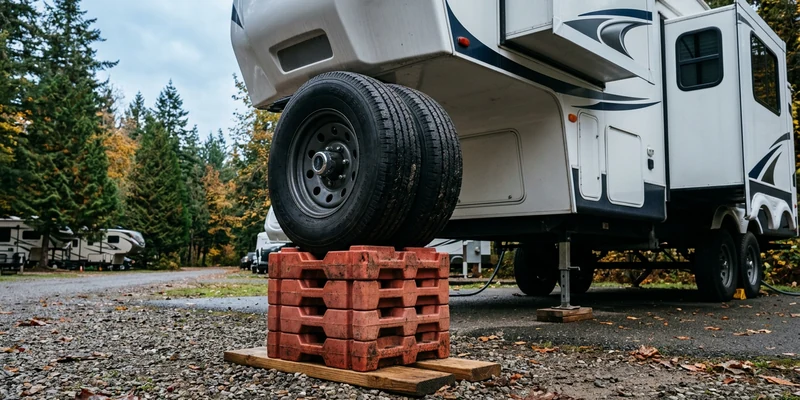
Heavy duty RV leveling blocks exist because a large fifth wheel or a Class A motorhome puts a load on one tire that general purpose blocks were never designed to carry. The failure is not dramatic when it happens. A block goes quiet, then splits along a rib, then the corner of the rig settles an inch while you are inside making coffee. Owners who have had it happen once buy on published rating from then on.
The heavy duty tier differs in ways you can see and ways you cannot: thicker walls, deeper ribbing, a larger footprint that spreads load into soft ground, and resin formulated to stay tough rather than brittle in the cold. This guide covers how to work out what your rig actually needs, which formats suit which situations, and where a block should never be used no matter what it is rated for.
This article contains affiliate links. If you buy through them, we may earn a commission at no extra cost to you. Learn more.
Quick Answer
Which heavy duty RV leveling blocks should you buy?
- Compare the published per block rating against the load on your heaviest single tire, which comes from your axle rating divided by the tires on that axle, not from the weight of the whole rig.
- For a big fifth wheel or Class A, buy for the footprint as well as the rating, since spreading load matters on gravel, grass, and soft asphalt.
- Blocks and stabilizers are not lifting devices. Nothing that puts a person under the rig ever rests on plastic.
What Makes a Block Heavy Duty
The label is not regulated, so read the specifications rather than the marketing. These are the properties that separate a genuine heavy duty set from a standard set in a darker color.
| Property | Why it matters on a heavy rig | What to look for |
|---|---|---|
| Published per block rating | One block carries a share of one wheel, and that is the number that fails | A stated capacity comfortably above your heaviest per tire load |
| Wall thickness and ribbing | Deeper ribs resist the point loading of a narrow tire contact patch | Substantial ribbing visible from below, not a thin waffle |
| Footprint | A wider pad sinks less into gravel, grass, and hot asphalt | Larger surface area, or blocks designed to be used side by side |
| Interlocking system | Heavy loads punish a stack that can shift as a tire climbs | Positive tabs that lock layers in both directions |
| Maximum stack height | Tall stacks lose stability regardless of block strength | A published limit, and the discipline to respect it |
| Cold weather behavior | Plastic gets less forgiving as temperature drops | UV stabilized resin sold for RV leveling, and owner feedback from cold climates |
| Dual wheel compatibility | Duals need both tires supported across their full width | Blocks or a ramp long and wide enough to carry both tires together |
The number nobody publishes is the one that matters most: how a block behaves at temperatures near freezing after three seasons of sunlight. That is where owner reports across RV forums carry more weight than any specification sheet, and where the established RV brands generally have the better reputation.
Working Out What Your Rig Actually Needs
The arithmetic is simple and it is the whole decision. Take the GAWR from the trailer or motorhome label, divide by the number of tires on that axle, and you have a conservative figure for what one tire can be putting into one stack. Leave headroom on top of that, because loading is never perfectly even and the heavy side is usually the side you are lifting.
If that per tire figure lands near or above the rating of a general purpose set, you are in the heavy duty tier and no amount of stacking more blocks changes it. Capacity is per block, so ten underrated blocks do not add up to one properly rated one. Working out where the ratings come from is covered in RV weight ratings explained, and it is worth doing once for your rig rather than guessing at every site.
Duals Change the Math
Motorhomes and duallies put two tires on one side of an axle, and both of them need to be supported across their whole width. A stack that catches only the outer tire loads that tire far beyond its share and puts the block under an edge load it was not designed for. For duals, a long ramp or wide blocks used side by side is the right answer.
Our Top Picks at a Glance
How we chose: we compared widely available leveling products on published per block capacity, footprint, interlocking quality, stack height limits, and the themes that repeat in owner feedback across RV forums and retailer reviews. Our assessment rests on manufacturer information and that feedback rather than on any hands on trial of our own.
🏆 Best Overall
A heavy duty interlocking block set from an established RV brand is the default for a large fifth wheel or a big travel trailer. You get a published capacity well above the general purpose tier, deep ribbing, and blocks that stack squarely without creeping as the tire climbs. Buy enough of them that you can build a proper ramp under two tires on the low side rather than nursing a short stack, and confirm the rating against your per tire load before ordering.

💰 Best Budget Pick
The honeycomb style leveler remains the most owned block in RV storage bays, and for mid weight rigs it is often enough on its own. Used properly, which means the tire centered and the stack kept inside the published limit, owners report years of service. The reason it sits in the budget slot here rather than at the top is capacity: check the published number against your heaviest tire load before assuming it covers a heavy rig.

⚙️ Upgrade Pick
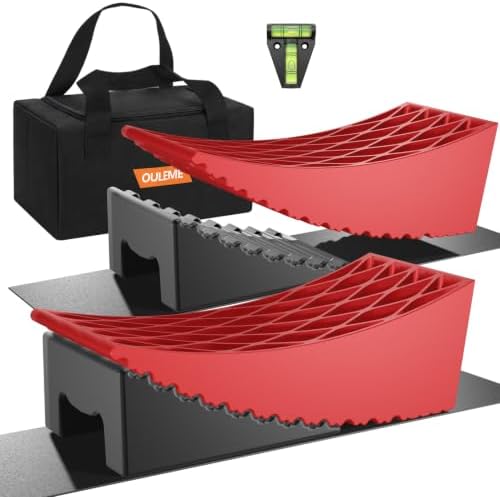
A curved ramp style leveler removes the stack entirely. You drive up until the bubble reads right and drop in the matching chock, which is faster than building a staircase and puts a longer, continuous contact patch under the tire instead of a tower of layers. It wants firm, reasonably even ground under its full length, and heavy rigs should confirm the published capacity applies to their per tire load before committing.
Which Setup Suits Your Rig
Heavy rigs are not one category. The right combination depends on what you are lifting and what you are parking on.
| Rig and site | What matters most | What usually works |
|---|---|---|
| Large fifth wheel, gravel sites | Per tire capacity and footprint together | Heavy duty blocks in quantity, plus wide pads under the landing gear |
| Class A on duals | Supporting both tires across their full width | A long ramp or wide blocks used side by side, never one tire only |
| Heavy travel trailer, tandem axle | Both tires on the low side supported | Enough blocks to build two ramps, not one |
| Soft ground, grass, or hot asphalt | Spreading load so nothing sinks or dents | Wide pads under every jack, block, and stabilizer foot |
| Motorhome with hydraulic leveling | Protecting the jack feet and the surface | Dedicated jack pads rather than tire blocks |
| Frequent short stops | Speed of setup | A ramp leveler with blocks kept as the backup for awkward sites |
If you are new to the routine, the order of operations saves more frustration than any product does. It is laid out in how to use RV leveling blocks correctly.
Two More Things Heavy Rigs Should Carry
Tire blocks solve one problem. On a heavy rig, the jacks and the parked stability of the rig are separate problems with separate answers.
🧱 Best for Jacks and Landing Gear
Landing gear feet and hydraulic jack pads concentrate a lot of weight on a small area, which is how you end up with feet sunk into gravel or dents in fresh asphalt. Dedicated pads spread that load across a much larger footprint and keep the feet out of mud. Match the pad size to your jack foot rather than using whatever is left in the bag, and store them somewhere you can reach without crawling.

🛑 The Part That Is Not Optional
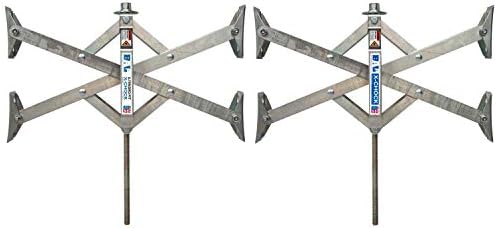
Once a heavy rig is up on blocks, chocks are what keep it there, and lightweight chocks from a starter kit are not enough. Solid chocks front and back on each side are the baseline, and on tandem axles a wedge that spreads between the two tires adds a second layer that also reduces rocking inside the trailer. Place them as soon as side to side leveling is done, before unhitching.
Using Them Without Breaking Them
Heavy duty blocks fail in the same ways ordinary ones do, just at higher loads. Keep the tire centered so the load sits over the ribbed structure rather than on an unsupported edge, since overhang is the most common cause of a cracked corner. Build a ramp rather than a wall, so the tire climbs progressively instead of stepping up onto a tall stack.
Respect the published stack height even when the blocks feel solid, because tall towers become unstable as the tire climbs regardless of how strong each layer is. Drive up slowly and stop where you intended rather than rolling off the far edge. Rinse grit off before they go back in the bay, since sand between layers stops the interlocking tabs seating, and inspect for hairline cracks at the start of each season and after any cold weather use.
The Line That Does Not Move
Leveling blocks are for leveling and stabilizer jacks are for stabilizing. Neither lifts, and neither supports a rig with a person underneath it. If you need to get under the RV, use properly rated jack stands on firm level ground with the wheels chocked, or take it to a shop. Slide rooms and hydraulic leveling systems also assume the frame is not twisted, which is one reason a badly leveled rig shows up later as RV slide-out problems.
Common Mistakes to Avoid
- Buying on block count instead of rating. Capacity is per block, so more blocks does not raise what a stack can carry.
- Comparing to total rig weight. The number that matters is the load on one tire, from your axle rating.
- Supporting only the outer tire on duals. Both tires need full width support or one carries the pair.
- Stacking past the published height. Tall towers shift as the tire climbs, and that is when blocks shoot out sideways.
- Using lumber offcuts. They split, absorb water, and carry no published rating at all.
- Treating blocks as jack stands. Nothing that puts a person under the rig ever rests on plastic.
Frequently Asked Questions
How much weight can heavy duty leveling blocks hold? Capacity is published per block and varies by set, which is why the comparison to make is against the load on one tire rather than against the weight of the rig. Take your axle rating, divide by the tires on that axle, and leave headroom.
Do I need heavy duty blocks for a fifth wheel? Usually yes for larger fifth wheels, because per tire loads sit above what general purpose sets are rated for. Check the published numbers rather than assuming, and see stackable RV leveling blocks for the standard tier.
How high can I stack them? Only to the limit the manufacturer publishes, commonly around four blocks for interlocking sets. If a site needs more than that, the right answer is a different spot.
Can I use leveling blocks under landing gear? Blocks help, but dedicated jack pads spread the load better under landing gear and hydraulic jack feet, especially on gravel, grass, and hot asphalt.
Are plastic blocks safe in freezing weather? Quality RV specific blocks use UV stabilized resin and are used year round, but plastic is less forgiving in the cold. Drive up slowly, keep tires centered, and inspect for cracks before building a stack.
Do heavy duty blocks replace wheel chocks? No. Blocks set height, chocks stop movement, and on a heavy rig both are needed every time, placed before you unhitch.
The Bottom Line
Buy heavy duty blocks on published per block rating measured against the load on your heaviest single tire, then on footprint and interlocking quality, and only then on how many come in the box. Big fifth wheels and Class A coaches also need full width support under duals, dedicated pads under landing gear and jack feet, and chocks rated for the rig. Keep the tire centered, respect the published stack height, and never let any block stand in for a jack stand.