Last updated: August 14, 2026
An RV surge protector is misnamed, and the misunderstanding costs people money. Actual lightning surges are the rarest thing that campground power does to an RV. Far more common, and far more damaging over time, is low voltage on a hot afternoon when the park is full, along with open grounds, reverse polarity, and miswired pedestals that no basic surge suppressor will notice at all.
That is the reason the category splits into two products. A plain surge protector absorbs a voltage spike and warns you about wiring faults with indicator lights. An electrical management system does that and also measures the incoming supply continuously, cutting power before your converter and air conditioner take the damage. This guide sorts both, covers 30 and 50 amp versions, and explains where the portable versus hardwired decision actually matters.
This article contains affiliate links. If you buy through them, we may earn a commission at no extra cost to you. Learn more.
Quick Answer
Which RV surge protector should you buy?
- Buy an electrical management system rather than a basic surge protector if you move between parks. Low voltage does more damage to RV appliances than surges do, and only an EMS disconnects for it.
- Match the amperage to your shore cord. A 30 amp rig needs a 30 amp unit, a 50 amp rig needs a 50 amp unit, and adapting around the wrong one adds another connection to fail.
- Portable units plug in at the pedestal and are easy to move between rigs. Hardwired units live inside the coach, cannot be stolen, and need a certified technician to install.
What Separates a Real Protector From a Power Strip
Six things decide whether a unit will actually save your equipment. The joule rating on the box is only one of them, and by itself it is the least useful.
| What to check | Why it matters | What to look for |
|---|---|---|
| Surge versus management | A surge device absorbs spikes, an EMS also disconnects for bad supply | Stated low and high voltage cutoff, not just joules |
| Low voltage protection | Sustained low voltage overheats motors and compressors quietly | Automatic disconnect and reconnect with a delay |
| Wiring fault detection | Open ground and reverse polarity are common at older pedestals | Fault indication before power is passed through |
| Amperage rating | Must match the service your coach is built for | 30 amp or 50 amp version, matching your shore cord |
| Display and diagnostics | Turns a mysterious shutdown into a readable fault code | Voltage and amperage readout, or a remote display |
| Weather and theft resistance | Portable units sit outdoors on a post all week | Sealed housing, a locking point, and a decent cord grip |
If your rig is tripping the pedestal breaker rather than suffering supply faults, that is a different problem with a different fix. Start with why RV breakers trip at a campground pedestal.
Surge Protector or Electrical Management System?
A basic surge protector contains suppression components that absorb a voltage spike and sacrifice themselves doing it, plus a set of indicator lights that report the pedestal’s wiring condition. It is genuinely useful, it costs the least, and it does nothing about the most common problem.
An electrical management system adds continuous measurement and a relay. When the incoming voltage falls below or climbs above its thresholds, it opens the circuit and waits, reconnecting after a delay so a compressor is never restarted immediately. Low voltage is the case that matters, because a rooftop air conditioner or a residential refrigerator compressor asked to run on a sagging supply draws more current and gets hotter, and that damage accumulates over seasons rather than announcing itself. Owners who move between parks consistently report this as the feature worth paying for.
What neither of them does
Neither device gives you more power. A protector will not stop a breaker tripping from overload, it will not fix an undersized pedestal, and it cannot compensate for a park whose supply is simply weak. It protects, reports, and disconnects. If your problem is running out of capacity rather than getting bad power, the answer is load management, covered in 30 amp vs 50 amp RV service explained.
Our Top Picks at a Glance
How we chose: we compared widely available RV power protection devices on protection type, voltage cutoff behavior, fault detection, display quality, weather resistance, and the themes that repeat across owner feedback and technician recommendations. Our assessment rests on published specifications and that feedback rather than any hands on trial of our own. Two practical notes: match the amperage to your shore cord rather than to the pedestal, and check whether the model you are looking at is the surge only version or the management version, because manufacturers often sell both under near identical names.
🏆 Best Overall
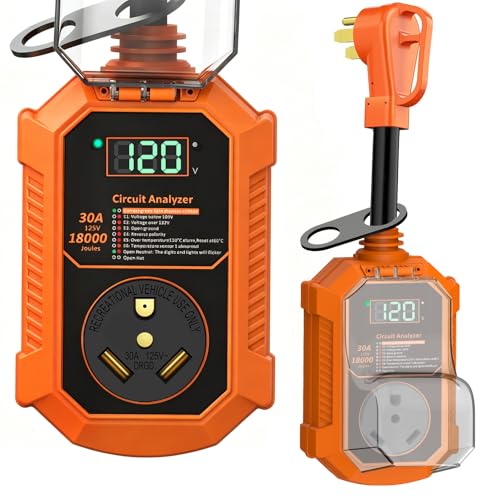
A portable 30 amp electrical management system with a display showing voltage, amperage, and specific fault codes, plus automatic disconnect for low and high voltage. This is the version that protects against the failure mode that actually happens, and the display alone removes most campground guesswork. The right default for anyone who changes sites regularly.
💰 Best Budget Pick
A basic 30 amp surge protector with indicator lights for open ground, reverse polarity, and correct wiring, from Camco. It absorbs spikes and tells you whether the pedestal is wired properly before you plug the coach in, which is the single most valuable thing a cheap device can do. It will not disconnect for low voltage, so treat it as a first step rather than the final answer.

⚡ Upgrade Pick
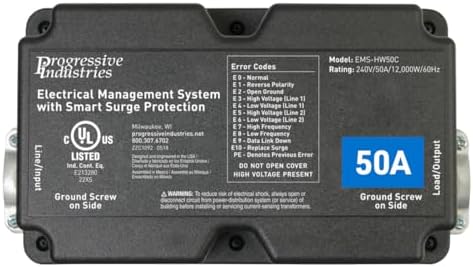
A hardwired electrical management system installed inside the coach with a remote display at the panel. It cannot be stolen off a pedestal, it stays dry, and it protects every time you plug in without anything to remember. The tradeoff is that installation is 120 volt work for a certified RV technician, so it is not a driveway afternoon.
Which Setup Fits Your Camping?
How often you move, and where you move to, predicts the right answer better than any spec sheet. Find your pattern below.
Weekend campers at familiar parks
A basic surge protector with fault lights covers the most likely problem, which is a badly wired or worn pedestal at a site you have not used before. If you always return to the same well maintained park, this is a defensible place to spend less.
Owners who move between parks constantly
An electrical management system earns its place here, because the variable you cannot control is supply quality, and it changes every time you arrive somewhere new. The display also shortens troubleshooting from an afternoon to a glance when something behaves oddly.
Full timers and anyone in a hot climate
Low voltage during peak air conditioning hours is the specific threat, and it is worst exactly when the park is fullest. A hardwired unit makes sense at this point, both because it is always in circuit and because there is nothing left outside overnight.
Three More Picks for Specific Situations
The three above cover most owners. These handle the 50 amp case, the theft problem, and the adapter that so often sits in front of whatever you buy.
🔌 For a 50 Amp Rig
A portable 50 amp electrical management system with the same voltage cutoff behavior and a larger display. Do not adapt a 30 amp unit onto a 50 amp coach, because you are limiting the whole rig to the smaller service and adding a connection that will heat up. Match the device to the shore cord.

🔒 For Leaving It on the Pedestal
A locking bracket or security cable sized for a portable protector, since these units sit unattended on a post for days and are a known theft target at busy parks. Most portable models include a locking loop, and a simple weatherproof padlock through it removes the easiest opportunity.

🔗 The Adapter That Comes With It
A properly rated dogbone adapter with molded ends, for the sites where the pedestal has the wrong outlet. Cheap adapters add resistance and heat in front of a device you bought specifically to keep the supply clean, which defeats a good part of the point.

Using It Without Creating a Problem
Plug the protector into the pedestal first, with the pedestal breaker off, then connect your shore cord to the protector and switch the breaker on last. That order means the device sees the supply before your coach does, which is the entire point of owning one. Give it a moment to run its checks, since most units deliberately delay before passing power.
Two habits matter afterward. Read the display when something odd happens rather than immediately blaming the rig, because a low voltage disconnect looks exactly like a dead pedestal from inside the coach. And check the unit and the cord ends for heat after a few hours on a hot day, since warmth at a connection means resistance and resistance is what eventually chars a plug.
Where the line is
Installing a hardwired unit is not a DIY job. It goes into the coach’s 120 volt wiring between the shore cord inlet and the distribution panel, and that is work for a certified RV technician or a licensed electrician. Portable units are entirely owner friendly, since you are only plugging things in. Never open a campground pedestal enclosure to investigate a fault your protector reports, because that equipment belongs to the park and its wiring is upstream of everything you own. Report it at the office and move sites. And if any plug, adapter, or cord end is discolored, melted, or smells hot, take it out of service rather than continuing to use it.
Common Mistakes to Avoid
- Buying surge only and expecting voltage protection. Low voltage is the common threat, and only a management system disconnects for it.
- Adapting a 30 amp unit onto a 50 amp rig. It throttles the coach to the smaller service and adds a hot connection.
- Ignoring the fault lights. An open ground indication means the pedestal is unsafe, not that the device is fussy.
- Leaving a portable unit unlocked. They disappear from pedestals at busy parks, and the locking loop exists for a reason.
- Assuming it prevents breaker trips. Protection is not capacity. Overload is a load management problem.
- Skipping it on a short stay. Damage from bad supply usually happens in a single afternoon, not gradually over a season.
Where to Go From Here
If your actual complaint is a breaker that opens rather than a supply that misbehaves, the diagnosis is in why RV breakers trip at a campground pedestal, and the load math behind it is in 30 amp vs 50 amp RV service.
If you are here because something already failed, the converter is the component that sits most directly on incoming shore power and the most common casualty of bad supply. Our guides to RV converter repair and what happens when an RV converter goes bad cover the symptoms and the replacement decision.
Frequently Asked Questions
Do I really need an RV surge protector? Campground pedestals are the least controlled power most RVs ever see, and the converter and air conditioner sit directly on it. Most owners who move between parks treat protection as standard equipment rather than an accessory.
What is the difference between a surge protector and an EMS? A surge protector absorbs spikes and reports wiring faults. An electrical management system also measures voltage continuously and disconnects the coach when the supply goes out of range.
Is low voltage really more dangerous than a surge? For RV appliances, generally yes. Motors and compressors asked to run on a sagging supply draw more current and run hotter, and that damage builds up quietly.
Portable or hardwired, which is better? Hardwired cannot be stolen, stays dry, and is always in circuit. Portable is easier, moves between rigs, and needs no technician. The tradeoff is convenience against installation.
Can I use a 30 amp protector with an adapter on a 50 amp rig? You can physically, but you are limiting the coach to 30 amps and adding a connection that heats. Buy the version matching your shore cord.
Will it stop my breaker from tripping? No. Breaker trips are usually an overload problem, which is about how much you are running rather than the quality of the supply.
The Bottom Line
Buy for low voltage, not for lightning: an electrical management system disconnects when campground power sags, which is the failure mode that actually damages converters and air conditioners. Match the amperage to your shore cord rather than adapting around it, choose portable for flexibility or hardwired for security, and remember that protection is not capacity. Hardwired installation is 120 volt work for a certified RV technician.