Last updated: August 14, 2026
An inverter that beeps, shuts down mid coffee, or refuses to wake up at all feels like an expensive failure. Most of the time it is not. The majority of RV inverter repair questions end at the battery, the cables, or a fuse, because an inverter is only as good as the direct current it is being fed, and it is designed to protect itself by quitting long before it damages anything.
This guide covers what actually fails on RV inverters, what an owner can fix with hand tools and a meter, and what has to go to a certified technician. It also explains the alarms, because an inverter that beeps is usually not broken, it is complaining about something specific that you can measure.
This article contains affiliate links. If you buy through them, we may earn a commission at no extra cost to you. Learn more.
Quick Answer
What usually fails on an RV inverter, and can you fix it?
- Most inverter faults are external: a blown DC input fuse, loose or corroded battery cables, a battery that sags under load, or simply too much wattage on the output.
- Repeated beeping is almost always the low voltage alarm, which typically starts somewhere around 10.5 to 11 volts at the inverter terminals on a 12V system.
- Fuses, connections, ventilation, and load management are owner level work. Internal board repair and any 120V output wiring belong to a certified RV technician.
Inverter Symptoms and What They Point To
Inverters give better error signals than most RV components, and the pattern tells you where to look. Match your symptom here before you unbolt anything.
| What it does | What it usually means | What to do first |
|---|---|---|
| Steady beeping, then shutdown | Low DC input voltage alarm | Measure voltage at the inverter terminals while the load runs, not at rest |
| Nothing at all, no lights, no fan | Blown DC input fuse, open disconnect, or dead battery bank | Check the main inverter fuse and the battery disconnect |
| Works, then quits after several minutes | Thermal shutdown from restricted airflow or a heavy sustained load | Clear the vents, reduce the load, let it cool, and retest |
| Trips instantly with one appliance | Surge draw above the inverter rating, common with compressors and motors | Compare the appliance startup draw against the inverter surge rating |
| Runs, but voltage at the inverter sags badly | Undersized, long, or corroded battery cables | Clean and torque both ends, then measure voltage drop under load |
| Some devices buzz or misbehave | Modified sine wave output feeding sensitive electronics | Not a fault, this is a waveform mismatch and needs a pure sine unit |
| Burning smell or discolored case | Internal failure | Disconnect the DC side, stop troubleshooting, and get it inspected |
If beeping and random shutdowns are your main complaint, the pattern is broken down further in our article on RV inverter problems, beeping and shutdowns.
Why the Battery Is Usually the Real Suspect
An inverter is a current amplifier in the least convenient direction. To supply a modest 120V load it pulls a much larger current from the 12V side, roughly ten times the AC amps as a rule of thumb, before efficiency losses. A microwave that draws a handful of amps at the outlet can pull well over a hundred amps from the battery bank.
That is why a battery which looks fine at rest can still cause shutdowns. Resting voltage might sit around 12.6 to 12.8 volts, but the moment a heavy load starts, an aging or undersized bank drops far enough to hit the inverter’s low voltage cutoff. The inverter is not failing, it is reporting the sag. This is also why inverter complaints often appear in cold weather or at the end of a battery’s life rather than on the day something broke. Our overview of what an RV inverter actually does covers the current math in more detail.
The Free Checks, In Order
Do these before spending anything. Disconnect the shore cord and open the battery disconnect before touching any DC connection, and remove the inverter’s main fuse before working at its terminals.
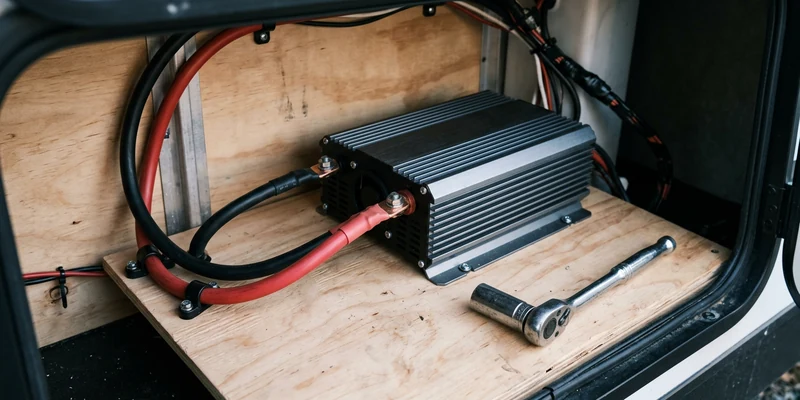
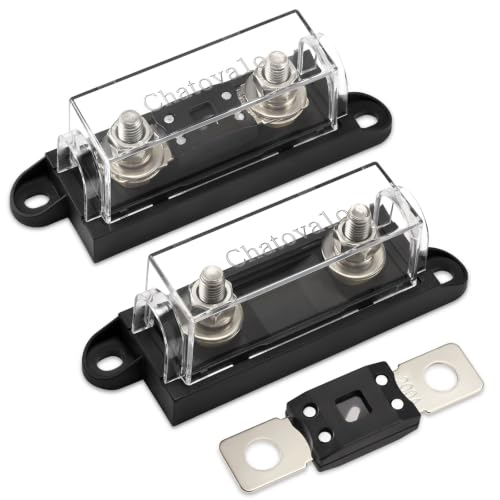
- Check the DC input fuse. Inverters are protected by a large fuse close to the battery, usually an ANL, MEGA, or Class T type depending on the install. A blown one is silent and total, and the correct rating is on the fuse and in the inverter manual.
- Check the battery disconnect and any inverter switch. Many rigs have a remote panel or an inline switch that people forget exists after a winter of storage.
- Inspect and torque both ends of the battery cables. Loose lugs generate heat, heat raises resistance, and resistance costs you voltage exactly when the load is highest. Look for discoloration on the lugs.
- Clean corrosion off terminals and the negative bus. The ground side causes as many inverter faults as the positive side.
- Clear the ventilation. Inverters are commonly mounted in a bay or under a bed, and gear stacked against the fan intake causes thermal shutdowns that look like random failures.
- Reduce the load and retest. If it runs a laptop but not the microwave, you have a capacity or surge issue, not a broken inverter.
If the main fuse blew, replace it with the same type and rating and find out why before running again. Repeat failures point at a short, an overload, or a fuse rated below what the install actually needs.
Measuring Instead of Guessing
Two measurements tell you almost everything. Both are taken on the DC side, which is the side an owner can safely work on.
First, measure directly at the inverter’s own DC terminals with the problem load running. Comparing that number against the reading at the battery terminals at the same moment reveals voltage drop in the cables. A small difference is normal, but a large gap under load, more than roughly half a volt on a typical 12V run, points at undersized cable, a long run, or a bad connection rather than a bad inverter. Second, watch how far the battery voltage falls when the load starts. A bank that plunges toward the low voltage cutoff under a load it should handle is telling you the batteries, not the inverter, are the limit.
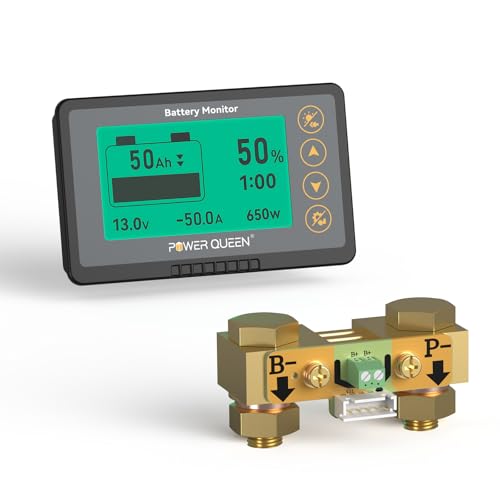
A permanently installed battery monitor with a shunt makes this far easier than chasing readings with a handheld meter, because it shows voltage and current together and logs what happened while you were asleep. Victron and Renogy both sell shunt based monitors that fit typical RV banks.
When Replacement Beats Repair
Inverters are sealed, potted, and built to a price. Board level repair is rarely offered outside the manufacturer, and for the smaller units common in RVs the labor to diagnose a component fault usually exceeds the cost of a new unit. Replacement makes sense when the DC checks pass, the fuse is intact, voltage at the terminals is healthy under load, and the inverter still refuses to produce clean output.
Replacement is also the right answer for two non fault situations. If your inverter is modified sine wave and you keep finding devices that buzz, run hot, or refuse to work, the waveform is the problem and only a pure sine wave unit fixes it. And if it shuts down every time a real appliance starts, the unit is undersized rather than broken, so size the replacement by continuous wattage plus surge headroom for motors and compressors. Xantrex, Renogy, and Victron are the names that come up most often in RV installs.

For sizing and shortlists, see our guides to the best RV inverters and to 2000 watt inverters for RV use.
Where This Stops Being a DIY Job
The DC side of an inverter is owner territory with normal precautions. The AC side is not, and inverter installs blur the two more than any other RV component.
Reasonable to do yourself: replacing the DC input fuse, cleaning and torquing battery lugs, improving ventilation, adding a monitor, and plugging loads directly into the inverter’s own receptacle. Work for a certified RV technician or licensed electrician: hardwiring an inverter into the RV distribution panel, installing or wiring a transfer switch, adding a subpanel, any modification to the 120V circuits, and bonding or grounding decisions. Getting neutral to ground bonding wrong on an inverter install can defeat the protection you rely on at a campground pedestal, and that is not a guess and check job.
Two more hard stops. Large battery banks can deliver enormous short circuit current, so never let a wrench bridge a positive terminal to the chassis, and remove rings and watches before working. And if an inverter smells hot, shows discolored plastic, or has scorched cable insulation, disconnect the DC side and stop. Wiring layouts and the components a proper install needs are covered in how to wire an RV inverter.
Common Mistakes to Avoid
- Blaming the inverter for a tired battery. The low voltage alarm is a battery report, not a self diagnosis.
- Fitting a larger fuse to stop nuisance blowing. The fuse protects the cable. Oversize it and the cable becomes the fuse.
- Using thin or overlong battery cable. Cable size is set by current and run length, and inverter current is high. Undersized cable causes sag, heat, and shutdowns.
- Running a rooftop air conditioner off a modest inverter. Startup surge, not running watts, decides that, and most small inverters cannot do it. See running an RV air conditioner on batteries.
- Mounting it in a sealed locker. Inverters shed real heat and need airflow around the fan.
- Leaving it switched on in storage. Idle draw is small but constant, and it flattens a bank over a winter.
Frequently Asked Questions
Why does my RV inverter keep beeping? Continuous or repeated beeping is nearly always the low voltage alarm. Measure at the inverter terminals while the load runs, because a 12V system typically alarms somewhere around 10.5 to 11 volts under load even when resting voltage looked fine.
Can an RV inverter be repaired? External items yes, internal boards rarely. Fuses, cables, connections, and cooling are owner serviceable. If the DC supply is healthy and the output is still bad, replacement is normally the practical route.
Why does the inverter shut off when I start the microwave? Startup surge exceeds either the inverter rating or what the battery bank can deliver without sagging. Check the surge rating first, then the battery voltage at the moment of startup.
Does an inverter drain the battery when nothing is plugged in? Yes, a small idle draw continues whenever it is switched on, which is why many owners turn the inverter off during storage or use the remote panel to shut it down overnight.
Is a modified sine wave inverter bad for appliances? It is not universally harmful, but sensitive electronics, some medical devices, variable speed motors, and certain chargers do not tolerate it well. Pure sine wave avoids the whole category of problem.
The Bottom Line
Treat inverter faults as a DC supply investigation first: fuse, disconnect, cable condition, torque, ventilation, and battery behavior under load. Beeping is an alarm about voltage, not a broken board, and thermal shutdowns are usually about airflow or an oversized load. If the supply checks out and the output still fails, replace rather than repair, and hand any 120V wiring or transfer switch work to a certified RV technician.