Last updated: August 14, 2026
You pull the black valve at the dump station and get a trickle instead of a rush, or worse, nothing at all while the panel insists the tank is full. An RV black tank clogged like this is almost never a mysterious failure. It is usually a mound of solids and paper sitting directly under the toilet, built up because the tank ran with too little water, and water is also what dissolves it again.
That is the good news: the fix is mostly patience and gallons, not chemistry. This guide works from the free stuff, soaking and rinsing, through the tools that make it faster, and it is deliberately careful about what you should never pour or push into a plastic waste tank. The wrong choice there turns a weekend annoyance into a tank replacement.
This article contains affiliate links. If you buy through them, we may earn a commission at no extra cost to you. Learn more.
Quick Answer
How do you clear a clogged RV black tank?
- Close the valve, fill the tank with fresh water through the toilet, and let it soak for several hours or overnight before dumping again. Repeat as needed.
- Speed it up with a tank rinse wand through the toilet, a built in tank flush, or a clear elbow with a backflush adapter so you can see what is moving.
- Skip harsh drain chemicals and never push a metal snake down an RV toilet. Both can damage plastic tanks and fittings, and many parks restrict what you may dump.
Symptoms, Causes, and Actions at a Glance
Not every full reading is a clog, and not every clog is in the same place. Match what you are seeing before you start pouring anything in.
| What you see | What it usually means | What to do |
|---|---|---|
| Toilet drains slowly, tank reads full | Pyramid of solids built up under the toilet | Fill with water, soak, dump, repeat |
| Valve open, only a trickle comes out | Blockage at the valve or in the outlet pipe | Backflush from the outlet with a clear elbow adapter |
| Nothing at all with the valve pulled | Hardened blockage, or valve not actually opening | Check the valve cable and handle before assuming a clog |
| Sensors always read full after dumping | Residue coating the probes, often not a clog | Rinse the tank thoroughly; treat readings as a hint, not gospel |
| Gurgling and odor inside the coach | Blocked roof vent or a dry trap | Inspect the vent cap for debris or a nest |
| Toilet backs up into the bowl | Tank full or the outlet completely blocked | Stop adding water, dump or soak before anything else |
| Valve handle moves but nothing changes | Broken valve cable or blade | Mechanical repair, not a clog; often a technician job |
Why Black Tanks Clog in the First Place
Three habits cause most blockages. The first is dumping with too little liquid in the tank, which leaves solids and paper stranded instead of floating out. The second is leaving the black valve open while parked on a full hookup, so liquid drains continuously and the solids dry into a mound under the toilet. The third is flushing things that never break down, wipes above all.
Understanding that shape matters, because it explains why the fix works. A dried mound needs to be rehydrated and floated, and that takes standing water and time. Chemicals cannot substitute for either, no matter what the label promises.
Sensors lie more often than tanks clog
Holding tank probes sit inside the tank wall and hold residue easily, so a tank that reads full straight after a good dump is frequently just dirty. Judge by drainage and weight behavior, not by the panel. If the tank empties freely and the toilet flushes normally, chase the sensors separately rather than treating it as a clog.
The Soak Method: Free and Usually Enough
This is the first thing to try and it clears a majority of clogs on its own. It only needs water, a closed valve, and a night of patience.
- Close the black valve. Everything below depends on the tank actually holding water.
- Add water through the toilet. Hold the pedal, use the sprayer, or pour buckets in until the tank is well filled. More water is better than less.
- Let it sit. Several hours minimum, overnight is better. Driving a few miles with the tank part full sloshes the contents and helps break the mound apart.
- Add a tank treatment if you have one. Enzyme or bacteria based products work over hours, not minutes, so add them at the start of the soak rather than at the dump station.
- Dump with the tank full. A full tank creates the head of water that carries solids out. Pull the valve all the way and let it run until it stops.
- Refill and repeat. Two or three soak and dump cycles clear most stubborn tanks. Improvement between cycles tells you it is working.
A tank treatment is the one consumable worth keeping aboard for this, and the septic safe formulas are the ones that stay welcome at dump stations and in home systems.

Rinsing Tools That Speed Things Up
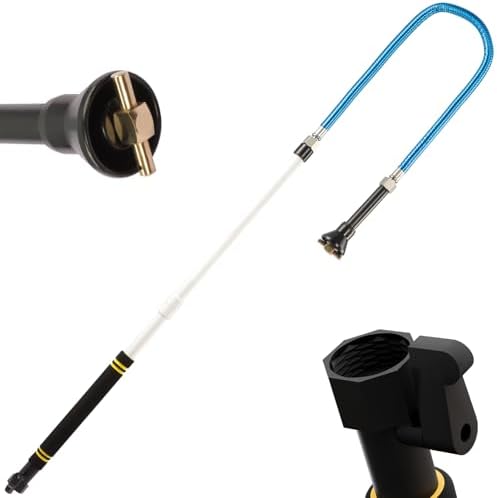
When soaking alone is slow, the next step is directed water. A flexible tank wand goes down through the toilet on a garden hose and sprays sideways at the mound; the flexible versions reach the area under the toilet that a straight wand cannot. Work in short bursts with the valve closed, then open and dump.
If your rig has a built in black tank flush, use it: it feeds a spray nozzle inside the tank from an outside inlet. Run it with the valve closed for a minute or two, then dump, and repeat a few times rather than running it continuously with the valve open, which mostly wastes water.
See what is happening
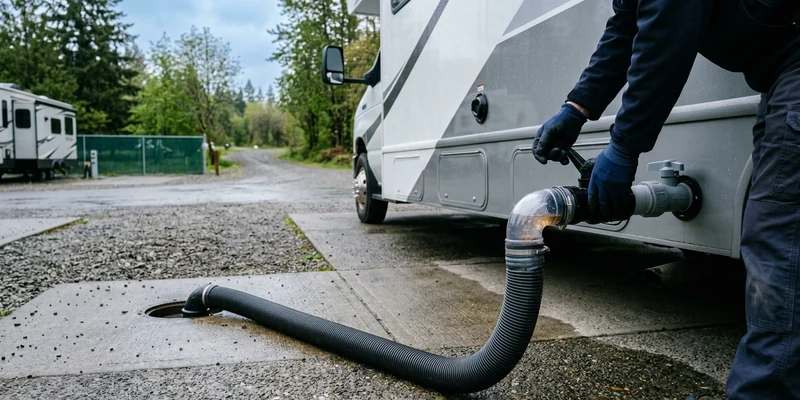
A clear elbow at the outlet is the least glamorous and most useful thing you can own here, because it turns guesswork into observation. Many include a backflush adapter that lets you push clean water up into the tank from the outlet side, which is exactly what you want when the blockage sits near the valve. Use a dedicated hose for this, never your drinking water hose, and keep the two stored separately.

About Chemicals: The Honest Version
There is a real temptation to reach for a household drain opener when a tank will not move. Do not. Caustic and acid based drain products are formulated for metal and rigid household plumbing, and RV waste systems are plastic tanks, ABS pipe, rubber seals, and a blade valve. Owners and technicians consistently warn that these products can damage seals and fittings, and if the tank still will not drain, someone eventually has to open a system full of that chemical.
There is a second reason that has nothing to do with your rig. Whatever you put in the tank ends up in a dump station, a septic system, or a municipal treatment plant. Many campgrounds and most septic systems specifically ask you to avoid formaldehyde based and harsh chemical treatments, because they kill the bacteria those systems rely on. Enzyme and bacteria based treatments labeled septic safe exist precisely for this reason, and they are what to use if you are dumping at home or at a park on septic.
Never put hard tools down the toilet
A metal drain snake or an auger will puncture or gouge a plastic tank or an ABS elbow, and a hole in the tank is a repair that involves dropping it. The flexible wands sold for this job are soft on purpose. Ice cubes and water driven around for a few miles are a popular owner trick; they will not hurt anything and some owners swear by the scouring effect, though the results are inconsistent and it is no substitute for a proper soak.
When to Stop and Call Someone
Soaking, rinsing, and backflushing are safe for anyone to do. Past that point, the risk shifts.
- The valve will not open, or the handle moves with no effect. That is a mechanical failure of the blade or cable, not a clog. Replacing a valve means dropping the outlet assembly, and often the tank.
- Multiple full soak cycles produce no change. A blockage that survives repeated flooding is either hardened solid or something that should never have gone in. Mobile RV technicians and tank cleaning services have high pressure equipment made for this.
- You see any wetness or staining under the coach near the tank. Stop adding water. A cracked tank or fitting under pressure gets worse fast.
- Waste has backed up into the shower or floor drain. That points at the gray side or a shared vent, and it needs a proper diagnosis, not more water.
Standard hygiene applies for all of this: disposable gloves, a dedicated hose and tool set for the waste side, and a proper wash up afterward.
Preventing the Next Clog
The rule that prevents nearly all of these is simple: never let the tank run dry. Add a few gallons of water to an empty black tank right after dumping so solids have something to land in, and use plenty of water on every flush.
Keep the black valve closed until the tank is at least two thirds full, even on a full hookup, so each dump has enough force to carry solids out. Flush only waste and paper that breaks down; wipes marketed as flushable, paper towels, and hygiene products are the classic causes of the clogs that no amount of soaking fixes. Paper choice matters less than people think but is not nothing, which we cover in black tank clogged with toilet paper. And when you dump at home rather than at a park, follow the rules for dumping RV holding tanks at home.
Common Mistakes to Avoid
- Leaving the black valve open on hookups. The single most reliable way to build a dried mound under the toilet.
- Dumping a half full tank. Without volume there is no flow, and solids stay behind.
- Reaching for household drain cleaner. Wrong chemistry for plastic tanks and seals, and unwelcome in septic and dump systems.
- Pushing a metal snake down the toilet. Punctured tanks and cracked elbows are far more expensive than patience.
- Trusting the tank sensors. Residue on the probes reads as full long after the tank is empty.
- Using the drinking water hose to backflush. Keep a separate, clearly marked hose for the waste side, always.
Frequently Asked Questions
How do I know if my black tank is really clogged? Slow or nonexistent drainage with the valve fully open is the reliable sign. A panel that reads full after a good dump is usually just residue on the sensors, not a blockage.
Can I use Drano or a household drain cleaner in an RV black tank? No. Those products are made for household plumbing and can damage plastic tanks, seals, and valve components, and they are unwelcome in septic systems and many dump stations. Use water, time, and a septic safe tank treatment instead.
Does the ice cube trick work? Owners report mixed results. Ice and water sloshing on a drive will not hurt anything and may help scour the tank walls, but it does not replace filling the tank and letting it soak.
How long should I let the tank soak? Several hours at minimum, overnight where you can. Stubborn blockages often need two or three soak and dump cycles before they let go.
Can a clogged black tank make my toilet leak? A backed up tank pushes water and pressure against seals that were already marginal, so yes, it shows up that way sometimes. Our guide to an RV toilet leaking covers what to check.
What if the valve will not open at all? Check that the handle and cable actually move the blade. If the mechanism is broken, that is a repair at the outlet assembly rather than a clog, and it usually belongs with a technician.
The Bottom Line
Almost every black tank clog is a dried mound of solids under the toilet, and water plus time is what removes it. Close the valve, fill the tank, soak overnight, dump full, and repeat, then add a rinse wand or a backflush adapter if you want it to go faster. Leave the harsh chemicals and metal snakes out of it, and prevent the next one by keeping water in the tank and the valve closed until it is properly full.