Last updated: August 14, 2026
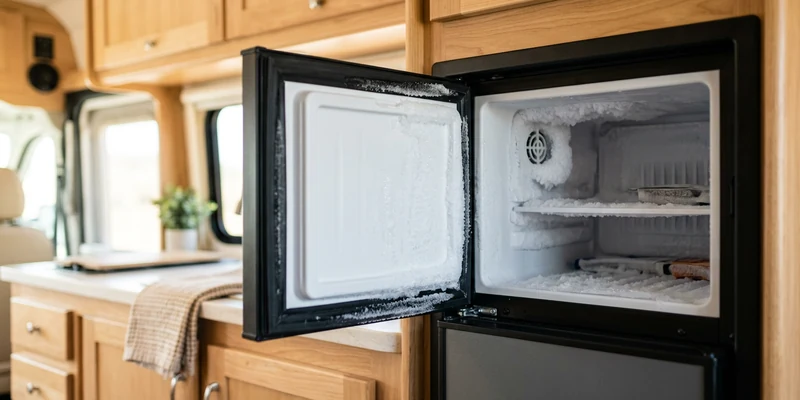
If your Everchill fridge is not cooling but the freezer works, the compressor is almost certainly fine. On a 12V compressor refrigerator, cold is made in one place and then moved, so a frozen freezer with a warm fresh food compartment points at air movement between the two, not at a failed cooling system. The usual suspects are a stalled evaporator fan, a duct blocked by frost or groceries, or a door that is not sealing well enough to keep the cabinet ahead of the heat coming in.
That is a very different diagnosis from the absorption refrigerators most RV troubleshooting articles describe. Everchill units in travel trailers and fifth wheels run on house 12V, which adds a second family of causes: low voltage shutdowns and battery protection settings that stop the compressor before your batteries are damaged. Work through both angles below. The brand-neutral overview lives in our guide to an RV refrigerator not cooling.
This article contains affiliate links. If you buy through them, we may earn a commission at no extra cost to you. Learn more.
Quick Answer
Why does the freezer work but the fridge stay warm?
- Cold air has to move from the freezer side into the fresh food compartment. If the fan stops or the duct frosts over, the freezer gets colder while the fridge gets warmer.
- Empty it, switch it off, and let it defrost fully with the doors open. A thick frost layer over the evaporator or the transfer vent causes this exact pattern.
- Then check 12V supply and the battery protection setting, because a compressor fridge cycling on low voltage looks like weak cooling rather than a shutdown.
Symptoms, Causes, and What to Do
Use the row that matches what you are seeing. The order runs from free checks to parts, and nothing here requires opening a sealed system.
| What you see | What it usually means | What to do |
|---|---|---|
| Freezer frozen solid, fridge warm | Air is not transferring between compartments | Listen for the fan, check the transfer vent, then defrost fully |
| Heavy frost on the back wall or vent | Ice is blocking the airflow path | Empty the fridge, power it down, and defrost with the doors open |
| No fan sound when the compressor runs | Evaporator or circulation fan has stopped | Confirm with a warranty or service claim; the fan is a serviceable part on most models |
| Fridge cools on shore power, struggles off grid | House voltage sagging under load | Measure battery voltage while the compressor runs and review your charging setup |
| Compressor starts and stops in short bursts | Low voltage cutoff engaging | Check the battery protection setting and the wiring connections at the fridge |
| Warm shelves near the door only | Door seal or misaligned door | Do a paper test on the gasket and check that the door closes square |
| Everything warm after a full day | Compressor or control module fault | Note any blink codes on the control module and contact the manufacturer or dealer |
| Loud buzzing, hot cabinet at the rear | Blocked rear ventilation | Clear the space behind and above the appliance so heat can escape |
How a 12V Compressor Fridge Splits the Cold
Most RV compressor refrigerators, including Everchill models, make cold at a single evaporator and then share it. A fan pushes chilled air through a duct or vent opening into the fresh food compartment, and a damper or thermostat decides how much gets through. That design is efficient and it tolerates off-level parking, which is why so many newer trailers use it instead of absorption cooling.
Why one warm compartment is good news
It also creates this exact symptom. If the transfer path is blocked or the fan is not turning, the freezer keeps receiving cold while the fridge side slowly warms. A sealed system failure normally makes both compartments warm together. So a frozen freezer, however frustrating, is proof that the compressor, refrigerant, and condenser are all doing their jobs.
Defrost It Properly Before Anything Else
Frost is the most common blocker, and a partial defrost does not fix it. Ice forms where humid air hits the evaporator, and once it bridges the transfer vent the fridge side is cut off from its cold supply. Owners report the problem returning within days after a quick wipe down, simply because ice remained deeper in the duct.
- Empty both compartments. Move food to a cooler so you are not tempted to rush.
- Power the fridge down. Switch it off at the panel, and if you plan to work near the rear, pull the 12V fuse for the appliance.
- Leave the doors open several hours. Towels below, no picks or knives, no hair dryer aimed at plastic ducting.
- Dry everything. Wipe the vent opening, the fan grille, and the drain path so water does not refreeze in the same place.
- Restart and listen. With the doors closed for a few minutes, you should hear the fan cycle. Then watch both compartments for a full day.
While it is empty, look at how you had loaded it. A full shelf pressed against the rear vent recreates the blockage without any ice at all, and tall bottles on the top shelf are the usual culprits.
Check Voltage Before You Blame the Appliance
A 12V compressor refrigerator is only as steady as the power feeding it. These units include a battery protection function with selectable cutoff levels, designed to stop the compressor before house batteries are drawn down too far. Working exactly as intended, that feature produces a fridge that runs fine on shore power and gives up overnight on battery.
Measure the house battery while the compressor is running rather than at rest. A healthy lead acid bank usually reads around 12.6 to 12.8 volts at rest and sags under load, and long or undersized wiring adds its own drop at the appliance. If voltage is the story, the fix is charging and battery capacity, not the refrigerator. Our guide to an RV converter not charging the battery covers the most common reason a bank never comes back up.
🔧 Best way to catch low voltage shutdowns
A plug-in 12V monitor left in a socket shows you what the batteries actually do overnight, which no amount of guessing will.

Doors, Seals, and Travel Damage
Compressor fridges hold temperature well until they are fighting an air leak. Close the door on a strip of paper and pull: it should drag. Do that at several points around the frame, especially at the corners and along the hinge side, since a door knocked out of square on a rough road stops sealing at one edge only.
Check the travel latch as well. A latch that no longer holds lets the door open a few inches on the road, and the fridge spends the rest of the trip trying to catch up. If the gasket is torn or permanently deformed, replacement seals are usually available through the manufacturer or the dealer that sold the trailer, which is the safer route than a generic gasket that does not match the profile.
When to Stop and Call for Help
Two areas are not owner territory. The sealed refrigeration circuit, meaning the compressor, refrigerant lines, and condenser, cannot be opened or recharged at home and needs a qualified appliance or RV technician. The 120V side, if your model also runs on shore power, includes wiring that a certified RV technician should handle rather than you.
The 12V side is fair game with normal precautions: switch the appliance off, pull its fuse before touching connections, and never work behind the fridge with the battery disconnect on. If your Everchill is one of the gas absorption variants rather than a 12V compressor model, the propane rules from our main refrigerator diagnosis apply in full, meaning no home work on gas lines or burners. Any RV with a propane appliance on board should also carry a carbon monoxide alarm that has not passed its expiration date.
If It Is Time to Replace It
When the control module or compressor is confirmed bad and the unit is out of warranty, replacement is often the practical answer, since RV appliance labor adds up quickly. Measure the cabinet opening and the door swing before shopping, and check the amperage draw against your existing wiring so the new unit is not fed by a circuit sized for something smaller.
Our comparison of the best 12V RV refrigerators walks through sizing and power draw. In the meantime, a portable compressor cooler keeps a trip alive without rewiring anything, and it doubles as overflow storage later.
🔧 Best stopgap while you sort it out
A portable 12V compressor cooler runs from a socket, holds fridge or freezer temperatures, and saves a trip you already paid for.

Common Mistakes to Avoid
- Chipping at frost. A screwdriver near an evaporator turns a free fix into a sealed system repair.
- Turning the thermostat colder. If air cannot reach the fridge side, a colder setting only freezes the freezer harder.
- Blocking the rear vents. Storage crammed around the cabinet traps the heat the fridge is trying to shed.
- Ignoring the battery protection setting. Owners change it without noting it, then wonder why the fridge quits at night.
- Judging it after two hours. Give any restart a full day with the doors mostly closed before drawing conclusions.
Frequently Asked Questions
Why is my Everchill freezer cold but the fridge warm? Cold air is not reaching the fresh food compartment, usually because of frost over the transfer vent, a stopped circulation fan, or food packed against the vent opening.
How do I reset an Everchill refrigerator? Switch it off at the control panel, remove 12V power at the appliance fuse for several minutes, then restore it. If a fault returns right away, note any blink code before calling the dealer.
What temperature should the compartments hold? Most owners aim for a fresh food section somewhere around 35 to 40 F and a freezer near 0 F, measured with a thermometer rather than by feel.
Can low battery voltage stop the fridge? Yes. These refrigerators include a battery protection cutoff, so a sagging house bank or an undersized feed can shut the compressor down while everything else still works.
Does the RV need to be level for an Everchill? A 12V compressor model tolerates off-level parking far better than an absorption fridge, which is one of the main reasons manufacturers switched to them.
The Bottom Line
A frozen freezer with a warm fridge is an airflow story, not a dead compressor, so defrost the unit completely, clear the transfer vent, and confirm the circulation fan runs. Then check what the house batteries do under load, because the battery protection cutoff on a 12V compressor fridge mimics weak cooling. Keep your hands off the sealed system and any 120V wiring, and treat a confirmed compressor or control module fault as a dealer or replacement decision.