
Last updated: August 14, 2026
A battery that is full on Sunday and flat on Friday almost always has a passenger. An RV battery drain test is how you find it, and the answer is usually one of a short list: a propane leak detector that never sleeps, a stereo holding its memory, a slide or leveling controller waiting for a button press, or something genuinely left switched on inside a cabinet. The number of true mystery drains is far smaller than the internet suggests.
The useful part is that this test is entirely 12 volt work, it needs one inexpensive tool, and it follows a fixed sequence. First you establish how much current is leaving the battery with everything supposedly off. Then you compare that figure to what is normal for an RV. Then you pull fuses one at a time until the number drops, which points at the circuit. This guide walks that sequence and explains what each result means.
This article contains affiliate links. If you buy through them, we may earn a commission at no extra cost to you. Learn more.
Quick Answer
How do you find a parasitic battery drain in an RV?
- Disconnect shore power, switch everything off, then measure current between the negative battery post and its cable with a meter set to DC amps. That single number tells you whether you have a real drain.
- A parked RV with the battery disconnect closed commonly sits somewhere around 20 to 100 milliamps for the detectors and memory circuits. A steady draw of an amp or more is a genuine fault worth chasing.
- Pull one fuse at a time and watch the reading. The fuse that makes the number collapse identifies the circuit, and from there you narrow it down to the device.
What Your Symptom Usually Means
Not every flat battery is a parasitic drain. Charging faults, aging batteries, and cold weather all produce the same complaint, so match the pattern before you start pulling fuses.
| What you notice | What it usually means | What to do first |
|---|---|---|
| Battery flat after a few days parked, no shore power | Parasitic drain, or the battery disconnect is not actually isolating | Run the amp draw test below |
| Battery flat overnight while plugged in | The converter is not charging, not a drain | Start with converter not charging |
| Battery drops fast under load but recovers when rested | Aging or sulfated battery, capacity loss | Load test the battery before chasing circuits |
| Drain only appears in storage over weeks | Normal detector and memory loads plus self discharge | Disconnect or maintain, see winter storage |
| Battery dies only after driving | Chassis charge line or isolator fault, not a house drain | Check the alternator charge line fuse |
| Reading jumps around instead of holding steady | A cycling load such as a fridge board, fan, or detector | Watch for a few minutes before concluding anything |
| New drain right after an upgrade | An inverter, monitor, or accessory left permanently powered | Check the newest circuit first, not the oldest |
Only the first and last rows are true parasitic drains. If yours is a charging problem instead, the diagnosis lives in RV converter repair.
What Is Actually Normal
Every modern RV draws some current while parked. The propane and carbon monoxide detectors run continuously by design, radios and control boards hold memory, and refrigerator and thermostat boards stay awake waiting for input. Switching everything off at the wall panel does not switch these off.
Owners commonly measure something in the range of 20 to 100 milliamps for that background load, and rigs with more electronics sit at the higher end. Over a week that adds up to a meaningful chunk of a single lead acid battery, which is exactly why a rig left parked for a month comes back dead even with nothing wrong. A steady draw approaching or exceeding one amp, on the other hand, is not background load. That is a device that thinks it is still on.
Why the detectors matter
It is tempting to solve a storage drain by disconnecting the propane detector. Do not. Detectors exist because propane pools low in an enclosed space and carbon monoxide has no smell, and they are the last line between a small fault and a serious one. If you have any combustion appliance in the coach, a furnace, a stove, a water heater, a generator, or a diesel heater, keep a working carbon monoxide alarm in the rig and replace it at the interval printed on the housing. Solve the storage drain with the disconnect switch or a maintainer instead.
The Amp Draw Test, Step by Step
This is the measurement that turns opinion into a number. You are inserting the meter into the circuit so that all current leaving the battery has to pass through it.
- Unplug shore power and turn off the generator and solar. Any charging source makes the reading meaningless. Cover the solar panels or switch off the charge controller if your system allows it.
- Switch off every load you can find. Lights, pump, fans, inverter, TV, and the water heater. Close the fridge door so the interior light goes out.
- Set the meter to DC amps on the 10A range and move the red lead into the dedicated 10A jack. This step is the one people skip, and it blows the meter’s internal fuse.
- Disconnect the negative battery cable. Negative first, always, so a slipped wrench cannot short to the frame.
- Bridge the gap with the meter. One probe on the negative post, the other on the disconnected cable end. Current now flows through the meter.
- Wait and watch. Some boards take a few minutes to go to sleep, so let the reading settle rather than trusting the first number.
- Write the figure down. This is your baseline, and every later step is a comparison against it.
One safety rule matters here. Never switch on a large load, start the engine, or extend a slide while the meter is in series, because those currents are far beyond what a handheld meter’s amp range can survive. If you need to check something big, remove the meter and reconnect the cable first.
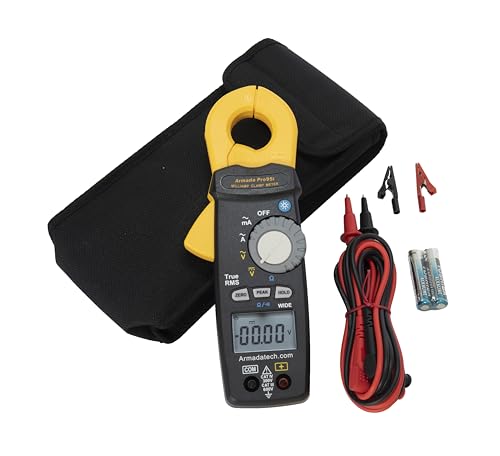
A basic digital meter with a 10 amp DC current range does everything this test needs, and the same tool handles converter output checks and fuse continuity.

Narrowing It Down by Pulling Fuses
With the meter still in series and a baseline written down, go to the 12 volt fuse panel and pull fuses one at a time. Pull one, look at the meter, and put it back before moving to the next. The fuse that causes the reading to fall sharply is sitting on the circuit doing the drinking.
Work methodically and expect small drops on several circuits, because the detectors and memory loads are spread out. You are looking for the one that removes most of the excess. Once the circuit is identified, the label on the panel narrows it further, and from there it is a matter of disconnecting devices on that circuit until the number drops again.
The suspects that come up most often
Forum threads and technicians repeat the same list: an inverter left in standby rather than switched off at its remote, a stereo or backup camera wired to constant power, a refrigerator control board that stays awake, a slide or leveling system controller, an antenna booster or signal amplifier, a step motor controller, and a switched accessory that a previous owner wired directly to the battery instead of through the panel. Aftermarket additions deserve suspicion out of proportion to their number, because factory wiring is usually the part that has behaved for years.
If a circuit refuses to reveal itself with fuses alone, a clamp meter that reads DC amps is the faster tool. It clips around a cable without breaking the circuit, so you can compare the main negative cable against individual branches in seconds rather than pulling twenty fuses.
Fixing What You Found
Most results fall into three buckets, and the fix is different for each. A device left on gets switched off properly, usually at its own remote or master switch rather than by hoping. A device that should sleep but does not, such as a stereo or a booster, is often best moved onto a switched circuit or given its own cutoff. And a genuinely faulty component, typically a relay stuck closed or a control board that has failed partly on, gets replaced.
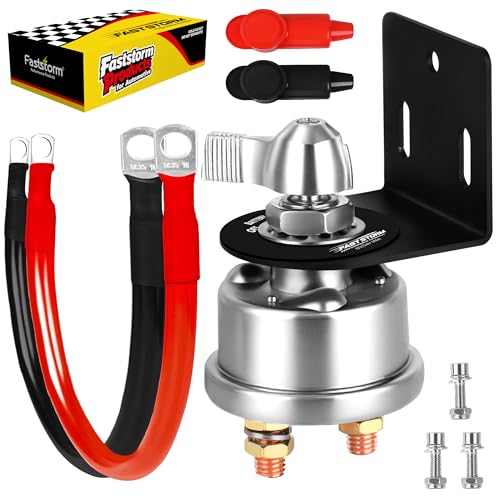
For rigs that sit between trips, a battery disconnect switch is the practical answer regardless of what the test found. It isolates the house battery from everything except the circuits wired ahead of it, which usually means only the detectors and any hardwired emergency equipment. Many RVs already have one; the ones that do not are easy to retrofit on the negative cable.
If the drain only shows up over long parked periods rather than in a week, the answer is maintenance rather than diagnosis. Our guide to keeping RV batteries charged in winter storage covers maintainers, solar trickle charging, and what lithium changes.
Seeing It Without Testing Every Time
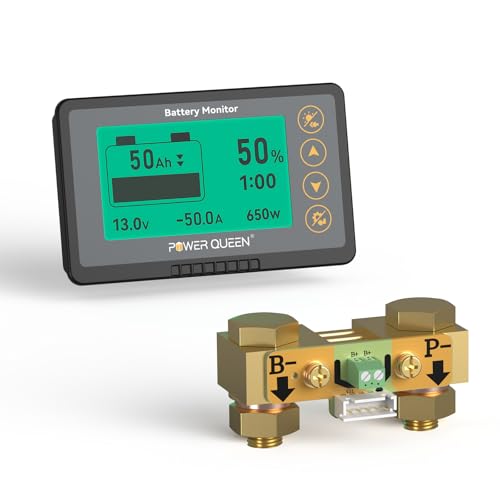
A battery monitor with a shunt sits permanently on the negative cable and reports current in and current out, plus state of charge, on a small display or an app. Once installed, the question of whether something is drawing power stops being an afternoon project and becomes a glance.
This is the upgrade most useful to owners who boondock, who have moved to lithium, or who have already chased one drain and would rather not do it again. It also catches the opposite problem, a charging source that is quietly contributing less than you assumed. Pairing it with a lithium bank is common enough that our walkthrough on switching an RV to lithium batteries treats them as one project.
Where This Stops Being a DIY Job
The whole test above is 12 volt work and sits comfortably in owner territory, provided you disconnect the negative cable first, keep metal jewelry off, and never put a handheld meter in series with a heavy load. Replacing a stuck relay, adding a disconnect switch, and rewiring an accessory onto a switched circuit are also normal driveway jobs.
Three things are not. Any wiring on the 120 volt side, including inverter and converter connections into the distribution panel, is work for a certified RV technician or a licensed electrician. Anything that smells hot, shows melted insulation, or has scorch marks around it should be disconnected and inspected professionally rather than traced further. And propane system components are never a DIY diagnosis: if the detector is alarming rather than merely drawing current, leave the rig, shut the tank valve if you can do it safely from outside, and have a certified RV technician find the leak.
Common Mistakes to Avoid
- Leaving the meter on the volts setting. Measuring amps requires the current range and usually a different jack. The wrong setup either reads nothing or blows the meter fuse.
- Testing with shore power or solar connected. Any charge source masks the drain completely.
- Judging in the first ten seconds. Control boards take time to sleep, and an early reading exaggerates the problem.
- Blaming the battery too soon. A battery that has been repeatedly flattened will also test poorly, so fix the drain before deciding it needs replacing.
- Disconnecting the detectors to stop the draw. They are the cheapest safety device in the rig and their draw is small. Use a disconnect switch instead.
- Ignoring the ground side. A corroded chassis ground can produce strange readings that look like a drain and are actually a bad connection.
Frequently Asked Questions
How much parasitic draw is normal in an RV? Something in the region of 20 to 100 milliamps is common for detectors and memory circuits with everything switched off. A steady draw around an amp or more usually means a device is still awake.
Does the battery disconnect switch stop everything? Not always. Many rigs wire the propane detector, and sometimes an emergency circuit, ahead of the switch, so a small draw remains by design.
Can I use a clamp meter instead of breaking the circuit? Yes, provided it reads DC amps with enough resolution. A meter that only reads AC amps will show nothing on a 12 volt circuit.
Why does my battery still die with no drain found? Either the battery has lost capacity, or the charging side is not keeping up. Confirm the converter output with a multimeter test before buying anything.
Is a solar panel enough to offset a parasitic drain? Often yes for background loads, but only if the panel actually sees light. A rig stored under a cover or in a barn is not being maintained by its solar.
The Bottom Line
Measure before you guess: put a meter in series with the negative battery cable, let the reading settle, and compare it to the 20 to 100 milliamp range that is normal for detectors and memory circuits. If the number is far higher, pull fuses one at a time until it collapses, then work down that circuit to the device. Keep the detectors powered, use a disconnect switch or a maintainer for storage, and hand anything on the 120 volt or propane side to a certified RV technician.