Last updated: August 14, 2026
An RV tire blowout is almost never a tire that simply gave up. It is heat, and heat comes from three sources that owners can control: running below the cold inflation pressure printed on the vehicle placard, carrying more load than the tire is rated for, and keeping a tire in service long after the rubber has aged out. Sidewall damage from curbs and potholes is the fourth, and it is the one that hides until it lets go.
Trailer tires live a harder life than car tires. They sit still for months, they bake in the sun, they get scrubbed sideways every time you turn tight in a campground, and nobody sits on top of them noticing a vibration. That combination is exactly why a preventable failure so often happens to the tire nobody had looked at since last season.
This article contains affiliate links. If you buy through them, we may earn a commission at no extra cost to you. Learn more.
Quick Answer
How do you prevent an RV tire blowout?
- Inflate to the cold pressure specified on your RV tire and loading information placard for the load you are carrying, and check it cold before every travel day.
- Stay inside the axle ratings on your trailer label and inside the load rating stamped on the tire sidewall, since an overloaded tire runs hot no matter how well inflated it is.
- Replace tires on age as well as tread, watch the sidewall for cracks and bulges, and consider a tire pressure monitoring system so a slow leak is a warning rather than a surprise.
What Actually Causes Blowouts, and What to Do
Every row here ends in the same place, which is a tire running hotter than its structure can handle. The difference is which lever you pull to stop it.
| Cause | What it looks like | What to do |
|---|---|---|
| Underinflation | Sidewall flexes more, tire runs hot, wear at both shoulders | Check cold pressure before every travel day against the placard figure |
| Overloading | One axle or one side over its rating, heat builds even at correct pressure | Weigh the loaded rig and stay inside GAWR and the sidewall load rating |
| Age and UV | Fine cracks in the sidewall or between tread blocks, chalky surface | Replace on age, keep tires covered in storage, check the DOT date code |
| Impact damage | Bulge in the sidewall, a scuffed or gouged section after a curb strike | Have the tire inspected or replaced; a bulge is a broken structure |
| Wrong tire for the job | Passenger rated tire on a trailer axle, load range below requirement | Fit tires that meet the type and load range the RV maker specifies |
| Slow leak from a valve or seal | One tire always a little low, or low only after long runs | Replace valve stems on new tire fits and monitor pressure while towing |
| Heat from a dragging brake | One hub or wheel much hotter than the others | Stop, let it cool, and have the brakes inspected before continuing |
The last row catches people out because the tire is innocent. A brake that drags heats the wheel, the wheel heats the tire from the inside of the bead, and the tire is what fails. If you have that symptom, work through why RV trailer brakes lock up or do not engage before adding miles.
Pressure: Use the Placard, Not a Number You Read Somewhere
There is no universal correct pressure for RV tires, and any article that gives you one is guessing about your rig. The number you need comes from the tire and loading information placard on your RV, which lists the cold inflation pressure the manufacturer specifies for the tire size fitted. The maximum pressure molded into the sidewall is a limit for the tire, not a recommendation for your trailer.
Cold means before you drive, not after. Tires gain pressure as they warm, so checking at a rest stop and bleeding air down to the placard number leaves you dangerously low once they cool. If a tire reads high when hot, that is normal. Never release air from a hot tire to hit a cold specification.
Check It the Same Way Every Time
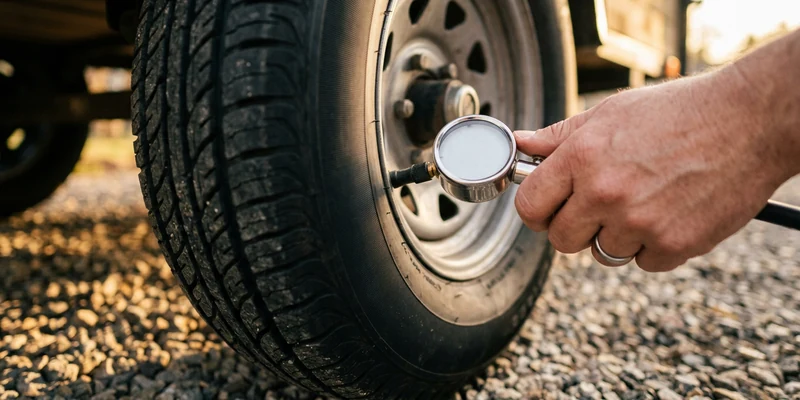
Use a gauge you trust rather than the one on a gas station hose, check every tire including the spare, and do it in the morning before the first mile. Dual wheels need a gauge or extension that actually reaches the inner valve, because a dual that quietly deflates transfers its whole load to its neighbor and takes both tires out.

Load Is the Other Half of the Equation
Correct pressure only protects a tire that is carrying a load it is rated for. Each tire has a maximum load stamped on the sidewall at a stated pressure, and each axle has a GAWR on the trailer label. Both have to be satisfied, and the side to side split matters as much as the total, because a rig loaded heavier on one side can put one tire over its rating while the axle total still looks fine.
The way to know is a scale ticket rather than a feeling. Weigh the loaded rig the way you travel, compare axle weights against GAWR, and divide by the number of tires on the axle to see what each one carries. If the numbers come out close to the limits, the answer is less cargo or a higher rated tire specified for your RV, never simply adding air. How the ratings interlock is laid out in RV weight ratings explained, and the same weighing trip gives you the figures you need for calculating tongue weight.
Age Kills Trailer Tires Before Tread Does
Trailer tires commonly reach the end of their service life with most of their tread still there. Rubber degrades from ultraviolet light, ozone, and heat cycles whether the rig moves or not, and a tire that spent three summers parked in the sun has aged more than the tread suggests.
Find the DOT code on the sidewall, where the last four digits give the week and year of manufacture, and know how old your tires are. Follow the replacement interval your RV or tire manufacturer specifies rather than an internet rule of thumb, and replace sooner if you see fine cracking in the sidewall or at the base of the tread blocks. Storage helps a lot here: covers keep the sun off, moving the rig occasionally avoids flat spotting, and parking on boards rather than directly on hot asphalt or damp ground extends life.

Monitoring While You Tow
Most blowouts are preceded by a pressure loss that nobody could see. A tire pressure monitoring system puts sensors on the valve stems and shows pressure and temperature for every wheel on a display in the tow vehicle, which turns a slow puncture into a warning at the next exit instead of a failure at speed.
Temperature is the underrated half of the readout. A tire climbing in temperature while its neighbors stay steady is telling you something is wrong at that corner, sometimes a brake, sometimes a bearing, sometimes a leak that has not shown up as pressure loss yet. Owners with dual wheels or a long fifth wheel benefit most, because those are exactly the tires you never see. Our roundup of wireless TPMS systems for RVs covers what to look for, including sensor count and whether you need a signal repeater.

Habits That Make the Difference
None of this takes long once it becomes routine. Walk the rig before each travel day, check cold pressures, look at each sidewall for cracks, cuts, and bulges, and run a hand near each hub at the first fuel stop to feel for one that is running hotter than the rest.
Speed and heat are connected, so use the speed rating and any speed guidance the tire manufacturer publishes for the type of tire fitted, and take it easier in high ambient temperatures. Avoid dropping a wheel off pavement onto a hard edge, take campground turns wide enough that you are not scrubbing tandem tires sideways, and never move the rig on a flat tire, because a few hundred feet is enough to destroy the sidewall and sometimes the wheel.
If One Lets Go Anyway
The instinct to brake hard and steer away is the wrong one. Hold the wheel firmly, keep the rig straight, ease off the throttle, and let it slow before steering gently onto a safe shoulder. Then look at the damage a blown trailer tire does to the fender, wiring, and underbelly, because the shredded tire usually takes something else with it and those repairs are worth catching before the next leg.
Common Mistakes to Avoid
- Inflating to the number on the sidewall. That is a tire limit. Use the cold pressure on your RV placard for the tires fitted.
- Bleeding air from hot tires. Pressure rises with heat by design, and releasing it leaves you underinflated once they cool.
- Judging tires by tread depth. Trailer tires usually age out before they wear out, so check the DOT date code.
- Skipping the spare. The one tire nobody checks is the one you need on a bad day.
- Ignoring one hot hub. That is a brake or a bearing cooking the tire from the wheel side.
- Adding pressure to compensate for overload. Air does not raise a load rating, and neither does a heavier ply marking than the RV maker specifies.
Frequently Asked Questions
What pressure should RV tires be? Use the cold inflation pressure on the tire and loading information placard fitted to your RV for the tire size installed. The number molded into the sidewall is the tire’s maximum, not a recommendation for your rig.
How old is too old for trailer tires? Follow the replacement interval published by your RV or tire manufacturer, and read the DOT date code on the sidewall so you know the real age. Replace earlier if you see sidewall cracking, bulges, or impact damage.
Do I need a TPMS on a travel trailer? It is not required, but it is the only practical way to know a trailer tire is losing pressure or heating up while you tow. Temperature alerts often catch a dragging brake or a failing bearing as well.
Can overloading cause a blowout at the correct pressure? Yes. A tire carrying more than its rated load flexes more and runs hotter regardless of inflation. Weigh the rig and stay inside GAWR and the sidewall load rating.
What should I do when a trailer tire blows? Hold the wheel straight, ease off the throttle rather than braking hard, and let the rig slow before easing onto a safe shoulder. Inspect the fender, wiring, and underbelly for damage before continuing.
Are tire covers actually worth it? Ultraviolet exposure is one of the main reasons trailer tires age out with tread left, so covers on a rig that sits for weeks or months are cheap insurance. See how to secure a trailer at a storage lot for the rest of the layup routine.
The Bottom Line
Blowouts come from heat, and heat comes from underinflation, overloading, age, and damage. Set cold pressure from your RV placard rather than the sidewall maximum, weigh the loaded rig so every tire stays inside its load rating and the axle stays inside GAWR, and replace tires on age using the DOT date code rather than on tread depth. A TPMS turns the failures you cannot see into a warning you can act on, and one hub running hot is a brake or bearing problem to fix before it becomes a tire problem.